Get Full Government Meeting Transcripts, Videos, & Alerts Forever!
Get email alerts on the Warner Pond Proposals topic
No spam. Unsubscribe anytime.
Concord task force advances amended Warner's Pond proposals and sets public meeting
Summary
After extensive line-by-line review and debates over how to present costs, the Warner's Pond Task Force agreed to move an amended proposals document forward for public review and scheduled a March public forum to gather resident feedback.
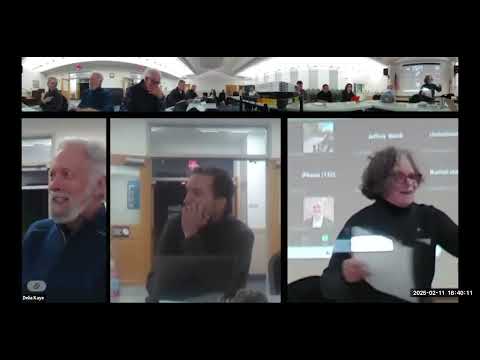
The Warner's Pond Task Force voted to advance an amended proposals document for public release and set a public forum to gather resident feedback, members said at a meeting where they also debated how to present cost estimates and technical uncertainties.
The document, developed by a small drafting group and reviewed in detail at the meeting, lays out three alternatives for Warner's Pond management — enhanced management, dredging, and dam removal — and accompanying background including a recent technical memo on fish passage. Task force members agreed to publish a single, standardized cost-comparison template, put a concise high-level cost summary into each proposal section, and prepare a side-by-side comparison table in the appendices to help the public compare capital and recurring costs.
The choice of how to display costs was the central disagreement at the meeting. Members sought a balance between transparency and avoiding an impression that early cost numbers are final. “Our goals for tonight's meeting are to get consensus, get approval, for the proposals document that we've all put together,” a task force member said while opening discussion of the draft. After debate the group agreed to present costs in 2025 dollars (no market escalation baked into headline figures), show both one‑time capital and multi‑year operating totals, and include an appendix with more granular line items and assumptions.
The task force asked that each work group supply a single-slide, one‑page summary and a 4–5 slide deck for the planned public meeting; presenters should include a one‑page top-line cost summary (capital + 5‑year operating estimate), risks and known uncertainties, and a brief explanation of key tradeoffs. The planning team proposed a public forum on March 13 at the Town House, 7–9 p.m., with in‑person and livestream options; work groups were asked to submit slides to the planning team by March 3 for review and formatting.
Members discussed several technical and process clarifications to be added to the document before distribution: referencing a recently circulated fish‑passage technical memo as an appendix; clarifying that conceptual channel and dredge graphics are approximations; and explicitly listing uncertainties (for example, PFAS and other contaminant testing where applicable). The task force also resolved that previously incurred, sunk costs would not be used in apples‑to‑apples forward‑looking comparisons, while recommending the final report include an appendix documenting sunk costs already paid to date (for transparency).
On the administrative side, the group addressed how to present costs for the three alternatives. One small‑group estimate cited a sample range for a recurring-management approach of roughly $519,300 to $1,589,300 as a possible headline line; members instructed staff to translate such detailed appendices into a single, comparable table for the public materials. The group also agreed to show capital and operating columns (first‑year capital, annual operating, and a 5‑ or 10‑year summed figure as appropriate) and to use a uniform template so each alternative can be compared quickly.
Following the discussion, the task force conducted an informal roll call and then a motion to move the amended proposals document forward for public release and to proceed with planning the public meeting. The motion received multiple aye responses in the record and was carried; the transcript records several members saying "Aye" when asked if they could live with the amended document and to proceed (names for each individual vote were not all recorded on the transcript). The meeting record also shows an earlier attempt to take up approval of January meeting minutes; members discovered the minutes were not on the agenda and that item was deferred to the next meeting.
Next steps include: work groups filling the standardized cost/template forms and submitting slide decks by March 3; the planning team producing poster‑style materials and a side‑by‑side cost appendix; and the task force hosting the March 13 public forum at the Town House with in‑person and livestream options. The planning team said it will compile sticky‑note and written comments from the forum, circulate the compiled feedback to members, and use public responses to refine the group’s recommendations.