Get Full Government Meeting Transcripts, Videos, & Alerts Forever!
Get email alerts on the Town Budget topic
No spam. Unsubscribe anytime.
Concord staff present draft FY26 town budget; committee hears cuts, library Sunday closure and proposed stabilization funds
Summary
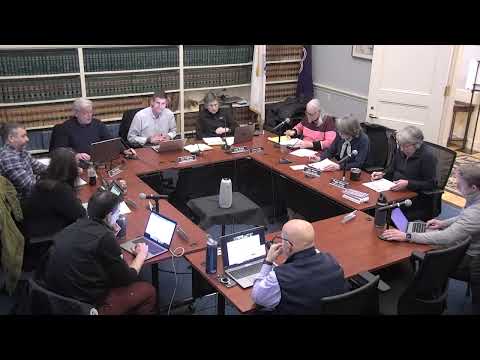
Concord town staff presented a draft fiscal year 2026 operating budget to the Concord Finance Committee on Feb. 13, saying the recommended spending plan meets the committee's 2.85% guideline and totals $33,678,889 but requires cuts to staffing and services.
Concord town staff presented a draft fiscal year 2026 operating budget to the Concord Finance Committee on Feb. 13, saying the recommended spending plan meets the committee's 2.85% guideline and totals $33,678,889 but requires cuts to staffing and services.
The budget "is still considered a draft version of the town's budget," said Anthony, the staff presenter. "We met the 2.85% guideline... but it doesn't come without some pain." Anthony said the recommended plan includes the elimination of about 2.5 full-time equivalent positions, reductions to non-public-safety overtime and other line-item adjustments to align expense accounts with historical spending.
The draft also identifies several operating changes and policy recommendations the town manager wants the committee and town leadership to consider for FY27 and beyond: a near-hiring freeze or a formal pre-hire review panel for new positions, a review of non-public-safety take-home vehicles with possible consolidation into a pooled fleet, a plan to reduce the number of town credit cards (PCOD cards) to improve purchase oversight, and targeted reductions to salary line items by budgeting at mid-range rather than top-step pay. Anthony said he "beefed up" the salary reserve by $50,000 in the FY26 draft but cautioned that collective-bargaining outcomes could require more funding; he said staff had identified a figure closer to $700,000 as a possible need when unresolved contracts are considered.
Health-insurance costs are an immediate pressure. Anthony told the committee he had initially budgeted for a 12% increase but had since received a higher guidance of 14.8% from the insurer consortium; that figure is not yet final and remains under review.
Library hours and staffing drew sustained attention. The presentation reduced library overtime and showed a potential $44,000 savings tied to Sunday hours. "Right now the main library is open for 4 hours on Sunday from 1 to 5," a committee member noted; Anthony said the draft change would affect Sundays beginning July 1 if the budget is adopted. Don Kupkayama told the committee he had heard the Friends of the Concord Public Library might offer to cover the $44,000 shortfall; Anthony said staff would meet with Library Director Emily and the Friends to explore options. Committee members pressed staff to consider alternatives to closing and to review recent staff additions before finalizing reductions.
Debt, reserves and stabilization: Anthony told the committee he increased the town-controlled salary reserve and proposed increasing the town's reserve capacity generally. He also proposed warrant articles to create a debt stabilization fund and a capital stabilization fund and suggested dedicating some portion of certificated free cash to those accounts if the town's certified free cash and priorities allow. "We only have $4,000 in our general stabilization," Anthony said, urging discussion about using excess free cash to build reserves. Finance Committee members and Select Board member Mary Hartman discussed tradeoffs: moving money to a stabilization fund can allow slightly more aggressive, low-risk investment and protects money from ad hoc spending requests, but money removed from free cash requires a two-thirds vote at town meeting to spend.
Hartman highlighted a practical demand on free cash: the MCI Concord advisory board has state-supported funding that will end on June 30, she said, and the Select Board may seek a short-term free-cash appropriation to keep the advisory board's consultant work and zoning analysis moving through the summer.
Committee members asked for follow-up detail and more meetings with department heads before the town manager's budget is finalized for presentation to the Select Board. Anthony said the manager's budget is due to the Select Board at the end of the month and that staff will sit down with department heads about proposed changes.
Votes at a glance
- Finance Committee vote to approve minutes of Jan. 9 meeting: approved, roll-call tally 13-0 (yes:13, no:0, abstain:0). The committee recorded a vote accepting the minutes earlier in the meeting after a motion and a second and a roll-call vote in which members answered in the affirmative.
- Motion to adjourn: approved by voice vote at the meeting's close.
Why it matters
The draft balances the committee's spending guideline but shifts costs and service levels through staff reductions, reduced overtime outside public-safety functions and an emphasis on tighter purchasing controls. If the health-insurance increase and unresolved collective-bargaining items run higher than projected, Anthony and committee members acknowledged the town may have to revisit assumptions or identify more reductions. The proposed stabilization funds and conversations about free cash set up a key policy decision about how Concord buffers large capital or debt costs in future years.
What's next
Anthony said placeholders for warrant articles will be filed ahead of the warrant closing and that he will meet with department heads. The Finance Committee will review the town manager's final budget when it goes to the Select Board at the end of February. Committee members also requested a follow-up liaison report and a tour opportunity for the committee to review capital and staffing impacts in person.