Get Full Government Meeting Transcripts, Videos, & Alerts Forever!
Get email alerts on the Land Acquisition Superfund topic
No spam. Unsubscribe anytime.
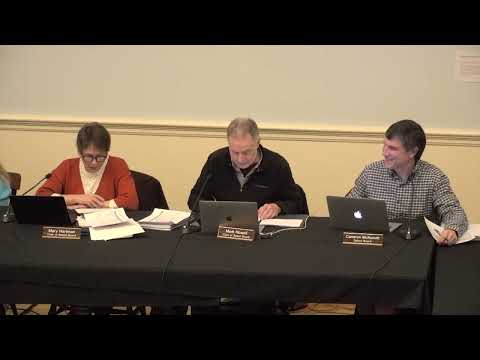
Select Board hears task force recommendation to pursue acquisition of 2229 Main Street Superfund site
Summary
The 2229 Main Street Advisory Task Force recommended the Select Board express formal interest in negotiating acquisition of the 46-acre Superfund site and begin parallel legal and planning work; task force members said the site could meet town needs if EPA cleanup proceeds as planned.
Members of a town-appointed advisory task force told the Select Board on Feb. 10 that the 46-acre 2229 Main Street property in West Concord could be a valuable long-term town asset if the ongoing EPA cleanup reaches required standards. The task force unanimously recommended the Select Board express formal interest to the U.S. Environmental Protection Agency and begin conversations with the Department of Justice about acquisition and liability protections.
The task force presented an executive summary and appendices that the group said reflect about 13 months of study, including environmental review, options for acquisition, institutional controls and preliminary infrastructure cost estimates. Paul Bohm (task force) and Richard Rowan (task force chair) told the board about liability protections municipalities can seek as part of a negotiated settlement, and that EPA has indicated municipalities can obtain protections for “legacy operations.” The town-contracted technical oversight committee continues to monitor cleanup work.
Task force members said about half the site is developable—roughly 20 to 22 acres by their estimate—and that remediation is scheduled to complete and allow transfer to a new owner around 2029. The group listed potential future uses including housing, recreation and energy projects, but emphasized reuse decisions are premature until legal and financial terms are settled and cleanup milestones are met.
Select Board members asked about near-term costs and staffing to support negotiations and planning. Carrie (town staff) told the board the town can cover preliminary legal work within current budgets if costs stay near the $30,000 figure cited by town counsel for fiscal 2026; she also said other costs could be covered by planning grants or ARPA funds if warranted. Task force members said legal negotiations with EPA and potentially the Department of Justice could take one to two years and that terms such as lien forgiveness and revenue sharing with the federal government remain to be negotiated.
The task force emphasized institutional controls that will be attached to any deed or covenant—examples cited included restrictions on excavation and a prohibition on groundwater use until cleanup standards are met—and said those constraints and long-term monitoring responsibilities are factors the town must plan to manage.
Task force members and Select Board members discussed timelines for construction work happening on the site in 2026 (final grading and holding-basin work) and the potential to coordinate early planning so on-site contractors might perform some infrastructure work for the town. The task force recommended parallel planning activities so that if the town ultimately acquires the site it can move to development planning quickly, rather than waiting until the acquisition closes.
The Select Board said it would review the task force report and take up a draft letter (template provided by the task force) at a future meeting; board members also suggested further risk communication with residents during the multiyear process.
Ending: The board did not vote to acquire the site; the task force recommendation was presented for the board’s consideration and further action. The task force and town staff expect negotiations with EPA and DOJ and detailed fiscal analysis to continue over the next 12–24 months before any final acquisition decision.