Get Full Government Meeting Transcripts, Videos, & Alerts Forever!
Get email alerts on the Public Shade Tree Appeal topic
No spam. Unsubscribe anytime.
Select Board grants homeowners' appeal to relocate elm in public way at 183 Hubbard Street
Summary
After a public hearing and several resident comments, the Select Board granted an appeal to relocate (rather than remove) an elm tree that sits in the middle of a driveway at 183 Hubbard Street; board voted 4–1 to approve removal/relocation if the tree warden deems relocation suitable.
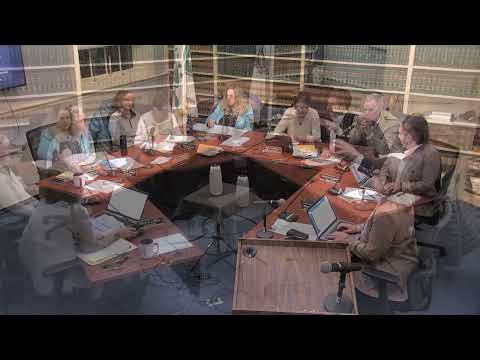
The Town of Concord Select Board on Tuesday granted an appeal that permits the removal or relocation of a young elm tree planted in the public shade‑tree strip at 183 Hubbard Street (also referenced as 207 Thoreau) after a public hearing that drew residents, the property owners and town staff.
Homeowners Kevin and Lynn Duffy told the board the tree, planted as part of the town’s public shade‑tree program, now sits in the middle of a driveway built to serve the property’s renovated two‑family structure. "Our request is the approval to move a tree that is now, basically in the middle of a driveway," Kevin Duffy said during the hearing, explaining the driveway and garage layout for a multi‑generation household.
Eric Shaw, assistant highway and grounds superintendent and the town’s tree warden, summarized staff involvement and the town’s process: he said he met with the homeowners in spring 2024 and noted the elm had been planted in fall 2022 under the public shade tree planting program. Shaw described the process for public shade tree removal requests, the on‑site hearing in September and the legal pathway that allows an objector to elevate the decision to the Select Board for final determination. "I received an email from Lynn Duffy, around April twentieth of this 2024," Shaw said, describing his timeline of involvement and the subsequent public hearing that produced an objection.
The hearing included multiple public commenters who urged care for public street trees and questioned process communications. Resident Stefan Bader and neighborhood volunteers said the town’s tree program depends on good stewardship and that the public planting program carries implicit expectations of care. The board and staff discussed whether the driveway permit and tree hearings were coordinated; town staff said the homeowners had advised engineering staff they intended to petition to relocate the tree and that the driveway permit was issued conditionally pending Select Board action.
Shaw estimated the town could relocate the two‑year‑old elm and gave a rough labor/cost estimate for a move, saying the work might be “around a thousand dollars” for removal and transplanting (labor and related costs), and cautioned survival after transplanting cannot be guaranteed. Several residents offered the town locations to relocate the elm if deemed appropriate.
Select Board member Cameron moved to approve the appeal, permitting the removal of the tree and authorizing the tree warden to relocate it if prudent and cost‑effective; the motion was seconded and passed 4–1. The board and the homeowners agreed the best window to transplant would be in the spring when conditions improve. The board directed the tree warden and public works staff to coordinate a relocation plan and to report back on timing and cost.
Board members and attendees used the hearing to note process improvements: several asked staff to clarify how tree hearings, driveway permits and public‑planting programs are coordinated so cases like this are identified and communicated earlier.