Get Full Government Meeting Transcripts, Videos, & Alerts Forever!
Get email alerts on the ADA Accessibility topic
No spam. Unsubscribe anytime.
Committee reviews ADA accommodations; coordinator handles requests, remote voting limited by state law
Summary
Members discussed reasonable ADA accommodations available through the town ADA coordinator, examples of satellite participation used by other towns, and the unresolved legal question whether federal ADA requirements can require remote voting when Massachusetts law requires in‑person votes.
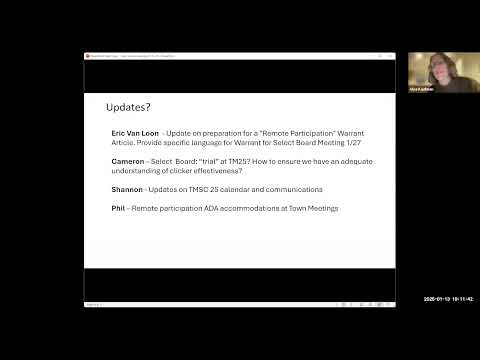
Town Meeting Study Committee members reviewed options for Americans with Disabilities Act accommodations at Town Meeting on Jan. 13 and identified both existing services and legal questions about remote participation for voting.
Phil Swayne summarized the state of local practice: "The Massachusetts state law, is you must be present at town meeting to vote," he said, and added that the town already posts an accommodations page and that requests are handled by the town ADA coordinator. Swayne described current reasonable accommodations available in Concord — accessible seating, hearing devices, sign‑language interpreters, and other services — and encouraged better publicity for those services.
Committee members discussed examples from other towns. According to the transcript, Carlisle allowed a single person to participate by Zoom as an accommodation and operated a satellite location at a senior housing facility with an assistant moderator for attendees there. Carmen, the moderator, said she has asked the Massachusetts Attorney General’s office for guidance because "the interesting question is whether the ADA, as a federal statute, under the supremacy clause trumps state law in terms of making, needing to make disability accommodations for people who can't physically come to the meeting," and the committee awaits a formal interpretation.
Why it matters: The committee noted the town can and does provide reasonable accommodations via its ADA coordinator, Jessica Porter, but the committee also emphasized that enabling remote voting as a general accommodation would require statutory change or clear legal guidance because state law currently requires in‑person voting.
Ending: Committee members asked staff to follow up with the Attorney General’s office and town counsel, to inventory current accommodations and publicize the ADA coordinator contact information so voters who need assistance know how to request help in advance of Town Meeting.