Get Full Government Meeting Transcripts, Videos, & Alerts Forever!
Get email alerts on the Home Grant Allocations topic
No spam. Unsubscribe anytime.
Affordable Housing Advisory Board recommends 2025 HOME funding package to city commission
Summary
The Lawrence Affordable Housing Advisory Board voted to recommend how the city should allocate its estimated 2025 HOME funds to tenant-based rental assistance and a community housing developer program after staff explained HUD rules, affordability periods and environmental-review constraints.
The Affordable Housing Advisory Board on April 10 recommended the city commission approve staff’s proposed allocation approach for the city’s anticipated 2025 HOME Investment Partnerships Program (HOME) grant from the U.S. Department of Housing and Urban Development (HUD).
Brad Carr, the city’s community development analyst for housing initiatives, told the board the city expects a federal HOME grant similar to last year’s award (about $430,000) but that the precise HUD entitlement figure had not yet been released. Carr said the city estimates $388,639 will be available for awards after subtracting a 10% administrative set-aside and adding roughly $1,600 in program income. "We're estimating that we'll get $388,639 to allocate to these applications that we've received," Carr said.
The recommendation followed a staff presentation of three applications: a tenant-based rental assistance (TBRA) request submitted by the Lawrence-Douglas County Housing Authority (LDCHA) and two applications from Tenants to Homeowners, the city’s HUD-qualified community housing development organization (CHDO). Carr explained HUD rules that require a minimum 15% of the jurisdiction’s HOME allocation be set aside for CHDOs and permit up to 5% for CHDO operating funds. Using the staff estimate, Carr said the CHDO minimum would be about $64,500 and the CHDO operating cap about $21,500.
Board members pressed LDCHA’s representative about the TBRA program’s capacity to transition people into permanent vouchers. Galal, representing LDCHA, said the authority can comfortably cycle about 30–40 transitional vouchers annually and that HOME-funded TBRA typically houses 15–20 households per year. He warned the authority’s waiting list had grown to more than 100 households, creating multi-year waits if throughput remains unchanged.
Board members also questioned Tenants to Homeowners’ project details. Carr said the CHDO proposes to build two houses and that HUD rules prevent staff from publicly identifying specific addresses before environmental review is complete. He explained that the CHDO’s recent two-bedroom units had total per-unit costs (including land) of a little over $300,000 and that HOME subsidies of roughly $125,000 per unit helped reduce the sale price to about $165,000 for the eventual low-income buyer. Carr described HUD-mandated affordability periods tied to per-unit HOME subsidies (e.g., 5–15 years for owner-occupied units depending on subsidy levels; 20 years for rental projects).
Board members noted that HUD’s environmental-review requirements can delay development: identifying a site triggers a full review and can freeze construction for six to eight months, and larger multi-unit site reviews can add time if archaeological or tribal consultations are required. "Developers have to understand that ... these things are triggered as soon as they identify our property," Carr said.
After discussion and an informal division of available funds during the meeting, the board moved, seconded and voted to approve staff’s recommendation to forward HOME award recommendations to the city commission. The roll-call vote recorded six board members as voting in favor and one member absent. The board’s approved recommendation will be included in the city’s annual action plan, published April 18, presented to the city commission at a tentative May 6 public hearing and then transmitted to HUD following the required public-comment period.
Votes at a glance
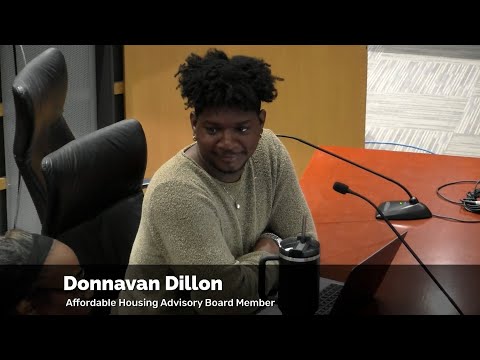
- Motion: Approve staff recommendations for 2025 HOME program awards and forward them to the City Commission for consideration. Outcome: Approved (roll-call: Mark Bueller — yes; Andrew Dahlager — yes; Mary Alfiero — yes; Christina Gentry — yes; Donovan Dillon — yes; Monty Soukup — yes; Elizabeth O’Neil — absent). Motion mover/second not specified in transcript.
- Motion: Approve minutes of the Feb. 13 meeting. Outcome: Approved (same board members present voted aye; Elizabeth O’Neil absent).
- Motion: Approve the 2024 Affordable Housing Advisory Board annual report. Outcome: Approved (roll-call recorded affirmative votes by attending members; Elizabeth O’Neil absent).
- Motion: Move the August 14 meeting to Sept. 11, 2025. Outcome: Approved by voice vote.
Context and next steps
Carr said staff will publish the annual action plan on April 18 with the board’s recommendations and that the city commission will hold a public hearing on the recommendations (tentatively May 6). The public will have a 30-day comment period before the commission’s final approval and staff’s eventual submittal to HUD. The board also directed that members who want changes to the Affordable Housing Trust Fund scoring matrix should send recommended edits to staff by the deadline Leah Roseland provides so staff can incorporate adjustments before the NOFO (notice of funding opportunity) is released.
Ending
The board’s recommendation is advisory; the city commission makes final awards and HUD must approve the entitlement grant. The board flagged two operational constraints for prospective applicants: (1) HUD affordability-period rules tied to the amount of HOME subsidy per unit, and (2) HUD environmental-review timelines triggered by identifying project sites. Staff said these constraints and estimated award amounts will be described in the annual action plan and the NOFO materials the city will publish in advance of the 2026 Affordable Housing Trust Fund cycle.