Get Full Government Meeting Transcripts, Videos, & Alerts Forever!
Get email alerts on the Land Development Code topic
No spam. Unsubscribe anytime.
Jacksonville Beach council adopts new land development code after public comment and debate
Summary
After two years of drafting and public workshops, the council adopted a comprehensive rewrite of Chapter 34 (Land Development Code). Council members and residents debated setbacks, digital sign rules and short-term rental impacts before the ordinance passed on second reading.
The Jacksonville Beach City Council voted to adopt a full replacement of Chapter 34 of the city code, a rewrite of the city nd land development code intended to update zoning definitions, setbacks, signage and permit procedures.
Heather Ireland, director of planning and development, and consultants from Kimley-Horn presented the 320-page revised code and described recent edits made since the first reading. Ireland said the rewrite is intended to align the city—ode with the strategic plan and community preferences, and staff said they will return about a year after adoption with recommended adjustments based on implementation experience.
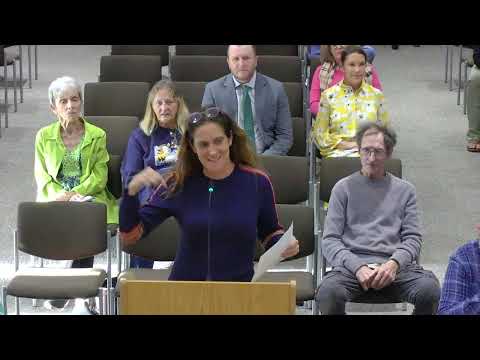
Public commenters urged caution about proposed changes to digital signage and setbacks. Longtime resident Terry Deloach told the council he opposed loosening rules for digital signs, saying such signs "don't contribute anything to our beautiful beach community." Another resident, Mike Boyles, criticized proposed allowances that he said would enable denser development and more short-term rentals on traditionally single-family blocks.
Planning staff and council members responded with explanations. Christian (planning staff/consultant) described where setbacks would change: the most notable adjustments are in RM-1 and RM-2 (multifamily/dense categories) and a new "urban single-family" option for some RS-3 areas aimed at preserving competitive single-family development while allowing narrower lots in denser places. Staff said single-family setbacks in most residential categories remain unchanged and that the intent is to provide parking and design options while protecting neighborhood character.
Council member Wouters moved to amend the ordinance by retaining a 30-foot rear setback and striking the proposed 20-foot rear setback in multiple residential categories; that motion received no second and failed. After council discussion, the ordinance on second reading passed by roll call: Sutton yes; Wagner yes; Wouters no; Golding yes; Horn yes; Janssen yes; Mayor Hoffman yes.
Council members emphasized the code will be a "living" document. Several members praised planning staff and consultants for two years of work and committed to annual reviews and future refinements. Planning director Ireland said the city will return in roughly one year with evaluation and possible follow-up changes.