Get Full Government Meeting Transcripts, Videos, & Alerts Forever!
Get email alerts on the Climate Resilience And Public Art topic
No spam. Unsubscribe anytime.
Cortada Foundation presents 'Underwater' public‑art project to illustrate sea‑level rise; commissioners express interest in city partnership
Summary
Artist and Cortada Foundation executive director Adam Roberti showed the commission how elevation sculptures, murals and QR‑code activations make sea‑level data personal; commissioners and staff discussed costs, school partnerships and possible installations in Hollywood parks.
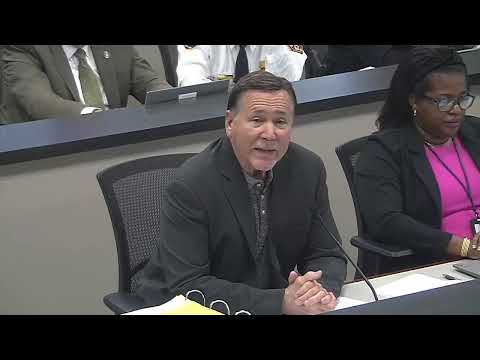
Adam Roberti, executive director of the Cortada Foundation and a Hollywood native, presented the foundation’s “Underwater” and Underwater Homeowners Association public‑art projects at the April 2 Hollywood City Commission meeting to demonstrate a community engagement approach to sea‑level rise.
The presentation focused on interactive elevation markers—murals, yard signs, sculptures and a mobile art piece—paired with QR codes that link to an app showing projected sea‑level scenarios and an address‑level elevation readout. Roberti described school programs, community activations and a mobile bus program that have been used in Miami‑Dade and Broward to make climate data local and actionable.
Why it matters: Commissioners and staff said making sea‑level rise “personal” helps residents understand why large infrastructure decisions—stormwater upgrades, septic‑to‑sewer conversion and coastal resilience investments—matter locally. The city is planning multiple corridor and shoreline investments, and staff and commissioners discussed how public art could strengthen community outreach and support for funding.
What Roberti told commissioners: He showed maps projecting six feet of sea‑level rise and explained that the project’s goal is to move residents from abstract numbers to personal relevance. "It makes climate change personal," he said, describing how students paint elevation murals and bring yard signs home. He described installation costs: ceramics or metal sculptures ranged from about $10,000 to $75,000 depending on size and materials, with one cited ceramic mural in the $30,000 range and a metal “4‑foot” piece near the county government center in the roughly $15,000 range. Roberti said the University of Miami College of Engineering has partnered for sustainable‑concrete sculptures and Broward County resilience funds had supported mobile and school outreach.
Commissioner questions and staff response: Commissioners asked about per‑piece cost, funding sources and whether smaller, lower‑cost signs or QR‑only installations could achieve outreach goals. Roberti said small signs, ceramic pieces and mobile activations had different cost profiles and that sponsors and donations (for example, concrete industry donors) had covered some costs in other jurisdictions. Vice Mayor Quintana and other commissioners suggested city communications, parks and resilience staff coordinate on possible pilot locations—parks, neighborhood monuments and public art already planned for the centennial—and discussed combining the idea with a scavenger‑hunt style outreach using QR codes and free transit to event sites.
Clarifying details captured from the meeting
- Costs: Roberti cited a range for installed pieces: roughly $10,000 (small sculptures) to $75,000 (large commissioned works). He noted one metal piece at about $15,000 and a ceramic mural in the ~$30,000 range from prior Broward/Miami installations. - Funding/partners: Broward County resilience and cultural division grants, University of Miami engineering partnership (sustainable concrete), private donations (concrete supplier Supermix), Cortada Foundation or Cortada Studio contributions. - Outreach: School assemblies, student‑painted murals, yard signs with QR codes, mobile bus artwork and park sculptures; QR codes link to apps that show address‑level elevation and action steps. - Timeline/scale: Presentations and school installations have been done across Miami‑Dade and parts of Broward; Roberti asked whether Hollywood would consider pilots in parks and schools during the city centennial.
Public comment and follow up: Commissioners expressed support for pilot projects and asked staff to coordinate a follow‑up meeting with Cortada Foundation, parks and resilience staff, Communications/CMED and the Broward County resilience office to identify sites and funding approaches. Roberti left printed elevation cards and offered to arrange demonstrations in schools and parks.
Provenance (transcript excerpts)
- topicintro excerpt: "A presentation, by Adam Roberti. He's with the Cortada Foundation, regarding the underwater, a socially engaged art project." (presentation introduced at meeting) - topicfinish excerpt: "Thank you very much. I'm gonna I'll hand you guys elevation cards... I'll give you those real quick." (presentation close and handout)