Get Full Government Meeting Transcripts, Videos, & Alerts Forever!
Get email alerts on the Immigration Policy topic
No spam. Unsubscribe anytime.
Bay City commission sustains mayor's veto of 'welcoming city' resolution after heated public comment
Summary
Mayor Gerard vetoed a resolution intended to limit local cooperation with federal immigration enforcement; an attempt by commissioners to override the veto failed after extended public comment for and against the measure.
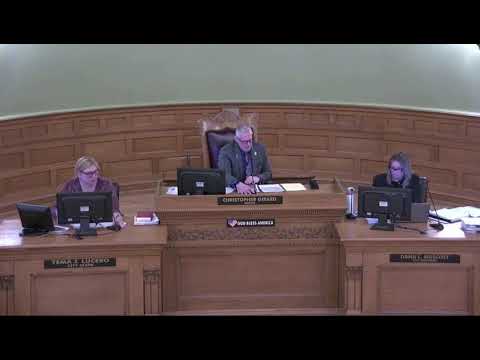
Bay City Mayor Gerard vetoed Commissioner Runberg’s “welcoming city” resolution, and the City Commission failed to override that veto at its April 7 meeting after an extended public-comment period and floor debate.
The veto left the resolution unenacted. The clerk read the question before the commission as whether members wished to override the mayor’s veto; the roll call recorded “yes” votes from Commissioner Rhunberg, Commissioner Charlebois, Commissioner Bernie Obershaw and Commissioner Tenney and “no” votes from Commissioner Morris, Commissioner Prince and Commissioner Coakley. The clerk said six votes were required; the motion failed and the veto was sustained.
The mayor opened the topic with a prepared statement saying the veto was grounded in legal and procedural concerns rather than opposition to the idea of a welcoming city. “My veto was not about rejecting the idea that Bay City should be a welcoming place,” Mayor Gerard said. He warned the commission that symbolic local declarations can carry practical consequences, saying they may not stop federal enforcement and could prompt state or federal funding impacts for the city and its partners.
Proponents of the resolution framed it as a local safeguard and a moral stance. Dozens of residents spoke during public comment, many urging the commission to adopt the measure to protect people in the city from immigration enforcement actions. Several speakers described national incidents they said illustrated the need for local limits on cooperation with federal immigration authorities; others cited local fear among immigrant neighbors and students. “This is our chance to do the right thing by our immigrant neighbors,” said Bree Melton of 306 Caroline, summarizing a common theme among supporters.
Opponents, including some long-time residents and business owners, argued the resolution risked concrete financial harms to city services and local nonprofits. Commissioner Prince, citing advice he said he had received about state budget processes, warned that the city could lose state or federal grant funding if it adopted the resolution. Several speakers urged caution, saying lost grants would affect police, fire, utilities and social-service providers.
Speakers also debated how local policing practices intersect with immigration enforcement. A member of the public, Paul Kleinhaus, said that during a closed session he had asked the director of public safety whether an officer who reported a resident’s immigration status would face discipline; Kleinhaus said the director replied there was “no rule” and “no penalty.” Kleinhaus presented that answer as part of his argument that the resolution would forbid conduct that otherwise might go unchecked. That account was given by Kleinhaus during public comment; the director of public safety did not speak on the record in the public meeting to confirm or deny the exchange.
Commission discussion reflected the splits heard in public comment. Commissioner Runberg argued the resolution helped shield residents who report crimes from immigration consequences and would clarify local policy. Commissioner Prince and others said the measure would not prevent ICE from acting, but could jeopardize grant funding that supports low-income residents and city services. Commissioner Charlebois framed the debate in moral terms and urged colleagues to override the veto.
The clerk concluded the roll call and announced the motion failed because it did not reach the required six votes, leaving Mayor Gerard’s veto in place. The commission did not adopt the resolution.
The meeting record shows the resolution remained a high-engagement issue for the city: dozens of public commenters addressed the measure during an extended public-comment period and multiple commissioners returned to the topic in their remarks. The immediate legal and budgetary consequences cited by the mayor and by opponents — possible state or federal funding impacts and the limits of municipal control over federal enforcement actions — were repeatedly raised as reasons to sustain the veto.
Looking ahead, supporters called for other steps to protect immigrant residents, while opponents emphasized protecting the city’s grant eligibility and services. The commission did not adopt any alternative or follow-up directive on the record at that meeting.