Get Full Government Meeting Transcripts, Videos, & Alerts Forever!
Get email alerts on the Public Transit Options topic
No spam. Unsubscribe anytime.
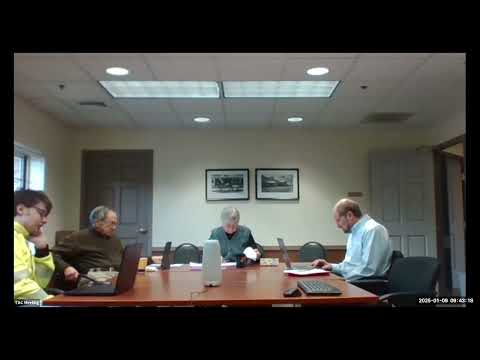
Concord TAC weighs data-driven pilots and stakeholder funding for local transit
Summary
Members discussed the limits of fixed-route transit in Concord’s low-density context and recommended data collection, partnership with existing providers and small pilots to test solutions.
The Concord Transportation Advisory Committee devoted a portion of its Jan. 9 meeting to public transit options, concluding that limited population density constrains fixed-route solutions and that data-driven pilots and partnerships may be more feasible.
Nick Pappas, TAC member, summarized the challenge: “If you have enough potential ridership, then you can justify or fund things more easily than if you were ever,” calling the issue “a financial question.” Members compared Concord with denser communities such as Lexington and Sudbury and noted that Lexington sustains municipal transit because of higher population density.
Committee members recommended a staged approach: (1) inventory what other comparable communities have tried and analyze funding models; (2) identify primary beneficiaries and potential funders (for example, employers, Council on Aging, hospitals or tourism interests); and (3) run small pilots and gather operational data. Mariana (TAC member) suggested using existing service providers’ data — for instance, the Council on Aging’s van service — to understand demand and cost before launching new services.
Public commenters urged exploring seasonal or visitor-oriented shuttles. Ned Perry, a resident, noted the summer trolley service that operates in Concord and suggested expanding it during high‑visitor months to help circulate tourists and residents. Tanya (resident) encouraged residents to submit letters or comments to TAC and the Select Board and said the committee has been “very open and generous with public comment.”
Members flagged potential partners and funding approaches including Council on Aging vehicles, employer- or hospital-sponsored shuttles, tourism funding for visitor services, and targeted subsidies for underserved riders. The committee did not adopt a formal transit plan; members asked staff to assemble examples of regional efforts, gather operational data from existing local providers, and return with proposals for pilot projects and funding scenarios.