
Energy advisory committee urges energy manager, unified building approach in annual report
Get AI-powered insights, summaries, and transcripts
Subscribe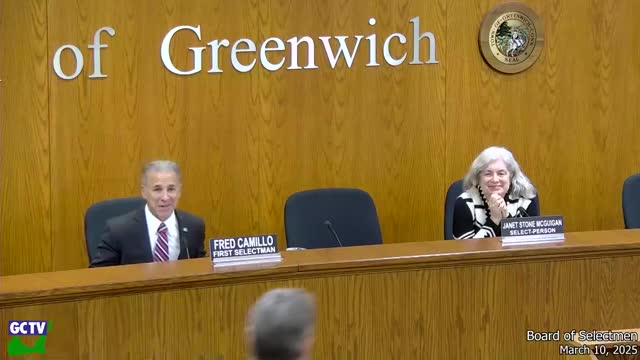
Summary
The Energy Management Advisory Committee presented its annual report, urging the town to hire an energy manager, adopt consistent energy expectations in ed specs, and coordinate town and school facilities to meet greenhouse-gas and energy-reduction goals.
Peter Schweinfurt, chairman of the Energy Management Advisory Committee, presented the committee’s annual report to the Board of Selectmen on March 10, urging the town to adopt more systematic measures to reduce municipal energy use.
"We set a goal of reducing energy consumption by 20 to 40%. We're just not doing it," Schweinfurt said, summarizing the committee's concern after recounting that the town spent about $8 million on energy last year. He said smaller efficiency measures—LED retrofits and programmable thermostats—have largely been completed, and that the town must now address major buildings and project design to achieve further reductions.
The report recommended six integrated actions, chief among them hiring a town energy manager, creating a common set of energy-efficiency requirements for ed specs used by building committees, consolidating or improving coordination between town and school facilities departments, and using commissioning agents on major projects to ensure systems are installed and operating as designed. "If we're not achieving our energy reduction goals because we simply aren't willing or able or competent to use these technologies, that's what I think we need to fix," Schweinfurt said.
Nut graf: The committee argued the town can achieve larger energy savings by changing how new construction is specified and managed—pushing for electrified systems, geothermal where appropriate, and consistent expectations across building committees and departments.
Schweinfurt highlighted several local projects as examples: Central Middle School, where a net-zero or geothermal option was rejected by the building committee; Hamilton Avenue (Hamill) rink, where a refurbished geothermal option was recommended and has budget backing; and the Town Civic Center solar proposal, where contract indemnity and related approvals have delayed installation. He urged clearer, enforceable ed specs and better staffing to maintain and operate systems. "We need to invest in somebody else or other people that can then be a resource on the town side and on the school side," he said.
Selectmen responded positively to many recommendations. Selectman Fred Camillo said hiring an energy manager is worth pursuing but suggested a consultant or grant-funded coordinator could be a near-term step. Selectwoman Janet Stone McWhiggin praised EMAC’s work and suggested linking recommended metrics to the town’s key performance indicators so progress can be tracked.
Ending: EMAC will refine its recommendations as a draft for selectmen and staff; selectmen asked staff to consider whether consultant support or a permanent energy-manager position should be proposed in upcoming budget discussions.