Get Full Government Meeting Transcripts, Videos, & Alerts Forever!
Get email alerts on the Jail Design topic
No spam. Unsubscribe anytime.
Johnson County CJCC members say Woodbury, Dallas jail tours highlight design, technology and dignity gaps at local facility
Summary
Members of the Johnson County Criminal Justice Coordinating Committee reported design and operational takeaways after visiting new facilities in Woodbury and Dallas counties, citing better medical spaces, courtroom co-location, technology investments and staff/workflow design as lessons for a county jail replacement.
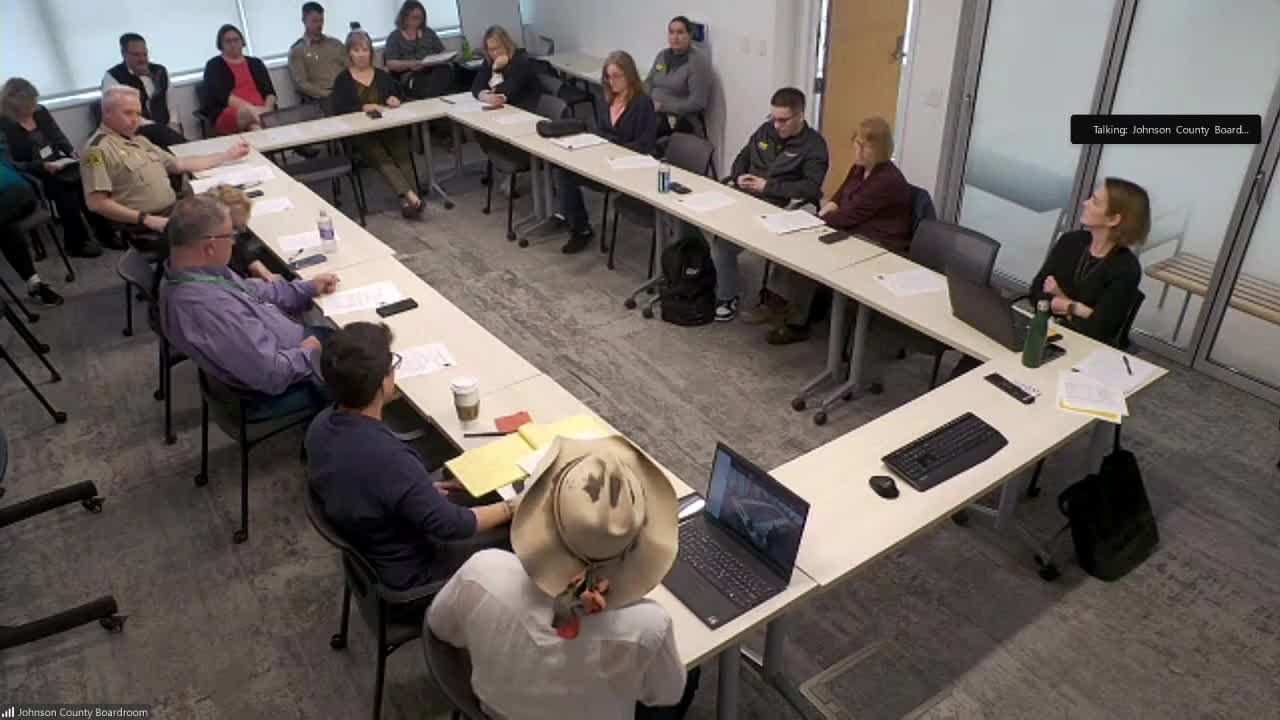
Johnson County Criminal Justice Coordinating Committee members on April 10 summarized lessons from recent site visits to Woodbury and Dallas counties, saying new facilities show how architecture, technology and program space can reduce staff risk and improve care for people in custody.
The committee’s reviews focused on housing and intake design, medical and evidence spaces, courtroom co-location and technology investments such as geothermal systems and body scanners. Committee members said those features reduced logistical burdens, improved safety and allowed more programming and family engagement than the county’s current jail.
Why it matters: committee members said careful design choices could make the county’s facility safer for incarcerated people and staff, improve compliance with Americans with Disabilities Act requirements and expand space for diversion and treatment programs the county hopes to deliver.
Committee members highlighted several specific takeaways from the tours. A visiting delegation noted that some peer counties have courtrooms inside the same building as the jail, which reduces inmate transport and related security and scheduling burdens. Delegates also described separate circulation that keeps public visitors and administrative staff distinct from secure housing and booking areas, and they praised dedicated medical observation spaces and pass-through cells for people who need close monitoring.
Lieutenant Moses, who spoke to the committee about medical features, said the observation cells were “a huge takeaway for me just to see what that could be so that we can get them proper medical care.” Members also described amenities seen on tours — libraries, gym space, virtual visitation setups and separate family-friendly visitation areas — as important for dignity and reintegration planning.
Technology and maintenance were recurring themes. Several members said modern features such as central control centers offer benefits but do not eliminate staffing needs; one person summarized that a central command room may improve oversight but still requires on-the-ground staff to observe multiple floors and units. Delegates also noted that investments such as geothermal HVAC systems and body scanners are costly but regarded by host counties as essential to operations and long-term savings.
Participants contrasted the toured facilities with the county’s current building, citing cramped lobbies, limited ADA-compliant cells and older fixtures that staff said complicate daily operations and pose safety and accessibility problems. Committee members urged the county to compile a lessons-learned list from hosts and to ensure architects and maintenance staff review those details early in design.
Next steps: committee members said the design and feasibility work underway — including a building feasibility study and a public survey (discussed separately) — should incorporate the tours’ operational lessons. No formal action or vote was taken on April 10; discussion will inform later planning and feasibility phases.
Ending: committee members thanked Woodbury and Dallas Counties and the tour hosts for candid briefings and said they will continue to work with the sheriff’s office, architects and community stakeholders as the county develops facility design options.