Get Full Government Meeting Transcripts, Videos, & Alerts Forever!
Get email alerts on the Mental Health Services topic
No spam. Unsubscribe anytime.
Supervisors discuss role as fiscal agent and governance as regional disability services shift
Summary
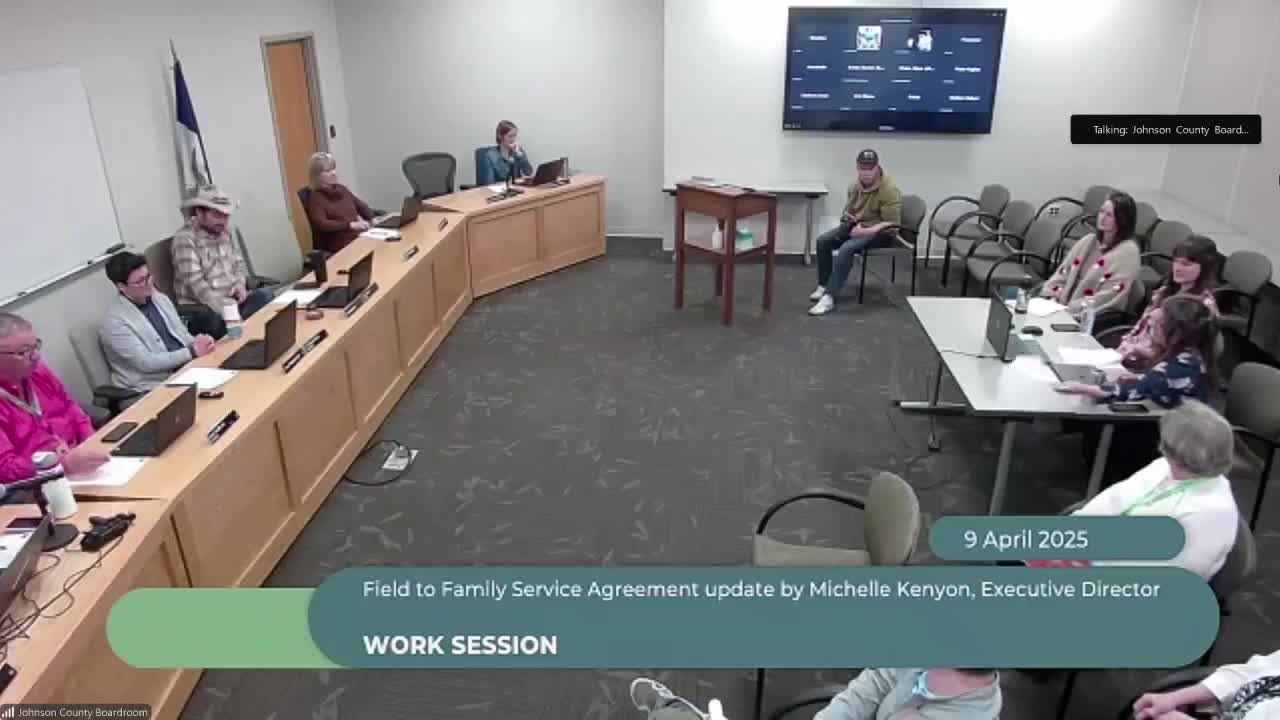
County officials discussed whether Johnson County should remain fiscal agent for the East Central Region’s disability access point and whether to stay party to the region’s 28E shared‑services agreement as state administration of mental‑health and disability services changes.
May (regional staff) briefed the Johnson County Board of Supervisors on a major reorganization of regional mental‑health and disability services that will take effect July 1, and asked whether the county will remain fiscal agent for the East Central Region’s Disability Access Point (DAP).
May told the board that under the new state rules the DAP will focus on information and referral, options counseling, short‑term services and supports and service coordination. ‘‘The list of services for short term services and supports is very small. It includes transportation. It includes rent. It includes respite,’’ May said, and added HHS intends those payments to be short term.
Scope and funding: May said HHS estimates the DAP will spend roughly 10%–15% of the former regional budget on short‑term services; regional staff estimated Johnson County’s payment responsibility as fiscal agent would be about $500,000 for an entire year to cover short‑term supports. By contrast, May said the prior MHDS regional fiscal agent processed about $2 million in claims per month.
Governance and the ‘‘2080’’ agreement: May explained the region’s 28E shared‑services (‘‘twenty‑eighty’’) agreement — the intercounty contract that created the MHDS region — will need amendment because the state contract and the entity’s work are changing. May said the Regional Governing Board voted to allow three counties (Benton, Iowa and Bremer) exemptions to an October deadline for notifying the region of an intent to exit.
Fiscal agent questions and county office input: Debbie Yonker of the auditor’s office told supervisors Johnson County would not want to serve as employer of record (payroll and benefits administration) but indicated the county would be willing to continue as fiscal agent in the narrower role of paying vendor claims if asked. ‘‘If we were to be asked to be an employer of record … We are not interested in doing that at this time,’’ Yonker said. She added that paying vendor claims is a capacity the auditor’s office would be willing to continue.
County attorney perspective and next steps: County Attorney staff member Dave said the policy questions — whether to remain in the 28E and whether to act as fiscal agent — are decisions for the board. He noted the legal framework is “clunky” because the statute underpinning the original county funding was repealed; that said, the 28E agreement can remain if counties choose to amend it. May requested that Johnson County authorize the county attorney’s office to draft amendments to the region’s 28E so counties can consider revised governance language. Supervisors agreed to request a draft amendment and to hold a separate decision on fiscal‑agent status at a later date.
Why it matters: The change shifts payment responsibility for many services from the region to the state and an Administrative Services Organization (ASO), while the DAP will retain responsibility for access and short‑term payments. That raises fiscal and governance questions for county governments that historically operated regional MHDS systems.
Ending: The board directed county staff to draft amendment language for the region’s 28E agreement and agreed to revisit the specific question of acting as fiscal agent after reviewing the proposed language and cost estimates.