Get Full Government Meeting Transcripts, Videos, & Alerts Forever!
Get email alerts on the Child Protection topic
No spam. Unsubscribe anytime.
Morrison County health staff report steady child‑protection caseloads, warn of unfunded mandates and technology limits
Summary
Health and Human Services presented a year‑end child protection report showing 803 reports in 2024, 45 families on ongoing case management, 43 children placed in out‑of‑home care and concerns that new state requirements and antiquated IT will increase county workload and costs.
Katie Knedel, Human Services Supervisor for Morrison County Health and Human Services, told the county board that the department received 803 child‑protection reports in 2024 and opened assessments and case management only when state screening criteria were met.
Knadel said the vast majority of reports are “screened out” and referred for voluntary supports; 45 families required ongoing case management last year and 43 children entered out‑of‑home placement because of maltreatment. She described neglect as the most common allegation, covering lack of supervision, school truancy and medical neglect.
The report outlined the department’s response timelines and staffing: screening contact must occur within either 24 or 120 hours depending on allegation type, and Knedel said the agency met all timeliness requirements in 2024. Child‑protection case managers are advised by the state that a caseload of 10 is considered full; the department currently has about seven full‑time staff devoted to child protection, with a roughly eight‑person team splitting related duties.
Health and Human Services Director Nathan Bertram flagged two operational pressures the county expects to increase workload and costs: expanded active‑effort requirements for Indian Child Welfare Act (ICWA) cases and similar provisions proposed by the Minnesota African American Family Preservation and Child Welfare Disproportionality Act, and new state expectations to assess non‑caregiver trafficking and labor‑trafficking allegations starting in mid‑2025.
Bertram also raised the county’s dependence on an aging state case‑management computer system (SSIS). “When they estimated replacement costs, they put a hundred‑million‑dollar price tag on it,” he said, and noted a legislative proposal that would add a one‑time $40 million appropriation to leverage federal matching funds for a replacement.
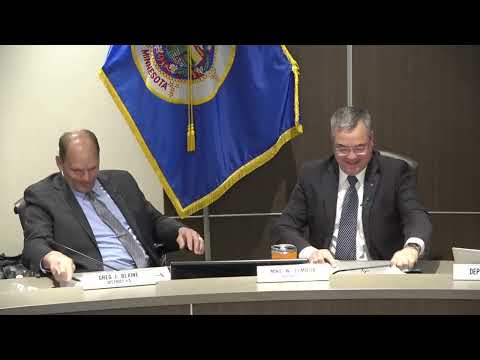
Commissioners pressed staff on several points. Commissioner Blaine asked whether placement decisions are made by the court or by county staff; Knedel said the court generally grants temporary custody but county staff make specific placement decisions and will return to the judge if placement is contested. Blaine also asked whether most out‑of‑home placement costs are covered by county levy dollars; Bertram and Knedel said most placement costs are county‑funded and state dollars for child protection are limited to multiple small pools that do not fully cover expenses.
Knadel described programs that aim to prevent long‑term involvement: a Parent Support Outreach Program (PSOP) for families with young children that opened 24 families into program work groups in 2024; extended foster care and “stay” funding that help youth age out of care; and a preference for relative and kin placements when children enter foster care. She said over half of children placed last year went to a relative or known caregiver.
Knedel noted that case management and placement work requires frequent travel and intensive support for kin caregivers who are not licensed foster parents, creating additional staff time demands. Board members thanked staff for the work and expressed concern that new unfunded state mandates could further strain county resources.
The board did not take a formal action on the report; staff said they will provide additional detail to commissioners as legislative proposals and state implementation timelines become clearer.