Get Full Government Meeting Transcripts, Videos, & Alerts Forever!
Get email alerts on the Property Foreclosure Redemption topic
No spam. Unsubscribe anytime.
Property buyers tell Hubbard County HRA investors redeemed sheriff’s certificate, costing them rehab work
Summary
Dwayne Gayden, owner of Tales Up Dime LLC, told the Hubbard County Housing and Redevelopment Authority that investors redeemed a sheriff’s certificate on 304 Pearl Street after he and his wife rehabbing the property, leaving them with lost improvement costs and hundreds of hours of labor.
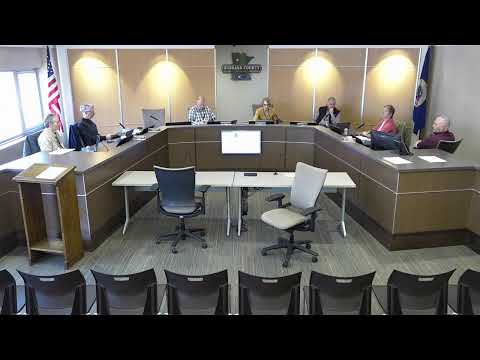
Dwayne Gayden, owner of Tales Up Dime LLC, told the Hubbard County Housing and Redevelopment Authority at a public meeting that he and his wife, Marion Gayden, bought 304 Pearl Street at a sheriff’s sale and then spent more than 300 hours and money rehabilitating the property, only to have investors redeem a junior lien and take the property before the Gaydens closed on a sale.
The Gaydens said they purchased the property at the sheriff’s sale last September and later obtained a certificate of sale through an expedited court process that shortened the usual six-month redemption period to five weeks because the property had been abandoned. “This was a punch in the gut,” Dwayne Gayden said, describing how two investors purchased the junior lien, paid allowable sheriff costs to redeem the certificate the Gaydens held, and then sold the property to a second investor two days before the Gaydens’ last day to file an intent to redeem. He added that the Gaydens expected to recover allowable sheriff costs but lost their asset-improvement expenses and roughly 300 hours of labor.
The Gaydens said they had a purchase agreement with a buyer to close April 1 contingent on clear title and that no one from the HRA contacted them about the HRA’s junior lien during the sheriff’s redemption period. In his remarks, Dwayne Gayden criticized an earlier HRA statement by name: “Mary Thompson made an incorrect statement that anyone could pay the cost and make a redemption on the property. In fact, there was only 2 parties that were eligible to do this,” he said.
HRA board members responded to the Gaydens’ account with expressions of sympathy and said they planned policy changes. One board member said they were “sick about it” and another said the HRA would review procedures to “properly vet these things prior to” taking action. The HRA director acknowledged the situation and said she was sorry it happened.
The Gaydens told the board they intend to pursue legislative change to the state statute governing sheriff’s sale redemption so holders of sheriff’s certificates would have protections when a junior lienholder seeks to sell during an active foreclosure. They asked what procedural changes the HRA would adopt to prevent similar outcomes.
The Gaydens also said they reached a private agreement with the investors after the redemption whereby the investors agreed to sell the property to the buyers with whom the Gaydens had an agreement; the Gaydens said they expect to receive a nominal finder’s fee as part of that arrangement.
Why it matters: The Gaydens’ account raises questions about how the HRA handled its junior lien during a sheriff’s-sale redemption period and whether notice or internal vetting procedures should change. The Gaydens' request for legislative change would require action beyond HRA policy and would involve state statute reform.
Details and clarifications: The Gaydens said the sheriff’s certificate initially provided a six-month redemption window; they secured an expedited five-week redemption via court order because the property was abandoned. They said the HRA chose not to redeem and instead planned to pursue a judgment against the original borrowers after foreclosure. The Gaydens said they were notified by the sheriff’s office only when another junior lienholder filed intent to redeem and that allowable expense claims did not include their asset-improvement costs.
The board did not adopt or vote on any immediate policy changes at the meeting; board members said they would discuss policy revisions. The Gaydens indicated they plan to pursue legislative change to the state statute governing redemption; the meeting record includes the Gaydens’ request and the board’s expressed intent to review procedures but no formal HRA action or directive to pursue legislation.
Ending: The Gaydens said they were “hoping to see a little payment here shortly” as a finder’s fee from the negotiated sale; board members expressed regret and agreed to consider procedural changes but did not announce specific new rules at the meeting.