Get Full Government Meeting Transcripts, Videos, & Alerts Forever!
Get email alerts on the Economic Development topic
No spam. Unsubscribe anytime.
South32 outlines Hermosa mine timeline, local hiring and water treatment plans in Nogales briefing
Summary
South32 representatives updated the Nogales City Council on the Hermosa zinc and manganese project, detailing a multibillion-dollar investment, workforce and training commitments for Santa Cruz County, a planned remote operating center in Nogales and current water-treatment work permitted by Arizona regulators.
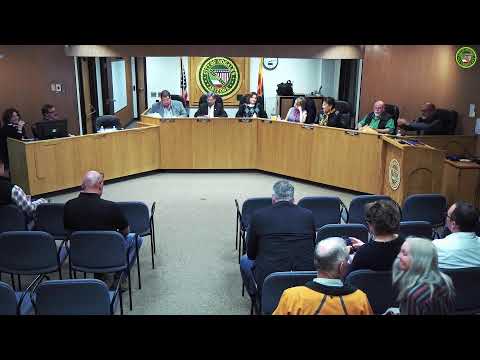
South32 representative Pat Reisner told the Nogales City Council on March 5 that the Hermosa project — a combined zinc and manganese development seven miles south of Patagonia — is moving from permitting and construction into expanded site work and workforce development. Reisner said the company has committed to a multibillion-dollar investment and is planning a remote operating center in Nogales to host many facility operators.
Reisner said, “we made a commitment to invest $2,200,000,000 over the next 3 years to build the project and get the Zinc deposit into production,” and added the company had already invested about $400,000,000. He described the site as “the only advanced mine development project in The United States that will produce 2 critical minerals off the federal government's critical minerals list.”
The update matters to Nogales officials because South32 said the operation will create hundreds of construction jobs in the near term and between 800 and 900 direct permanent positions at full production, with an additional roughly 1,500 indirect and induced jobs across the county and state. “We have committed to at least 80% of our long term permanent workforce will be existing residents of Santa Cruz County,” Reisner said, describing planned training partnerships with the Santa Cruz Center and Pima Community College to prepare local workers.
Reisner outlined the on-site schedule: shaft sinking and a decline to access underground deposits that will continue into next year, surface facilities construction beginning in April, and an expected start of zinc production in the company’s stated timeframe (company slides and comments referenced production in the latter half of the decade). He said federal permitting remains underway; the U.S. Forest Service draft environmental impact statement (EIS) was expected in May with public meetings later that month.
Water and environmental measures drew several council questions. Reisner said an existing, permitted water-treatment plant is treating groundwater that naturally contains elevated metals and sulfates, and returning treated water to Harshaw Creek under Arizona Department of Environmental Quality (ADEQ) permits. “We treat it to an Arizona surface water quality standard,” he said, and added the current discharge rate is about one-third of the permitted limit. He also said the company is studying targeted aquifer recharge and has proposed rapid infiltration basins in the pending federal permit to keep treated water higher in the Patagonia Mountains rather than routing it downstream.
Council members asked about tax and economic timing. Reisner compared South32’s projected property tax contribution — about $26 million annually, he said — to current county property tax receipts of roughly $14 million a year, and said those collections would begin after the mine reached production. When Councilman Chris Doyle asked “how long down the road before that would be generated,” Reisner replied the revenue begins at first production and that the council should expect initial collections after production ramps up (company comments indicated early production and first tax impacts in the mid-to-late 2020s).
On workforce, Reisner said the remote operating center — branded “Centro” in company materials — will be located in Nogales and house more than 200 staff who will remotely operate or monitor autonomous underground equipment. “With the technology we have, we can train someone with no mining experience in 18 months to do the roles,” he said, describing electrical and remote-operations training to be delivered locally.
Reisner also described the company’s community investments: a Hermosa Community Fund that has provided more than $1 million to 21 local nonprofits, STEM programs for local schools, and a formal community-protection-and-benefits (good-neighbor) agreement negotiation involving the city, county, the town of Patagonia and South32. He encouraged residents to attend listening sessions tied to the federal EIS and the agreement negotiations.
Council members asked for follow-up briefings on specific topics including water quality and the community-protection agreement. Reisner offered to provide more frequent updates and topic-focused briefings as the project progresses.
Pat Reisner is the primary source for the technical and schedule details in this report; council members and city staff clarified local concerns about taxes, water, traffic and training during the public Q&A.
Reisner concluded by inviting the public to monthly site tours and pointing to a company jobs page for openings and training information.