Get Full Government Meeting Transcripts, Videos, & Alerts Forever!
Get email alerts on the Urban Forestry topic
No spam. Unsubscribe anytime.
Committee clears $97,470 contract for phased city tree inventory; additional work contingent on grant funding
Summary
The Finance Committee approved a contract with Davie Resource Group Inc. to perform a GIS-based inventory of trees in the city right of way (phases 1–2, $97,470). Staff said additional phases could follow, funded in part by an anticipated $150,000 in grant awards from the West Virginia Division of Forestry delivered in $50,000 tranches.
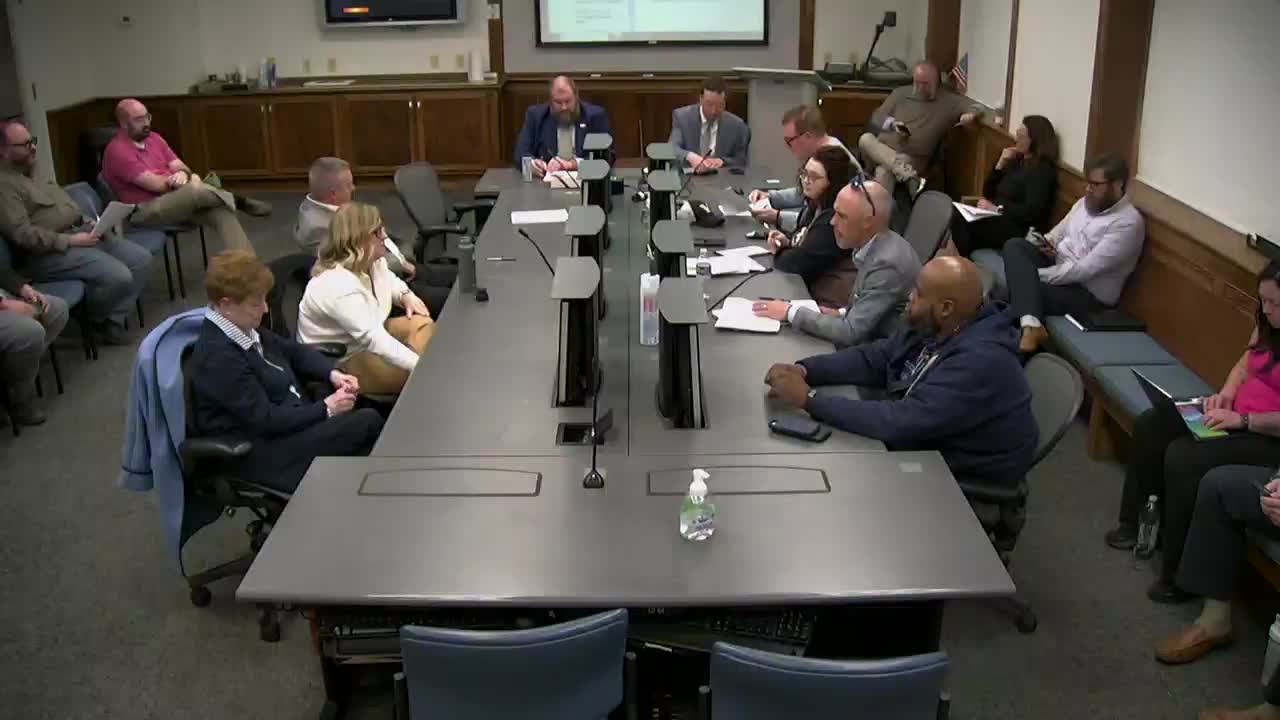
The City of Charleston Finance Committee on April 7 authorized a contract with Davie Resource Group Incorporated to conduct the first two phases of a city right-of-way tree inventory, approving an initial fee of $97,470 and authorizing the city to proceed up to an additional $150,000 for later phases if grant funds are received.
The inventory will document street- and right-of-way trees citywide in phases, beginning with most of Kanawha City, and will create a searchable GIS database containing species, photos, condition assessments and location data. Staff and members of the Municipal Beautification Commission said the database will support risk management, maintenance planning and future planting programs; staff also said the city will own the data and can export it at the end of a three-year software subscription.
Why it matters City officials said information from the inventory will help identify diseased or hazardous trees that require prompt removal, prioritize maintenance, and guide where new trees should be planted. Several council members urged attention to trees on state-owned roads and corridor routes and asked how the city will use grant funds and existing local funding for tree planting and urgent removals.
What staff and commissioners said Mister Michaud described the procurement: the city received multiple proposals, shortlisted three and selected Davie Resource Group (the high-scoring vendor) after interviews. He told the committee that the first two phases are priced at $97,470; a third phase will be priced after staff evaluates what remains after phase two. He said the city anticipates up to $150,000 in grant support from the West Virginia Division of Forestry, with awards arriving in $50,000 tranches and the first grant agreement scheduled to be signed pending council approval.
Brenda Craig Ellis and Anna Forbes of the Municipal Beautification Commission attended and answered questions from council members. Council members asked whether the inventory includes private-property trees; staff said the inventory will cover trees located within the city right of way and trees whose trunks or trunks' bases are within the right of way — trees fully on private property will generally not be inventoried. Committee members discussed whether trees along state-owned routes such as West Washington Street or Oakwood Road would be included; staff said the inventory will focus on city-controlled right-of-way and that work on state roads requires authorization from the West Virginia Department of Highways.
Council members asked how the city will act on hazardous trees identified by the inventory. Staff said immediate safety hazards would be prioritized for removal and that the city will assess which removals it can handle in-house versus contracting out; preliminary discussions are underway about future budget allocations to address removals identified by the inventory. Staff also said the deliverables will be handed to the city grounds staff and that a staff member will receive training to manage and query the database.
Several members raised questions about the software subscription. Staff said the three-year subscription fee is included in the vendor proposal, but the city can export the data and retain it in its own GIS systems after the subscription period; the Information Systems Director (Adam Confort) has indicated the city could host the data and avoid ongoing subscription costs if desired.
Votes and next steps The committee moved and approved Resolution 25-32 by voice vote; transcript does not show a roll-call tally. Staff said the contract would be signed upon council approval and that the first grant tranche agreement with the West Virginia Division of Forestry would also be signed assuming approval. Staff and commission members said they will coordinate with state agencies for any work touching state-owned right of way, and that future phases will be scoped and priced after the initial two phases are complete.
Clarifying details from the meeting - Initial fee for phases 1–2: $97,470 (stated by staff). - Anticipated additional grant-funded work: up to $150,000 in total, awarded in $50,000 tranches by the West Virginia Division of Forestry; first tranche pending execution of a grant agreement. - Geographic scope: city right-of-way trees only (private-property trees generally excluded unless trunks sit within the right-of-way); first phase includes much of Kanawha City. - Data ownership: city will own the inventory data and may export it into its GIS; a three-year subscription to vendor software was discussed with a cited three-year fee (approx. $3,600) but staff said the city can download data and host it internally.
Why some council members pressed for broader scope Several council members pressed staff to consider state-owned corridors where tree failures could pose immediate hazards; staff said the city can request cooperation from the West Virginia Department of Highways but cannot inventory or remediate state-owned trees without state authorization. Council members also asked whether grant funds could be applied to removal or planting in specific corridors; staff said some grant funds may be eligible for targeted removal and planting assistance but that amounts were limited and subject to grant terms.
Bottom line The Finance Committee approved the contract to begin a multi-phase, GIS-based inventory of city right-of-way trees to improve risk management, maintenance planning and future tree-planting strategy. The work will proceed in phases, with further phases and funding contingent on grant awards and future budget decisions.