Get Full Government Meeting Transcripts, Videos, & Alerts Forever!
Get email alerts on the Transportation Policy topic
No spam. Unsubscribe anytime.
Committee workshop reviews Safe Streets/transit goals; staff asked to develop a six‑month baseline dashboard
Summary
City staff and movement representatives briefed the committee on targets in a transportation resolution that aims to cut transportation greenhouse gas emissions and increase walking, biking and transit. Staff agreed to develop baseline data and a public dashboard and to report back in about six months.
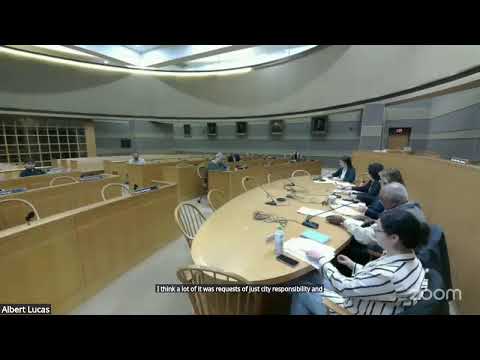
City staff and advocates briefed the City Services and Environmental Policy Committee on April 3 on a transportation resolution that frames New Haven’s work to increase walking, biking and transit and reduce transportation greenhouse gas emissions.
The workshop focused on how the city will measure progress toward a target included in the draft resolution: a reduction in transportation greenhouse gas emissions of 25 percent by 2030 (the resolution’s stated target). City staff and advocates said current challenges include a lack of consistent citywide baseline data and the need for more coordinated transportation demand management.
During the workshop, public commenter Bria Sarkar asked specific questions about staffing, employer engagement and federal and state grants to support implementation. City transportation staff said the city has programs in development, including plans for bus rapid transit, microtransit pilots and electric vehicle programs. Staff emphasized the need for a citywide baseline to track reductions over time and agreed to work on a dashboard to show “baseline conditions,” useable metrics and a timeline to report back to the committee.
Committee members and staff discussed partnerships with regional and state transit providers, university “U‑Pass” programs that offer students unlimited transit access, and possible funding sources including federal grants and municipal capital allocations. Staff reported a $2.9 million federal transportation alternative grant and other state funding already committed to related projects; they said that federal funds could be used as match for linked capital projects.
Key directions from the workshop included a staff commitment to prepare within about six months: a baseline greenhouse gas and mode‑share dashboard, details of staffing needs for transportation initiatives, and outreach plans to employers and universities. The committee asked staff to return with clearer written answers on the resolution’s implementation path and the specific steps the city will take to accelerate mode shift.
Committee members praised the workshop as an opportunity to align multiple departments and urged staff to keep the committee informed about grant opportunities and progress on implementation. The meeting record shows no formal vote on the resolution at the workshop; it was part of a continued conversation and follow-up was requested.