Get Full Government Meeting Transcripts, Videos, & Alerts Forever!
Get email alerts on the Food Assistance topic
No spam. Unsubscribe anytime.
Community groups urge New Haven to add $993,000 for food-assistance programs amid federal cuts
Summary
Advocates including the Coordinated Food Assistance Network and local pantry operators asked the Finance Committee during a public hearing to add $993,000 to the mayor’s proposed budget to shore up local food pantries and school break grocery distribution as federal emergency food aid faces cuts.
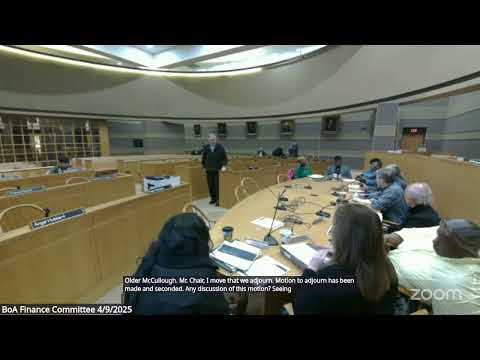
Community advocates asked the New Haven Finance Committee on April 9 to add $993,000 to the city budget for existing food-assistance programs, citing a steep local rise in hunger and recent federal funding cuts.
At a public hearing, Tamika (project coordinator, CARE; member, CBAM) said local pantries trained in the SWAP (Supporting Wellness at Pantries) program struggle to source healthy food and asked the committee for direct funding to help them buy nutritious items. “We need funding for food here in New Haven,” Tamika said.
Why it matters: Speakers said food insecurity has risen sharply and local providers rely heavily on federal distributions that advocates warned are being cut. Alicia Santilli, co-chair of the New Haven Coordinated Food Assistance Network (CFAN), told the committee FoodShare and USDA emergency programs supply a large share of pantry food and urged a city contribution to avoid service disruptions that would affect thousands of residents.
CFAN’s request and local numbers CFAN asked that the city allocate $993,000 to existing food-assistance programs not reflected in the proposed FY2026 budget. Alicia Santilli said CFAN represents more than 40 food programs across New Haven and noted that food insecurity rose from about 15% in 2021 to 27% in 2024. “We are asking the city of New Haven to step out and do your part as well,” Santilli said.
Steve Marlin, executive director of Downtown Meal and Soup Kitchen and co-chair of CFAN, emphasized the local system’s reliance on Connecticut FoodShare and federal USDA assistance. Marlin said recent federal announcements cut roughly $500 million from a key emergency food program and called that “a massive funding gap” that will require local and state action. He asked the city to begin by funding two priorities: a healthy food procurement program to let pantries buy wholesale healthy foods and a School Break Groceries program to extend meal support when school is out.
School Break Groceries Susan Harris, a member of Witnesses to Hunger and CFAN, asked the committee to fund a School Break Groceries program at $285,000 per year. Harris said the program currently assembles and distributes roughly 1,200 grocery bags during school vacations for students who otherwise rely on school meals. “For some children, the only meals they receive is during school,” Harris said, asking how the board will help feed students during breaks.
Other testimony David Paul Firestone of Fellowship Place and other speakers described limited institutional budgets for nutrition at community organizations and the strain of demand. Testimony noted that most small pantries operate with volunteers, depend on shelf-stable donations and lack funds to purchase fresh or nutritious items at scale.
The public hearing on the mayor’s proposed budget closed after the testimony; the committee announced a final public hearing on April 30 for additional testimony.
Ending: The committee did not act on the advocates’ funding request at the meeting; the hearing was part of the review process for the mayor’s FY2026 proposed budget and allowed the committee to gather public input ahead of later deliberations.