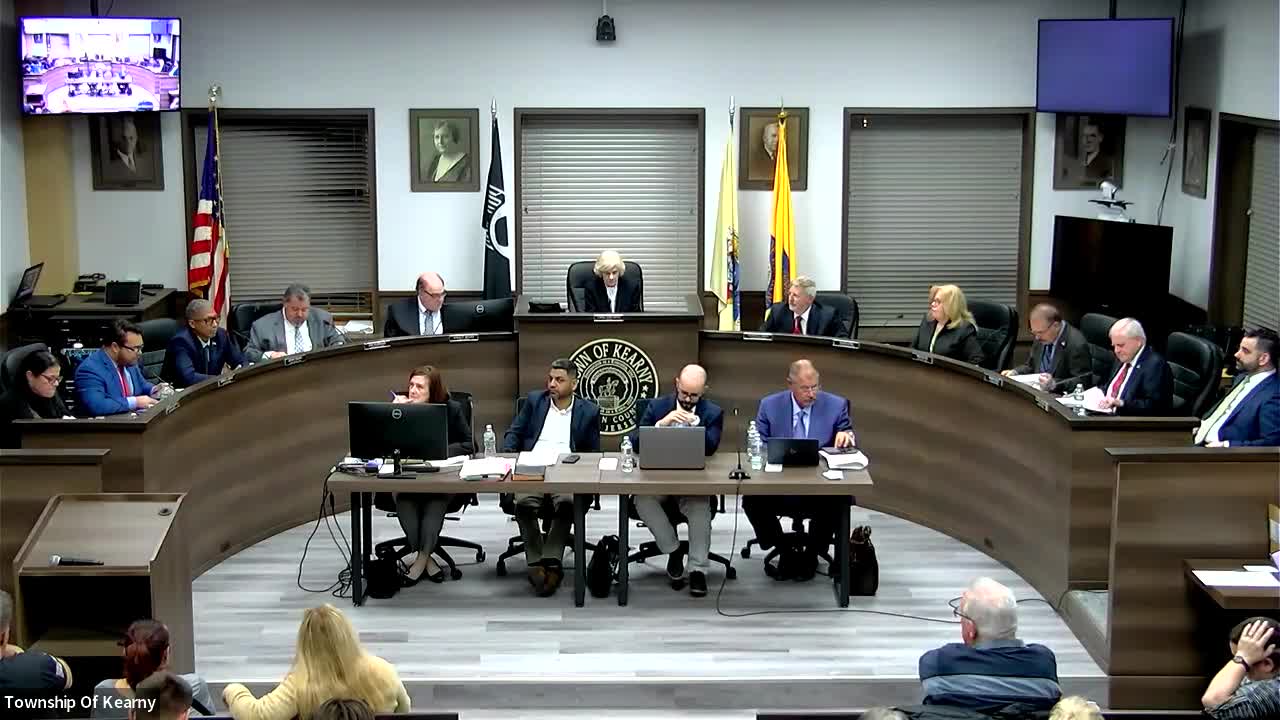
Kearney council adopts resident permit parking pilot for Sanford Avenue area after heated public hearing
Loading...
Summary
The Town of Kearney adopted ordinance 25-0-12 to establish resident permit parking on Sanford Avenue and nearby blocks as a six‑month pilot. The measure drew extensive public comment about renters, illegal apartments and visitor parking before passing on a council vote.
The Town of Kearney council on Monday adopted ordinance 25-0-12 to add section 7-32 to the town code, establishing a resident permit parking pilot affecting Sanford Avenue, Radley Street and portions of Ogden Avenue and adjacent blocks.
Councilman George Zapata moved adoption of the ordinance after a public hearing; the council approved the measure by roll-call vote. The ordinance designates the entire length of Sanford Avenue for permit parking between 7 p.m. and 7 a.m., excluding a 21-space paved area on the east side of Sanford north of Harrison Avenue; that paved area will be offered as a separately permitted set of guaranteed spaces (permit/paid) with remaining spaces held as resident parking until claimed.
Supporters said the restrictions respond to out-of-town parking pressure and long-term, nightly congestion. “We came together, and we showed that if we do things together, things get done,” said Pablo Martinez, a Sanford Avenue resident, thanking council members and volunteers who organized the neighborhood. Several residents described repeated difficulty finding evening parking and an increase in out-of-town and adjacent‑city vehicles using Sanford-area streets.
Opponents and other residents urged changes before adoption. Longtime activist Gary Shetlick told the council the ordinance as written risks creating a “selective parking tax” on renters and working-class families and recommended removing the small resident administrative fee and adding stronger vetting to prevent illegal apartments from receiving permits. Shetlick also urged a ParkMobile- or demand‑based visitor system so visitors, not residents, fund paid parking in high-demand areas.
Council members and staff said the ordinance is intended as a pilot and will be reevaluated. Councilman Zapata said the initial enrollment and a six‑month evaluation period are designed to measure whether permit rules reduce nonresident parking and improve quality of life. Councilwoman DeCastro and others described door-to-door outreach in the Second Ward to verify resident interest; the clerk reported 16 applications submitted in the lottery for the 21 paved spaces at the time of the meeting.
Police Chief and staff told the council enforcement will rely on distinctive permit numbering and usual parking enforcement tools; council members said remaining administrative details (coloring/numbering and whether unsold paved spots are temporarily available to permit holders) will be handled administratively by the mayor’s office, business administrator and police.
The council also heard several questions about scope: whether the pilot would expand townwide, how visitor access would work, and how the town would prevent fraudulent use of placards tied to persons not present in vehicles. Council members and staff responded that other neighborhoods will be evaluated separately and that the comprehensive zoning update (postponed to May) will address illegal apartment and broader supply issues.
The ordinance takes effect according to the calendar dates printed in the adopted text; implementation steps — permit issuance, enforcement signage and ParkMobile integration for visitor rules — were described as administrative actions to follow adoption.
Votes at a glance: The council adopted ordinance 25-0-12 by roll-call vote (majority yes). Specific procedural motions (introduction, public hearing opening) and the final adoption were recorded in the meeting minutes.