Get AI Briefings, Transcripts & Alerts on Local & National Government Meetings — Forever.
Council approves Arizona DPS border grant to buy license‑plate readers, drone and K‑9
Loading...
Summary
Sierra Vista City Council voted unanimously to accept a $115,417.89 Arizona Department of Public Safety local border support grant to buy 16 license‑plate‑reader cameras (with first‑year data management), a 3D crime‑scene drone and a replacement patrol/narcotics K‑9.
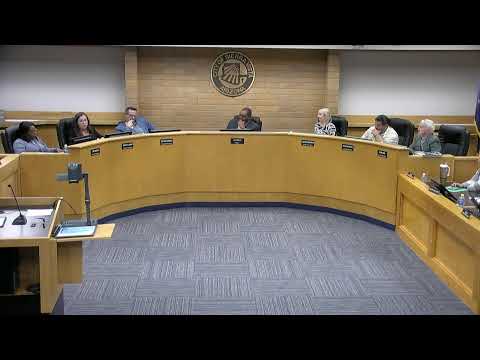
The Sierra Vista City Council on Feb. 27 approved Resolution 2025-017 to accept $115,417.89 from the Arizona Department of Public Safety under the local border support grant program to purchase license‑plate readers (LPRs), a drone and a K‑9.
Police Chief Heizer told the council the package will pay for equipment plus the first year of data management and that ongoing data‑management costs for the LPR system are expected to be about $40,000 a year. “We plan to pursue this grant every year, to continue that cost. And that cost is about 40,000 a year,” Heizer said. He added the initial procurement covers 16 cameras and the first year of cloud‑based storage and processing.
Heizer described intended uses for the cameras and the drone and said the department will develop a written policy before deployment. “These LPRs are not gonna be used for civil traffic enforcement…This is not that,” Heizer said, adding LPRs can be programmed to search for stolen vehicles, to follow a vehicle timeline and to match vehicle “fingerprints” (make, model, color, identifying marks) when a license plate is not known. On storage he confirmed the system the city is budgeting for retains data for 30 days.
The drone purchase is for a capable platform the department said will support crime‑scene diagramming and 3‑D accident reconstruction. The K‑9 would replace a medically retired canine and include handler training; the dog would be certified for patrol and narcotics detection.
Mayor Pro Tem Carolyn Umfrey and other council members asked for clarity on recurring costs and public accessibility of policies. Heizer said the department will consult CALEA‑accredited agencies and publish its LPR policy for public review. He said the city will assess effectiveness in the first year and continue to seek grant funding to cover recurring costs.
The council voted “all those in favor” with no opposition; the resolution passed unanimously.
The city will proceed to procurement and to drafting a public policy for LPR operation, data retention and access before cameras are installed.