
Apache Junction approves $815,978 Pure Water demonstration trailer to pilot direct potable reuse and public outreach
Get AI-powered insights, summaries, and transcripts
Subscribe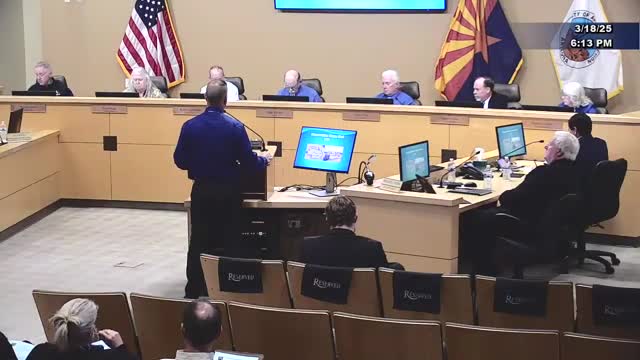
Summary
The board approved a construction agreement not to exceed $815,977.77 to build a mobile Pure Water demonstration trailer (pilot direct potable reuse) to educate the public and test treatment processes; staff said the pilot will produce 5–10 gallons per minute and is funded from water resource acquisition fees.
The Apache Junction Water District on March 18 voted unanimously to approve a construction agreement for a mobile Pure Water demonstration trailer, authorizing a not-to-exceed contract amount of $815,977.77 with Garner's Company Inc. (using a portion of the City of Scottsdale job order contract). The trailer is intended as a pilot demonstration of direct potable reuse treatment processes and as an educational outreach tool.
District staff said Arizona Department of Environmental Quality (ADEQ) has established a framework for direct potable reuse and that the trailer will demonstrate treatment processes at a small scale to regulators and the public. "The technology's there. We can do it. It's convincing the public that you can actually drink it," said Mike (district staff), explaining the trailer will let the public walk through the treatment train and observe treatment steps.
The pilot trailer is described as a small, mobile unit that will treat effluent to potable standards for demonstration and outreach; staff estimated the unit will run about 5 to 10 gallons per minute. The district intends to use modular equipment so technologies can be swapped as needed; staff discussed microfiltration, reverse osmosis (and the brine-disposal challenges RO can create) and activated carbon for removing persistent contaminants, including the so-called "forever chemicals."
Board members emphasized the educational purpose and public perception challenge. "I think this is the way to bring the public in and let them see how this is done and that it is safe," said Board Member Soler during the discussion, noting similar demonstrations and brewing events in other jurisdictions where treated water was used to make beer samples to help reduce the "yuck" factor.
Cost, schedule and funding: the board motion cited a base construction amount of $741,798 plus a 10% contingency of $74,179.80 for a total not-to-exceed price of $815,977.77. Staff estimated a roughly one-year build schedule and said the contract will be paid from the district's water resource acquisition fees — a fund collected from developers to acquire future water supplies — not from current rate-payer operating revenues.
Why it matters: staff framed the trailer as a drought-contingency and long-term planning tool. If CAP or other external supplies were reduced in the future, direct potable reuse and aquifer storage would provide an additional locally controlled source. Staff repeatedly told the board that the district is not currently out of water for existing customers but that the trailer is part of planning for continued growth and resilience.
Technical notes and next steps: the pilot unit is not a treatment plant and is intended for demonstration, training and limited pilot testing to support ADEQ approval pathways. Staff said equipment lifespans are roughly 10–15 years for the installed treatment components and emphasized the district will adapt equipment selections over time as technologies evolve.
Board action and vote: Board Member Soler moved to approve the construction agreement with Garner's Company Inc.; the motion passed unanimously on roll call (yes votes from Vice Chairperson Schroeder, Board Members Nusser, Heck, Soler, Johnson, Cross and Chairperson Wilson).
The district said the trailer will be used at public events such as community festivals and water-industry conferences to demonstrate treatment steps, collect operational data and build public familiarity with direct potable reuse.