Get Full Government Meeting Transcripts, Videos, & Alerts Forever!
Get email alerts on the Public Safety topic
No spam. Unsubscribe anytime.
Council hears wildfire risk, water-system and fire-department readiness; enforcement and vegetation control raised
Summary
The mayor and council discussed wildfire risk, Tucson Water’s firefighting capacity and Tucson Fire Department readiness and urged stepped-up enforcement of illegal fireworks, vegetation management and neighborhood preparedness.
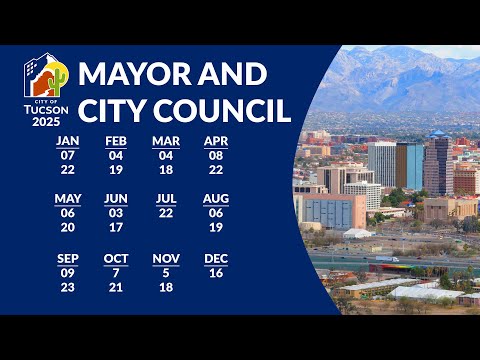
Council members on Feb. 19 held a broad discussion on wildfire preparedness and mitigation following recent severe fires in Southern California. The study-session item was requested by Council Member Lane (Council Member Lee) and featured briefings from Tucson Water and the Tucson Fire Department about infrastructure, response capacity and community measures.
Water director John Kamik summarized how Tucson’s groundwater-based system was originally built, in part, for fire protection. Tucson Water staff highlighted the system’s storage capacity—more than 300 million gallons across tanks and reservoirs—and the network of pumps and pressure zones designed to meet four‑hour minimum fire flows (the presentation cited 1,500 gpm for residential and up to 3,000 gpm for some commercial structures). Kamik said the city performs regular hydrant maintenance and manages more than 22,500 hydrants and dozens of production sources that can be called on to support a large-scale response.
Fire Chief emphasized that Tucson Fire has 21 stations with roughly 645 uniformed personnel and a full emergency‑medical-services workload: about 85% of call volume is medical. The department maintains a small wildland-capable team (about 10 cross‑trained members) and regularly cooperates with Arizona Department of Forestry and Fire Management and mutual‑aid partners. Chief described recent mutual‑aid deployments to California.
Council discussion focused on practical, near-term measures including stricter enforcement of illegal fireworks (city code prohibits devices that rise above a few feet), public education about defensible space around structures, and better coordination of brush and bulky‑item pickup with outreach and removal to reduce fuel near housing. Council members also asked staff to pursue two code- and policy-focused items: (1) a forthcoming report to mayor and council to update city ordinances (including wash activity and warming‑fire rules) in light of state Proposition 312 direction; and (2) outreach and pilot work on Firewise USA neighborhood certification, which Council Member Lee volunteered to lead as an initial neighborhood demonstration.
Council Member Doll additionally called for the city to consider alternatives to traditional fireworks displays (laser or drone shows discussed) and urged more aggressive invasive‑grass control on city‑owned lands such as buffelgrass abatement programs and coordination with the Sonoran Desert Museum and volunteer groups.
What’s next: staff will return with ordinance cleanup and implementation items (timing referenced for early March) and will continue interagency coordination with Pima County and state forestry for regional mitigation and communication.