Get Full Government Meeting Transcripts, Videos, & Alerts Forever!
Get email alerts on the City Budget topic
No spam. Unsubscribe anytime.
Tucson managers present FY26 budget update with $17.8 million programmed for compensation; $2.1 billion CIP outlined
Summary
City staff told the mayor and council they are moving toward a balanced FY26 budget, with $17.8 million proposed for pay adjustments and a five‑year capital improvement plan with $2.1 billion of projects, while outside funding and program requests remain uncertain.
City Manager Michael Tamir and finance staff updated the mayor and council on progress toward a balanced fiscal year 2026 budget, highlighting $17.8 million currently programmed to address employee compensation and a preliminary five‑year capital improvement program totaling about $2.1 billion.
The compensation package in the city's financial plan covers three components: in‑range pay placement (moving existing employees to appropriate positions in pay ranges based on experience and qualifications), market adjustments to reposition entire pay ranges, and a broadly available pay progression. Tamir and CFO Anna Rosenberry said some increases would be recommended to take effect July 1, while market adjustments would likely be implemented mechanically in October.
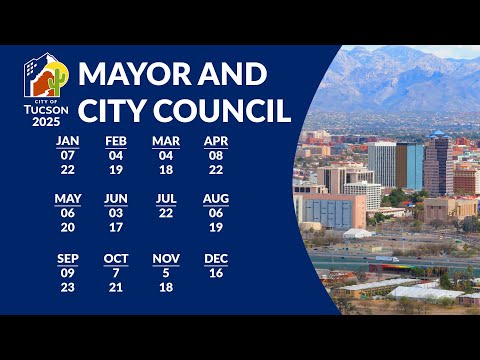
Rosenberry told council members the administration expects to present a comprehensive compensation update at an April 8 study session, with a recommended compensation plan from the HR director at the same meeting. She said the $17.8 million figure is “about the size of our deficit for right now” and that some adjustments will be phased across FY26 and FY27 as staff confirm employee background data.
The presentation also included the city’s proposed five‑year capital improvement program (FY26–30). The plan lists roughly $683.3 million in proposed FY26 spending and a total of about $2.1 billion across five years. Major projects called out in the March memo and in staff remarks include: northwest well treatment to return three wells to service (PFAS and 1,4‑dioxane treatment; estimated project cost cited at about $33.5 million), the Tucson Airport remediation program (estimated at roughly $27 million), water utility investments, the “Better Streets, Better Streets, Safer Streets” neighborhood street safety program tied to Prop 411, and parks projects funded by Prop 407 such as Morris K. Udall Park and the Robert A. Price Senior Park. Public safety facilities in the CIP include a South Side joint police and fire complex and the East End Annex.
Tamir cautioned council that some capital figures represent what is “known and approved” today and said departments are preparing longer‑term plans; he also noted rising project costs (he cited roughly 40% escalation in project prices for water capital over five years). Tamir said the failure of Prop 414 (a city ballot measure discussed separately) will not be catastrophic for FY26 but may widen the FY27 structural deficit and that staff are assembling options to reduce future cliffs in service funding.
Outside agency funding and ARPA community partnership dollars were also reviewed. The city reported it awarded $28 million in ARPA‑sourced community partnership funding to nearly 150 projects in three rounds; that round funding was allocated prior to FY26 and will not provide new base funding going into FY26. The city said the Pima Early Education program (referred to as PEEP) had $750,000 budgeted in FY25 and the county had asked for $778,000 in the coming year; the city said that request was “uncertain” as the recommended budget was not complete. The nonprofit Community Home Repair Project of Arizona (CHERPA) currently receives $400,000 from the water utility and $90,000 from housing allocations; staff said the water utility portion is expected to remain flat while the general fund portion is under review in balancing the FY26 budget and will be recommended April 22.
Tamir reiterated the timetable for the budget: an April 8 study session focused on compensation and a recommended compensation plan, then a near‑final recommended budget on April 22 and further decisions through the usual adoption process. He told council the administration will continue to pursue alternate funding sources for capital, re‑examine which programs can be moved into the base budget, and prepare follow‑up materials showing implementation and timing for compensation, market adjustments and the phased approach to in‑range placement.
Ending: Staff said they will return on April 8 with a compensation roadmap and that additional CIP details and final FY26 recommendations would come in April and late May as the financial plan coalesces.