Get Full Government Meeting Transcripts, Videos, & Alerts Forever!
Get email alerts on the Budget Review topic
No spam. Unsubscribe anytime.
Clifton council continues budget review; officials cite $6.8M gap and raise questions on salaries, police hiring, sewer delinquencies and fleet leases
Summary
At a special meeting focused on the 2025 budget, administration reported roughly $1.1–1.2 million in salary adjustments and outlined options for hiring 14 police positions; councilors pressed staff for clearer salary lines, sewer collection figures, trust-account uses and an audit of vehicle leasing practices.
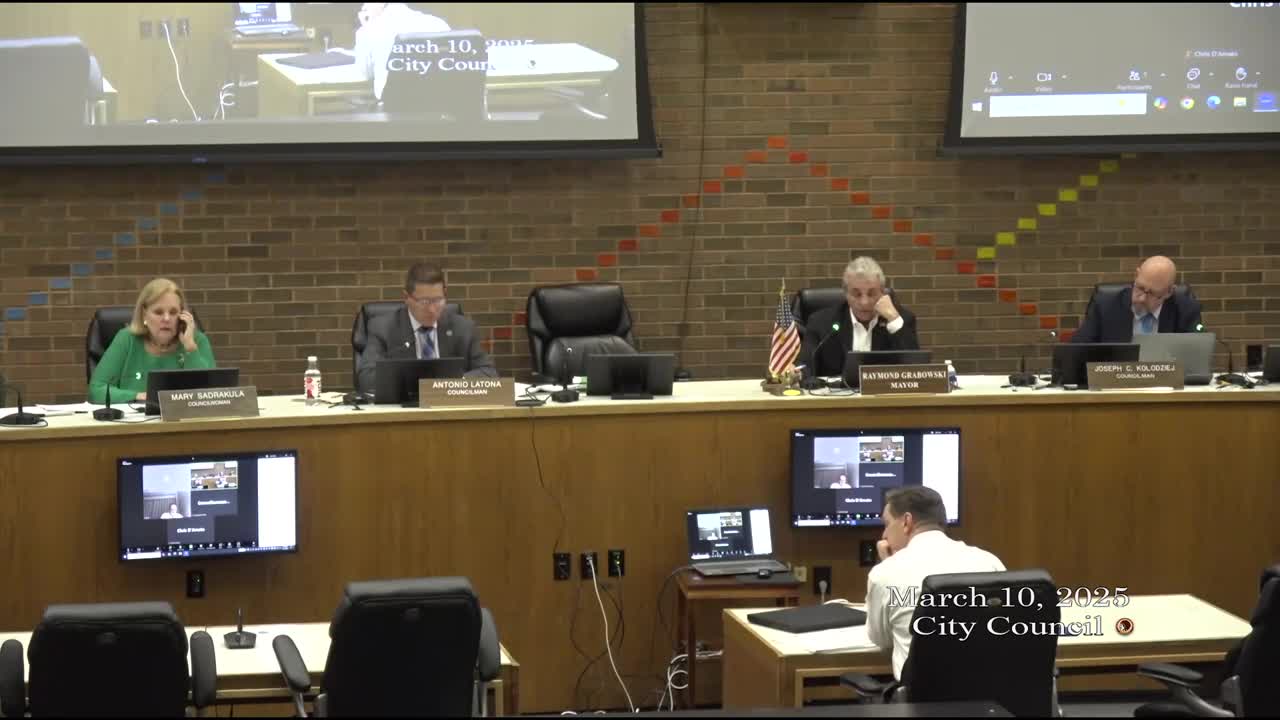
City of Clifton officials continued a line-by-line review of the 2025 budget at a special council meeting, where members pressed administration for clearer salary totals and asked for reconciliations of multiple trust and revenue accounts.
Finance staff said a recent recalculation of the city’s payroll lines produced roughly $1.1–$1.2 million in credits. "I use the black book because the black book shows all of the salaries, including stipends and everything else that the, longevity for some of the employees," said Joe Kunz, who described the step-by-step reconciliation with department tables of organization and payroll records. Kunz told the council that updating position counts and raises reduced previously reported totals.
Council members discussed policing and the budget gap at length. Administration reported there are 18 open police positions; the budget includes a proposal to hire 14 of them in phased groups tied to academy dates. Staff presented three timing options: not hiring the 14 (about $600,000 in salary savings), hiring and sending recruits to a September academy (about $450,000 in savings), or hiring to get recruits into an earlier academy in May (about $300,000–$350,000 in savings). Finance staff said they modeled the budget assuming hires by May, producing the smaller breakage estimate. Council members repeatedly asked why salary lines changed between versions of the budget and requested a single total-salary line that reconciles the new figures with the prior draft.
Councilors also pursued details on fire-department pay and projected breakage: staff reported a fire-chief salary range with a minimum near $166,005.80 and a maximum listed at about $246,000; deputy fire chiefs were described as falling in the roughly $200,000–$220,000 range depending on contract classifications. Officials said the acting fire chief will retire April 1 and that administration plans to promote two deputies and elevate one deputy to fire chief this week; councilors asked staff to show the resulting breakage and to confirm how the promotions are budgeted.
Sewer delinquencies were raised as a continuing concern. Finance staff reported year-end sewer delinquencies at $1,058,905 (as of Dec. 31), falling to $895,608 and later to about $832,000 on subsequent reconciliations. Staff explained that unpaid sewer fees that remain uncollected roll into the tax sale process if unpaid the following year; the tax- sale process, staff said, typically generates interest and often yields payment before the sale. The council asked whether delinquent notices are sent to mortgage companies as well as homeowners; staff said the sewer-billing process normally notifies the homeowner and that mortgage companies are notified when properties go to tax sale.
Councilors sought explanations for several trust and special-fund items. Members questioned how proceeds from the city’s hundredth-anniversary events and civic-events trust were used to cover a larger fireworks and picnic cost in 2024 and asked for clear transaction history and balances. Staff said donations and food-stand revenues offset part of the cost and that some remaining funds were applied from existing event trust balances.
Members raised auditing questions about police extra-duty and vehicle-fee revenues. One council member noted that the extra-duty revenue analysis on hand did not reconcile with the current fund revenue lines and asked finance to reconcile administrative fees and vehicle fees collected versus amounts shown in the budget.
A prolonged discussion focused on the city’s fleet-leasing program. Council members said they previously directed administration to reduce leased vehicles but found the fleet count increased year-over-year. Councillors flagged discrepancies between earlier and later fleet reports, including changed lease terms (reports showing 48 months in one version and 60 months in another) and inconsistent vehicle identification numbers across monthly reports. One council member said some leased vans are used minimally — a few hundred to a few thousand miles per year — and questioned whether leasing or owning would be cheaper over time. Administration acknowledged the reports were inconsistent and said it will conduct a full inventory, verify VINs and lease terms with the vendor, and report back to the council.
Several council members urged the administration to produce more complete reconciliations before the next budget meeting and suggested both cuts and revenue-generation proposals. Suggestions included expanding parking and quality-of-life enforcement to increase summons revenue, re-examining training travel, reviewing legal staffing and outside counsel time at meetings, pursuing grants, and considering an expanded crossing-guard program as an investment to reduce officer overtime.
Council members set a follow-up expectation: administration should reconcile salary totals, trust-account flows, extra-duty revenues, and vehicle-lease records and return with corrected schedules at the next budget meeting so the governing body can identify specific cuts or revenue measures to close the roughly $6.8 million budget shortfall.