Get Full Government Meeting Transcripts, Videos, & Alerts Forever!
Get email alerts on the Fleet Management topic
No spam. Unsubscribe anytime.
Council presses Enterprise on 71 leased city vehicles, asks for detailed cost and resale reports
Summary
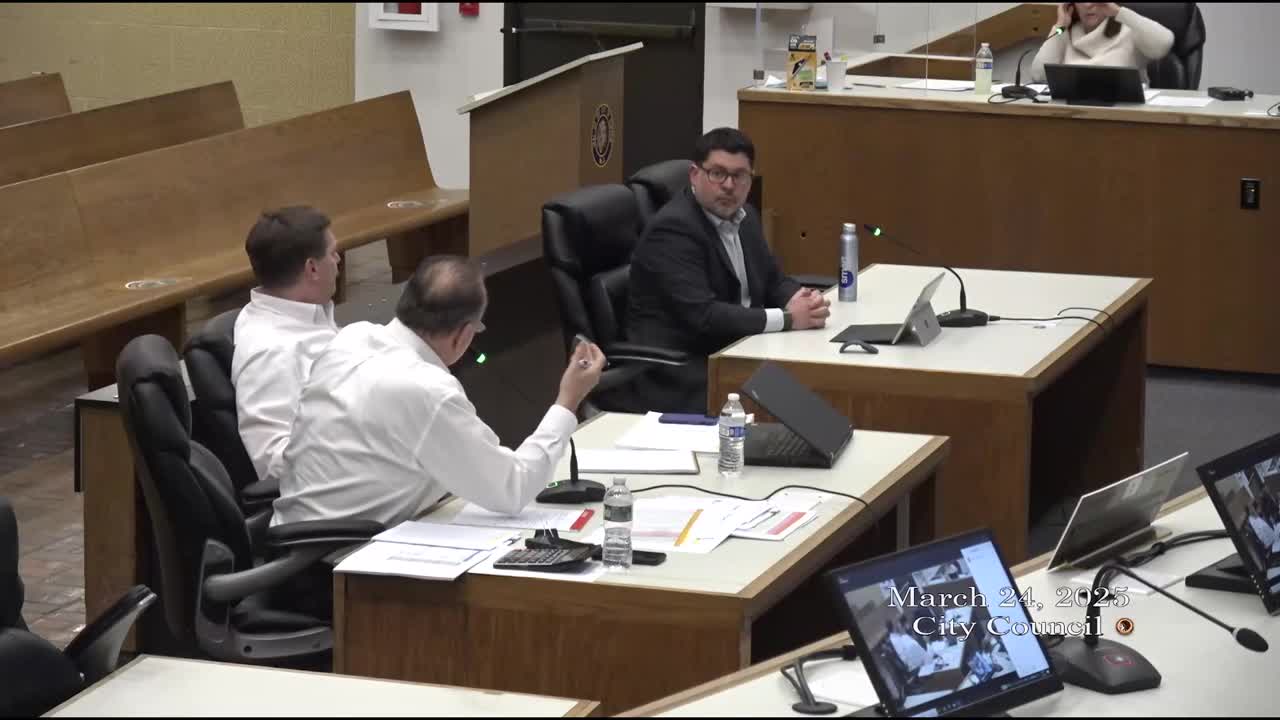
Clifton municipal officials spent an extended portion of their March 24 special meeting questioning Enterprise Fleet Management about the structure, costs and oversight of the city’s vehicle-lease program.
Clifton municipal officials spent an extended portion of their March 24 special meeting questioning Enterprise Fleet Management about the structure, costs and oversight of the city’s vehicle-lease program.
Enterprise area manager John Bell told the council the program is “an open ended equity lease,” meaning the city owns the equity in each vehicle and — after an initial 12‑month period — may return a vehicle without early‑termination penalties. Bell said Enterprise recommends terms (commonly 60 months for municipalities) based on mileage patterns and resale forecasts but that final term selections and approvals are handled by city staff working with Enterprise.
Why it matters: Council members said the city is paying monthly for underused vehicles and needs clearer, auditable information to decide whether to return, reassign or keep leased units. Multiple council members said some departments appear to have more vehicles than staff and asked for per‑vehicle and per‑department accounting.
Key takeaways from the exchange: - Enterprise said 71 vehicles were currently under lease to the city and that its model allows a city to keep a vehicle “for as long as you want” by extending leases in 12‑month increments after the initial year. Bell said the company can recommend terms (48, 60, 72 months) based on vehicle type and resale expectations. - On resale/equity: Bell said Enterprise sells returned vehicles and credits the city with net proceeds after a service/transfer charge (Enterprise reported one recent example where a vehicle sold for more than its capitalized amount). For a sample of 16 returned vehicles from the last 24 months, Enterprise said there were no instances where the city owed a large balloon payment; one vehicle (VIN last 4: 6120) produced proceeds higher than the city’s original capitalized cost. - On payments: Enterprise described monthly charges as a mix of principal repayment plus a “lease charge” (management fee and interest). Bell said once the principal is fully repaid on a vehicle the ongoing cost drops to a nominal management fee, which he said can be in the area of $25 per month — a statement Enterprise offered to substantiate with a vehicle‑level breakdown on request.
Council directions and next steps: Council members asked Enterprise and city staff for a set of documents and analyses for the next council meeting, including - a complete fleet inventory (VINs, department assignments, lease terms and monthly payments), - a vehicle‑by‑vehicle breakdown showing principal vs. lease charge vs. interest, and - a history of returned vehicles and sale proceeds since the program began, plus a list of vehicles Enterprise recommends turning in as soon as practicable.
Enterprise said Francesca Franco, the company’s client strategy manager who handles the city account, is the day‑to‑day contact and that she will attend a future meeting to provide the requested details. City staff agreed to meet with Enterprise before the next council meeting to reconcile lists and to return with the reports the council requested.
Council members also discussed operational follow‑ups: reviewing departmental assignments to reduce underutilization, identifying vehicles with low mileage for return, and evaluating whether funds held by individual departments could be used to buy replacements and allow lease returns when appropriate.
The meeting produced no formal votes on the fleet program itself; the council recorded the discussion, asked staff to gather and present the requested reports, and scheduled follow‑up meetings to act on the new information.