Get Full Government Meeting Transcripts, Videos, & Alerts Forever!
Get email alerts on the Public Space Management topic
No spam. Unsubscribe anytime.
Council advances ordinance to prohibit unattended shopping carts, allow disposal of abandoned items after amendment
Summary
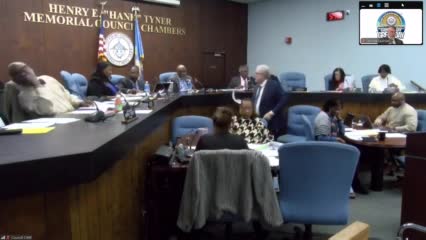
Atlantic City Council advanced an ordinance to ban unattended shopping carts on the boardwalk and to prohibit unattended luggage and containers in parks, approving an amendment that lets the city dispose of confiscated items it deems abandoned.
Atlantic City Council moved forward on an ordinance aimed at restricting unattended shopping carts on the boardwalk, prohibiting unattended luggage and containers in parks, and clarifying how authorities may treat items deemed abandoned.
The ordinance, sponsored by Councilman Kurtz, drew substantial comment from council members, the administration, public safety staff and public‑works representatives about how the city will handle personal property found in encampments and on public property. The chief of police and public‑works staff described health, safety and logistical concerns — including needles, bedbugs and other hazards — that have arisen during recent encampment cleanups.
Councilman Kurtz, the sponsor, and the administrator discussed whether confiscated items should be retained for a period or immediately disposed of if abandoned. After discussion, the council accepted a staff amendment (described on the floor and read into the record) that clarified section c would read: confiscated items shall be deemed abandoned after which they may be disposed of. The ordinance as amended also specified that items held at a designated facility for a period (30 days in the draft) may be removed and that procedures for reclaiming property were being revised.
Several council members urged caution, noting that some personal bags may contain identification documents needed for shelter or services; others highlighted safety hazards encountered during cleanups, including propane tanks and potential booby traps. Public‑works staff described removing heavy items and hazards from under the boardwalk and said the city lacks long‑term storage capacity for large volumes of confiscated material.
The council recorded the ordinance as first reading with the amendment described on the floor. The sponsor and administration agreed to meet with police and service providers to refine procedures before the second reading so that the city can balance health and safety, storage logistics and the need to preserve essential identification documents for people experiencing homelessness.
Why this matters: The ordinance addresses recurring public‑safety and sanitation challenges on the boardwalk and in parks, and creates a legal path for the city to remove and — as amended — dispose of items it deems abandoned. The debate shows the operational tension between removing hazards and protecting the property and documents of vulnerable residents.
What council directed next: Administration agreed to meet with the sponsor, the police department and council members to develop clearer reclaim procedures, identify possible storage/processing options and consider protections for identification documents before second reading.
Ending: Council approved the ordinance on first reading as amended; staff will follow up with the sponsor and public safety to prepare a refined ordinance and procedures for second reading.