
Orangeburg district reports $43.7M fund balance; FY26 draft budget targets teacher raises and other personnel steps
Get AI-powered insights, summaries, and transcripts
Subscribe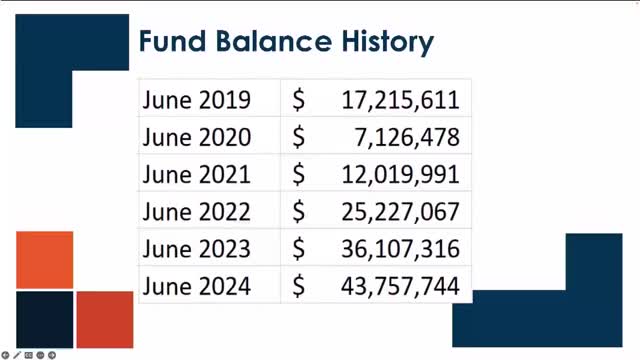
Summary
At the March 25 budget workshop the district reported a June 30, 2024 fund balance of $43.7 million, outlined FY25 revenue reductions, and identified FY26 priorities including a proposed $1,500 teacher pay increase, a bus‑driver schedule adjustment and possible retention and signing bonuses.
Gail (finance staff) and senior staff presented the Orangeburg County School District's current fund balances, revenue picture and preliminary priorities for fiscal year 2026 at the March 25 budget workshop.
Gail said the district's fund balance history shows $17.2 million in 2019, a drop to about $7 million in 2020 and a recovery to $43.7 million as of June 30, 2024. She told the board the FY24 revenue mix (audited) shows the general fund provided roughly 62% of total revenue, special revenue 19%, EIA 6%, food service 4%, debt service 7% and capital projects 2%.
Gail said the district's FY25 state allocation was $65.2 million but that the district expects reductions totaling about $3.7 million for the current year, affecting state aid for classroom instruction, health insurance and retiree insurance. She also summarized multi‑year enrollment changes and said current average daily membership (ADM) on the district's 40th‑day count was 10,089.
On FY26 priorities, Gail said the state budget draft includes a $1,500 teacher salary increase and a minimum beginning teacher salary proposal of $48,500. The district's preliminary list of priorities presented to the board included: maintaining the bachelor's plus‑18 salary category (despite the state's move to collapse that schedule), increasing the bus‑driver schedule (the district said an FY26 beginning wage projection is about $19.48 per hour and a top step near $24.99), a 2% state employee compensation increase for certain staff, step increases where eligible, marching band support and retention bonuses pending revenue. The board was told signing bonuses for new teachers would be considered but that amounts have not been set and would depend on revenue.
School staffing metrics were discussed: Mr. Holiday (staff) reported elementary student‑teacher ratios at 22:1 and a kindergarten class size target of 25 with an aide in the classroom.
Gail outlined the FY26 calendar and state budget process: governor's executive budget in January, legislative committee reviews in February and spring, and implementation beginning July 1; the district plans a first reading of the FY26 preliminary budget at the May board meeting and a second, final reading with public participation at the June meeting.
Board members asked for additional detail on district and central‑office salaries. One member said she would prepare a spreadsheet request listing name, salary, department and tenure to share with finance staff for follow‑up.
Votes at the March 25 workshop were procedural: the board approved the meeting agenda at the start of the session and later voted to adjourn (both by voice vote; no roll‑call tallies appear in the transcript).