Get Full Government Meeting Transcripts, Videos, & Alerts Forever!
Get email alerts on the Delta 8 Excise Tax topic
No spam. Unsubscribe anytime.
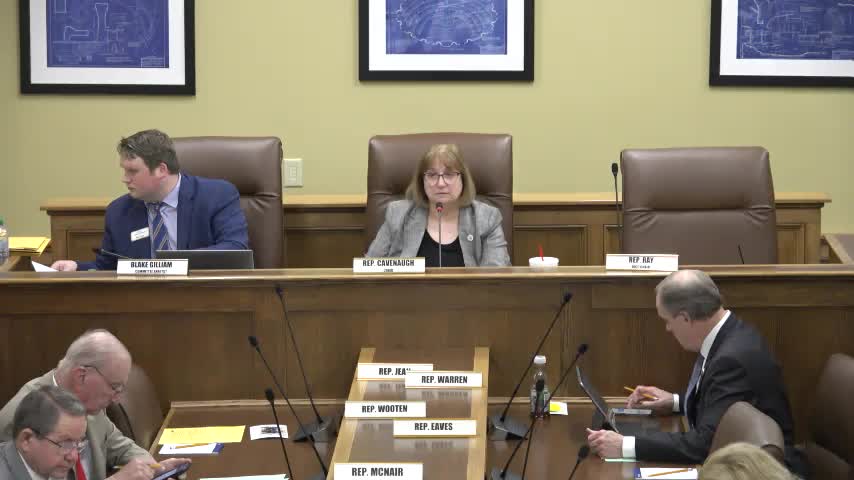
House committee debates 50% excise tax on Delta-8 products; motion to pass fails
Summary
A proposed 50% excise tax on certain hemp-derived THC products generated extended testimony and questions about enforcement, definitions and impacts on small retailers. The committee voted and the motion to pass failed.
A House Revenue & Taxation committee on Thursday considered Senate Bill 605, which would impose a 50% excise tax on certain “delta tetrahydrocannabinol” products and other hemp-derived intoxicating cannabinoids and would add a new reporting line for retailers to remit the tax.
Supporters described the measure as an additional enforcement tool against products the General Assembly has previously sought to ban. Opponents — including small retailers who sell hemp-derived cannabidiol (CBD) products — said the bill’s language is broad enough to sweep in naturally derived, federally legal hemp products and would jeopardize small businesses.
Representative Baker (District 71), the bill’s sponsor, told the committee the tax is intended to align the industry with tobacco and to give the Department of Finance and Administration (DFA) a second compliance mechanism while litigation over earlier bans continues. “If participants choose to continue to sell those, there is some gray area as litigation continues. What is not a gray area would be tax evasion,” Baker said.
Several witnesses and committee members pressed the sponsor and DFA staff on how auditors would distinguish taxable synthetic products from naturally derived hemp products at the point of sale. Paul Gearing of DFA said the agency would add a separate reporting line to sales tax filings and that retailers would self‑report sales subject to the excise tax; DFA staff would follow up with audits of records and invoices to verify compliance. “This would be a new tax…we would have to get our audit staff educated on this particular product,” Gearing said.
Small-business owners who testified said they use full‑spectrum hemp products to treat pain or anxiety and rely on third‑party testing and traceability. Roger Crawford, owner of SunMed (a CBD retailer), told lawmakers he does not sell synthetic products and warned a 50% tax would be fatal to his stores. “I'm here to oppose 605. Hemp CBD saved my life and I do not sell dangerous or deadly products,” Crawford said. He urged lawmakers instead to fund enforcement and testing efforts to remove clearly illegal synthetic products from shelves rather than impose a punitive tax on the wider industry.
Other witnesses and members described how bad actors have used packaging and labeling to disguise synthetic products and said enforcement is challenging without chemical testing at the point of sale. DFA officials and committee members acknowledged DFA’s auditors do not carry chemical testing equipment and that enforcement would rely on invoices, chain‑of‑custody records and cooperation with law enforcement and other regulatory offices. DFA said it could not estimate potential tax collections because there is no reliable statewide sales data for these products.
Several committee members raised policy and equity concerns about a 50% rate, noting few taxes in Arkansas reach that level and asking whether the bill could unintentionally tax non‑intoxicating CBD lotions, tinctures or other consumer products. Representative Warren, who said he has constituents who use hemp products for pain management in serious illness, said he would oppose a tax that risks driving legitimate businesses out of state.
After extended questioning and public testimony, a motion to pass SB 605 was called. The committee recorded vocal opposition and the chair announced, “I’m gonna say the no’s have it.” The motion to pass failed.
The debate highlighted three recurring issues lawmakers flagged for further work: (1) the statutory definition of taxed products and whether the bill’s lines capture only synthetic, intoxicating derivatives or also federally legal hemp products; (2) DFA’s practical ability to identify taxable sales without routine chemical testing and how audits would proceed; and (3) the fiscal and economic impact on small retailers and the potential for a larger black market if lawful businesses exit the state. Legislators and witnesses suggested follow‑up options including narrower statutory language, funding for field testing kits and rulemaking or regulatory coordination to separate bad actors from compliant retailers.
The committee did not advance the bill.