Get Full Government Meeting Transcripts, Videos, & Alerts Forever!
Get email alerts on the Consumer Protection Junk Lawsuits topic
No spam. Unsubscribe anytime.
House Judiciary Committee passes bill backers call a check on ‘junk lawsuits’; opponents say it weakens consumer protections
Summary
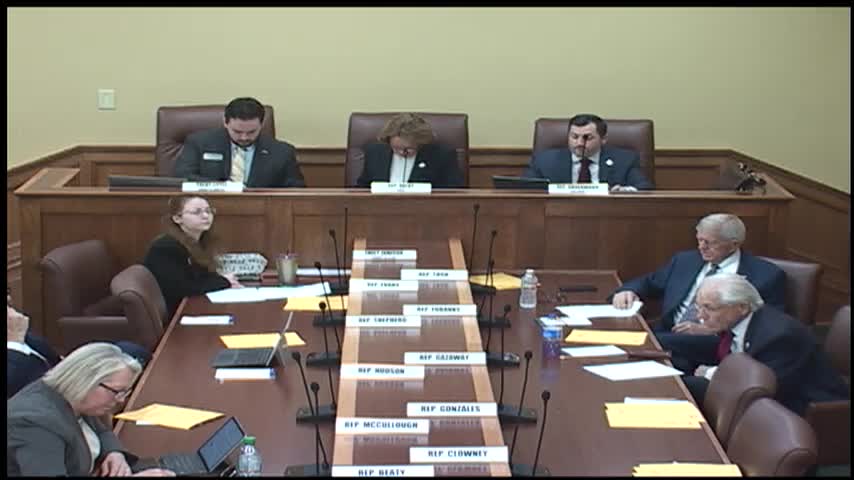
At the committee’s final meeting of the session, the House Judiciary Committee voted to pass Senate Bill 441, a measure backers described as a way to curb “junk lawsuits” tied to prescription discount cards.
At the committee’s final meeting of the session, the House Judiciary Committee voted to pass Senate Bill 441, a measure backers described as a way to curb “junk lawsuits” tied to prescription discount cards. Supporters said the bill would protect Arkansas businesses and courts from litigation where no consumer was harmed; opponents said it would undermine consumer-protection enforcement and could gut an existing statute.
Senator Bart Hester, State Senator, District 33, told the committee the bill was aimed at out-of-state law firms that he said file repeat suits in Arkansas against companies such as Blue Cross and Blue Shield, Walmart and Simmons Bank. “This is the junk lawsuit bill,” Hester said, arguing that many of the suits named in related litigation involved plaintiffs who were not harmed and served mainly to enrich law firms.
The bill’s language, as discussed at the hearing, would (according to witnesses’ descriptions) add a requirement that a plaintiff be “injured” to bring suit, add a 30-day written notice-and-cure process, narrow applicability to entities that accept fees from consumers, remove or limit statutory attorney-fee recovery, and apply changes retroactively to pending litigation. Hester told members the retroactivity was intentional and aimed at ongoing cases he described as harmful to constituents.
Bart Calhoun, an attorney with McDaniel Wolf law firm speaking on behalf of the Burton and Annette Mullins Foundation (identified in testimony as the plaintiff in the referenced litigation), opposed the bill. Calhoun said the foundation is Arkansas-based and was established by Burton and Annette Mullins. He said the foundation’s objectives include protecting Arkansas consumers and that the foundation has made charitable donations, including a $1,000,000 gift to Arkansas Tech University. Calhoun said the bill would have effects beyond standing: it would limit relief, remove attorney-fee recoveries that make private enforcement possible, and add a cure period that could preclude or delay meritorious claims.
Calhoun told the committee that in Arkansas the “American rule” ordinarily requires parties to pay their own attorney fees unless a statute provides otherwise; removing statutory fee recovery, he said, would effectively prevent many low-income Arkansans from finding counsel for small but meaningful harms. He also criticized the proposed 30-day notice-and-cure provision as vague and likely to produce litigation over what “possible” cure means.
Members questioned both proponents and the witness at length. Representative Springer asked whether the litigation identified by proponents was still pending; Hester confirmed it was. Representative Clowney and others pressed on procedural and legal consequences, including where actions may be filed and whether retroactive application would be subject to constitutional challenge. Several members noted they had mixed or unresolved views, and multiple members suggested courts, not the legislature, ultimately will resolve legal challenges to retroactivity and procedural changes.
After witnesses finished and the sponsor closed, Senator Hester closed for the bill and a motion to pass was made and carried. The committee conducted a roll call and the chair declared the bill passed.
Discussion vs. decision: committee debate centered on policy trade-offs — stopping what advocates called abusive litigation versus preserving private enforcement as a supplement to limited public enforcement resources. Opponents argued the bill would narrow who can sue, remove incentives for attorneys to bring consumer cases on behalf of low-income claimants, and add procedural hurdles that favor corporate defendants. Supporters said failing to act would allow out-of-state plaintiffs’ lawyers to “tie up” Arkansas courts in cases where no one was harmed.
No amendment language was provided in the hearing record presented here; senators and representatives referenced specific pages and lines in the draft bill during questions but committee discussion did not include adoption of text changes on the floor during this hearing.
The committee record shows the motion to pass was carried and the chair announced the bill was passed.