Get Full Government Meeting Transcripts, Videos, & Alerts Forever!
Get email alerts on the Business Law Franchise topic
No spam. Unsubscribe anytime.
Committee rejects amendment to clarify that insurance agents are not franchisees; plaintiffs warn of legal impact
Summary
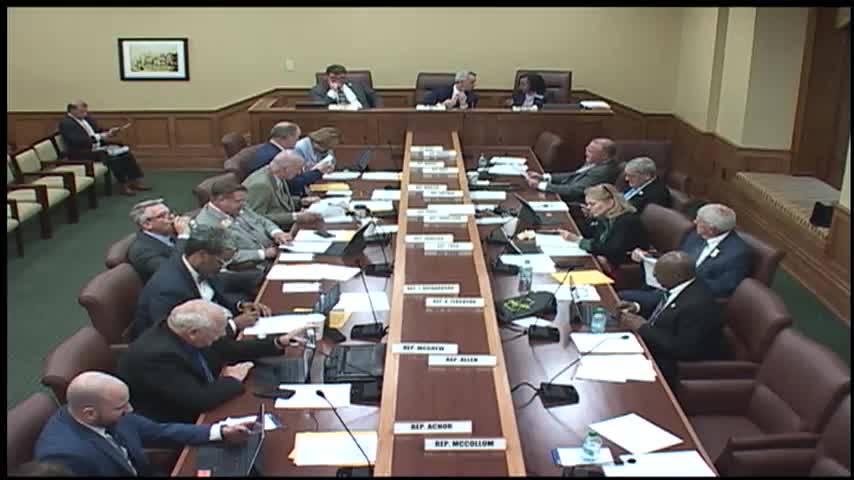
Representative Matt Brown presented an amendment to the Franchise Practices Act to state explicitly that insurance agents are not franchisees; the committee adopted a delayed effective‑date amendment but ultimately did not pass the bill.
Representative Matt Brown presented an amendment to the Franchise Practices Act aimed at clarifying that insurance agents are not franchisees for purposes of the statute. The committee adopted a two‑year delayed effective date amendment intended to avoid interfering with current litigation, heard testimony from the plaintiff and his son, and nonetheless failed to pass the overall measure.
Brown said the Franchise Practices Act was originally aimed at traditional franchise arrangements and that repeated court attempts to treat insurance agents as franchisees have created uncertainty. To address that, the bill would clarify the law so future claims by agents could not be litigated under the franchise statute. Brown said the amendment delayed effective date by two years to avoid affecting a pending lawsuit in Harrison.
Opponents said the change would appear to be targeted at ongoing litigation. RG Ernest, who spoke on behalf of his father, told the committee that his father’s contract was signed after the act became effective and that the family has spent substantial time and money pursuing a claim under the existing Franchise Practices Act. He warned that the legislature’s statement of intent could be used by the defendant to influence ongoing cases. His father, Roger Ernest, described building the family agency over decades and said the family was left to litigate after termination.
Several committee members questioned whether the two‑year delay would in fact prevent courts from citing legislative intent. An attorney who testified said judges do pay attention to legislative action and that a future statute could be used as persuasive authority, even before its effective date, depending on procedural posture and appellate timing.
Committee action: The committee adopted the delayed‑effect amendment but, after debate and public testimony, the motion to pass the measure as amended failed in committee.
Why it matters: The proposal would have changed how courts interpret the statutory protection in the Franchise Practices Act and could limit the legal options available to agents who claim they were treated as franchisees. Opponents said retroactive or near‑term changes could unfairly affect litigants who have already invested in legal claims; supporters said the change would reduce repetitive, unsuccessful litigation.
What’s next: With the committee vote failing, the statutory clarification will not proceed from this committee at this time; proponents may refile or pursue alternative remedies in later sessions.