Get Full Government Meeting Transcripts, Videos, & Alerts Forever!
Get email alerts on the Energy Policy topic
No spam. Unsubscribe anytime.
Committee hearing on wind‑energy bill becomes flashpoint; vote postponed for additional testimony
Summary
Lawmakers heard hours of testimony for and against a broad wind‑energy regulation bill. Supporters said the measure fills a regulatory gap; opponents said an amendment removed a negotiated exemption and the change would effectively block projects under development. The committee postponed a vote to take more testimony after session.
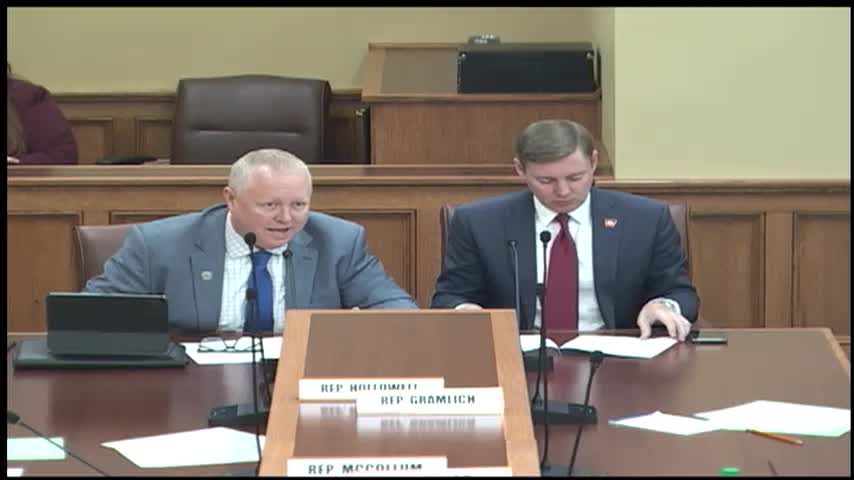
A proposed Wind Energy Development Act drew extended testimony and heated exchanges in the House Insurance and Commerce Committee on Tuesday, and the committee postponed a vote until after the legislative session to allow additional witnesses to review a last‑minute amendment.
Representatives Brad Hall and James Eaton introduced Senate Bill 437, which would impose state regulatory requirements on utility‑scale wind projects, including setback and siting restrictions, environmental and visual‑impact assessments, decommissioning and bonding requirements, and noise and shadow‑flicker limits. Supporters said the bill responds to rapid project proposals in rural counties and fills a regulatory gap; they said Arkansas has been one of the few states with limited statewide standards for large turbines.
Opponents — including developers and industry trade groups — said the measure’s rules are so restrictive that they would preclude most projects statewide. Several speakers said a compromise amendment adopted earlier in the process, and accepted in the Senate, included an exemption for projects “under development” that would prevent retroactive application to projects already under construction. However, an amendment the committee adopted Tuesday removed that exemption. Developers and project investors said they had relied on the senate compromise and that stripping the exemption “guts” the negotiated language and would create constitutional and investment‑risk problems.
Speakers for industry also emphasized the economic value of projects. Simon Mahan, executive director of the Southern Renewable Energy Association, said single wind projects can bring $200 million to $300 million in local investment and that nearby states with high wind penetration have lower electricity prices. Developers said they had met with local aerial applicators and agricultural stakeholders in project areas and planned mitigation such as painted meteorological towers and operational curtailments during aerial applications.
Local residents and other witnesses raised concerns about noise, shadow flicker, vibration and catastrophic failures; an expert witness cited media reports and said turbine fires and resulting fiberglass debris could be difficult for landowners to remediate. Committee members pressed for data and asked whether the bill’s distance requirements and other limits would effectively ban projects; witnesses responded that the bill would severely restrict where turbines could be sited, often leaving little available land.
After more than two hours of testimony, committee leadership said the amendment circulated that morning changed compromise language enacted earlier in the Senate; because many witnesses had not seen the revised text and more parties were expected to testify, the chair postponed the committee’s final vote until after session so all parties could be heard. No final committee vote was taken on SB 437.