Get Full Government Meeting Transcripts, Videos, & Alerts Forever!
Get email alerts on the Health Care Gender Affirming Care topic
No spam. Unsubscribe anytime.
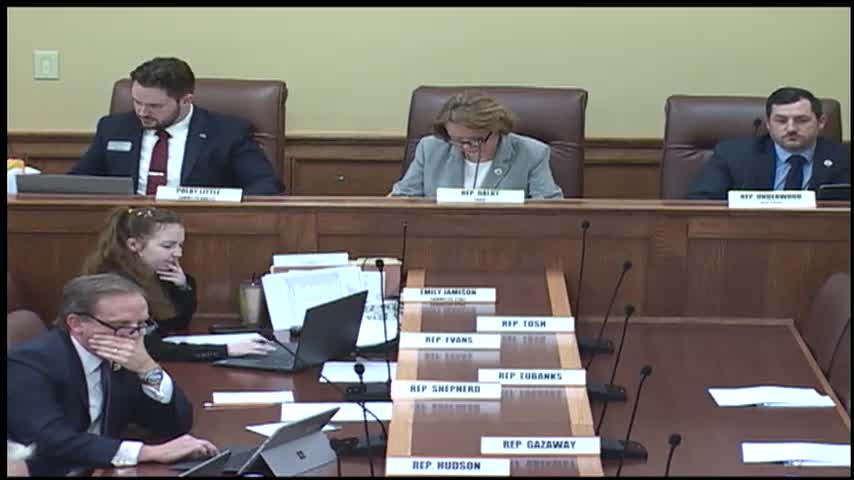
House Judiciary Committee advances bill creating 15‑year civil cause of action over gender‑affirming care for minors
Summary
After hours of testimony, the House Judiciary Committee voted to pass HB 19‑16, which would allow minors harmed by certain gender‑affirming medical interventions to sue for civil damages up to 15 years after reaching adulthood; the measure drew sustained opposition from medical groups and LGBTQ advocates.
The House Judiciary Committee passed House Bill 19‑16 after a lengthy hearing that included testimony from physicians, therapists, parents and adults with lived experience. Representative Mary Bentley, sponsor of the bill, said the measure would give minors and their parents a cause of action to sue health care professionals who performed gender‑affirming medical interventions, up to 15 years after the child turns 18.
Bentley described HB 19‑16 as an amendment to Act 274 of 2023 and said it would allow civil suits where providers “affirm the self‑diagnosis” of a minor and proceed with medical interventions that, she said, can have permanent effects. “I am asking for us to put the health and well‑being of our children first,” Bentley said in her presentation.
Opponents — including pediatricians, licensed mental‑health clinicians and multiple parents and adults who identify as transgender — argued the bill is overly broad and would chill access to mental‑health and medical care. Kirsten Sewell, a licensed clinical social worker who helped establish the state’s pediatric gender clinic, said forcing clinicians to fear litigation would delay or block treatment for youth who need it. “I have seen the emotional toll on kids forced to wait for care,” she said.
Multiple witnesses cited national studies and data on suicidality in LGBTQ youth and urged the committee to preserve access to established standards of care. Representatives on the committee asked about the bill’s definition of “gender‑affirming intervention,” the scope of potential liability, and whether routine, nonmedical acts such as using a preferred pronoun could expose providers to lawsuits. Bentley said the bill targets medical affirmation that leads to medical interventions, not casual or social interactions, and that plaintiffs would have to show “irreparable harm.”
After public testimony — where dozens of citizens spoke against the bill and a smaller number supported it — the committee approved the bill. The transcript shows a roll‑call was conducted and the measure passed. The committee recorded supportive and opposing statements from medical organizations, advocacy groups and people with personal experience; several speakers said the bill would create uncertainty for therapists and pediatricians, while supporters described it as a tool to protect minors from irreversible treatments.
The committee’s passage moves HB 19‑16 forward in the legislative process; the transcript does not specify the next scheduled committee or floor date.