Get Full Government Meeting Transcripts, Videos, & Alerts Forever!
Get email alerts on the Energy Policy topic
No spam. Unsubscribe anytime.
Committee rejects bill to override federal coal-closure orders after utilities warn of costly litigation
Summary
Lawmakers debated a measure to require state-level approval for retirement or repowering of dispatchable generation. Utilities and Entergy warned the bill would trigger prolonged litigation tied to existing federal consent decrees; the committee voted the bill down.
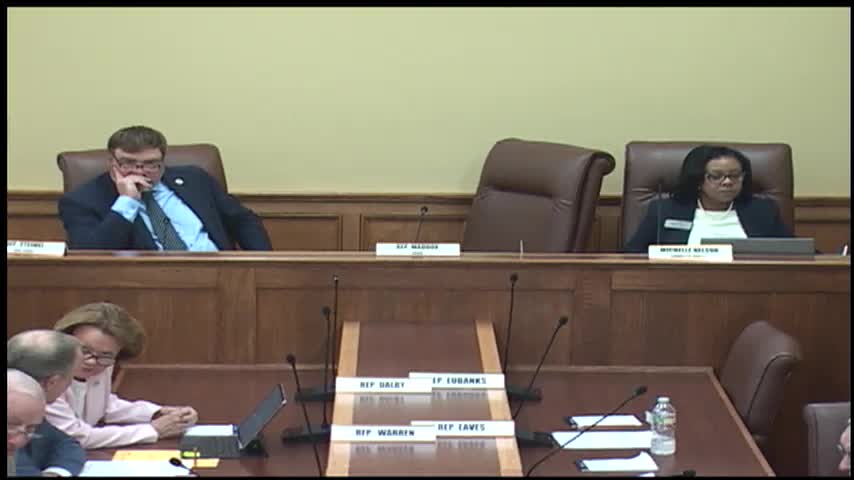
The House Insurance & Commerce Committee on Monday declined to advance Senate Bill 596, a bill aimed at strengthening state control over the retirement or repowering of dispatchable electric generation.
Sponsor State Senator Matt McKee said the intent was to ensure Arkansas sets its own energy policy and preserves dispatchable, reliable power for economic development. McKee told the committee, “I think it's time that as a state, we did that.”
Utility witnesses, led by John Bethel of Entergy Arkansas, told the committee the bill would insert legal and regulatory uncertainty into long-running federal consent decrees and could produce “lengthy expensive litigation with a very low probability of success.” Bethel said the bill would require the utilities to demonstrate to the Public Service Commission that early retirements are in the public interest but noted the bill contained no carve-out for facilities already subject to federal orders.
Justin Allen, Entergy attorney, outlined three risk paths: ignore the bill and face PSC enforcement; apply to the PSC and prompt federal litigation; or seek modification of federal consent decrees—each of which he said would create delay, expense and uncertainty for replacement planning.
Kurt Casselberry, Entergy resource planner, said the company needs the current certainty provided by consent decrees (White Bluff and Independence stations) to plan replacement capacity; the consent-decree dates were identified as end of 2028 for White Bluff and end of 2030 for Independence in testimony.
Representatives of SWEPCO and other utilities raised similar concerns about the practical timing and multi-jurisdictional complications of pre-approval rules. Entergy suggested a technical amendment to exempt facilities retiring or repowering pursuant to court-ordered settlements executed before the act’s effective date.
Representative McGrew moved a do-pass motion, but committee members raised questions about litigation risk and the timing of state policy work. After debate the committee voted; the chair recorded the result as noes prevailing and the bill failed in committee.
Opponents argued the bill would threaten predictable planning and could raise costs for ratepayers; supporters said the state should set policy rather than rely on federal court outcomes.
The bill’s defeat leaves existing retirement schedules and the Public Service Commission’s role untouched; sponsors said they will continue energy-policy work through other channels and the interim.