Get Full Government Meeting Transcripts, Videos, & Alerts Forever!
Get email alerts on the Hospital Reimbursement topic
No spam. Unsubscribe anytime.
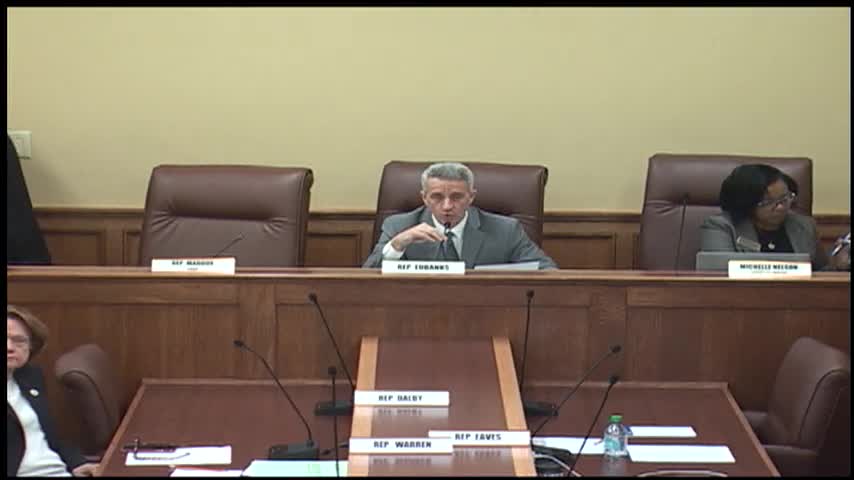
Committee hears major proposal to raise Arkansas hospital reimbursements; amendment adopted, final vote delayed
Summary
Representatives and hospital leaders debated a wide-ranging bill to lift a floor on commercial hospital reimbursements relative to neighboring states. Lawmakers adopted an amendment changing a numeric threshold and asked for more data; the committee did not finish consideration and will reconvene.
Lawmakers spent several hours debating a proposal led by Representative Wardlaw aimed at narrowing the gap between commercial hospital reimbursements in Arkansas and neighboring states. Supporters argued the state’s hospitals — particularly rural facilities — receive some of the lowest commercial payment rates in the nation and face closure risk; opponents warned of premium increases for employers and employees.
Representative Wardlaw said Arkansas hospitals are paid well below neighboring states: “A hospital in nearby Oklahoma treating the same patient with the same medical condition would make $5,725 more than a hospital in Arkansas,” he said, citing comparative figures. The bill would establish a multi‑year floor that moves Arkansas reimbursements closer to surrounding‑state averages; Wardlaw described a phased implementation intended to avoid a single sharp increase.
Hospital Association CEO Beau Ryle testified that low commercial reimbursement puts Arkansas hospitals at a competitive disadvantage and contributes to financial strain. He said the proposed measure sets a floor and tasks the insurance commissioner with collecting data to calculate target levels. “That is a significant difference and something that we see in every surrounding state,” Ryle said.
Representatives from Arkansas Blue Cross raised concerns about premium impacts. David Mann said a sample family premium for a family of four could rise noticeably if the bill were implemented as drafted; Alicia Birkmeyer (Blue Cross) provided an illustrative calculation showing the incremental premium change could be substantially larger than the routine year‑to‑year trend increase. Mann and Birkmeyer also noted that Medicare and Medicaid account for about half of claims in Arkansas and said national policy — not state law — largely controls Medicare rates.
Committee members amended the bill to change a drafting number from 90% to 85% (an amendment that also incorporated language from a related bill addressing rate review factors). After the amendment was adopted, members continued questioning witnesses; the hearing did not conclude before the committee recessed and committee leadership said it will reconvene to finish consideration. No final committee vote on passage was recorded in the transcript.