Get Full Government Meeting Transcripts, Videos, & Alerts Forever!
Get email alerts on the Consumer Protection topic
No spam. Unsubscribe anytime.
House committee approves bill requiring self-storage operators to notify tenants when units are known to be compromised
Summary
A House bill will require self-storage operators to notify tenants within five days if an operator has actual knowledge that a leased space was compromised; the operator is not required to inspect units and only must notify if it has actual knowledge.
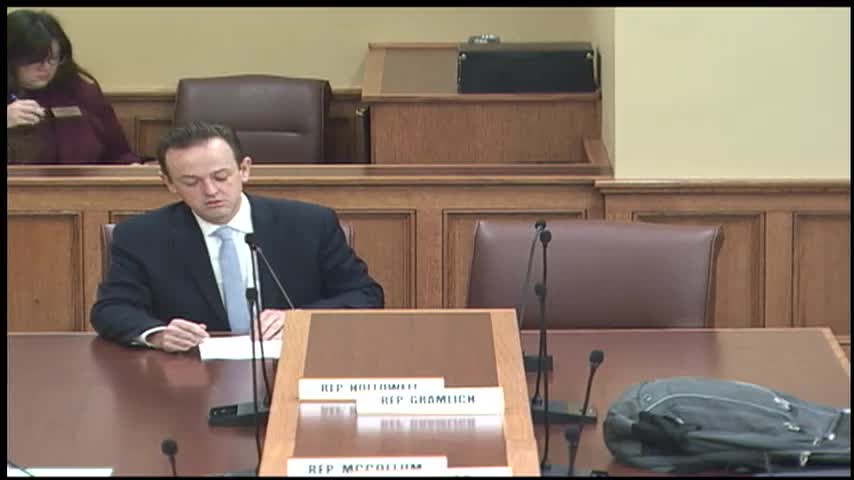
The House Insurance and Commerce Committee voted to pass House Bill 1994 on Tuesday after a detailed exchange about what triggers a self-storage operator’s duty to notify tenants.
Representative Andrew Collins, sponsor of HB 1994, said the bill responds to incidents in which belongings were strewn in storage‑facility parking lots after break‑ins and tenants were not told. Collins said he negotiated bill language with the Self Storage Association to create a notification duty that “doesn’t put any additional obligations” on operators who do not have knowledge of a break‑in.
Under the bill, an operator must notify the tenant within five days when a lease space is “compromised,” and the bill defines “compromised” to require that the operator have “actual knowledge” that the incident occurred. Collins told the committee the statute clarifies that an operator has no duty to proactively inspect units to determine whether a lease space has been compromised: “They don’t have to find out, but if they do find out, then they notify.”
Committee members asked who decides whether an operator had “actual knowledge,” and Collins said that determination would be made in litigation if a dispute reached court. Representative Lundstrom raised concerns the standard might be subjective; Collins replied that the standard is evidence‑based: “You would need to make your case that the person has actual knowledge.”
Other members asked about inspection frequency and whether knowing only that belongings were scattered in a lot would trigger notice obligations; Collins said the operator must know which unit was affected to have the duty to notify. He and other lawmakers also discussed whether contract language between tenant and operator could instead address the issue; Collins said the code provision would be an “outer guarantee” while contracts can add more detail.
The committee adopted the bill and passed it on a voice vote. Representative Allen moved the motion to pass; the committee chair announced the bill passed.