Get Full Government Meeting Transcripts, Videos, & Alerts Forever!
Get email alerts on the Isolated School Districts topic
No spam. Unsubscribe anytime.
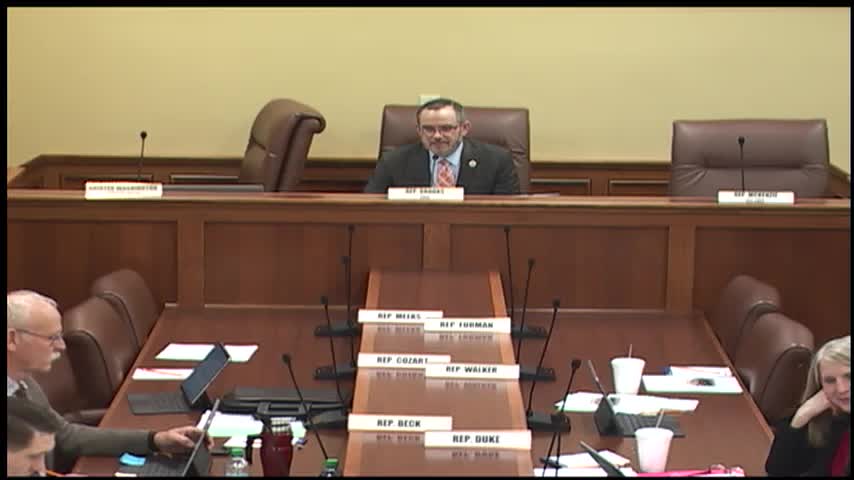
House Education Committee approves pathway for designated isolated rural schools to re-form as independent districts
Summary
The committee approved Senate Bill 619 to allow already‑designated isolated schools to create their own school districts and elect local boards; sponsors and local leaders said the change would preserve small schools and their communities without a new state fiscal burden.
Senate Bill 619, which creates a process for already‑designated isolated schools to form independent school districts, cleared the Arkansas House Education Committee after extended testimony from sponsors, local officials and residents.
Sponsor Sen. Missy Irvin, R‑District 24, said the bill would return local control to small communities where a single school is a central part of local life and the local economy. “This bill creates an isolated school district,” Irvin told the committee, and it “is about local governance. It’s about allowing people to stand on their own two feet and be able to support that community and that school.”
Committee members heard more than an hour of testimony from rural residents, school leaders and community officials who said the measure would let small campuses that were consolidated under earlier law re‑establish themselves. Mark Rush, superintendent of Mountain View School District, said two small campuses that currently operate under Mountain View — Rural Special and Timbo — serve roughly 200 students each and already operate like separate K‑12 entities with their own bus routes, athletics and extracurriculars. “These campuses … would get to create their own millage. They would get to elect their own board, and they would go back to operating as independent entities,” Rush said.
Supporters told the committee the bill is narrowly targeted: it applies only to isolated schools already designated by the Department of Education and lays out a specific process to form a district. Sen. Irvin and Rep. Steven Walker, who joined her on the presentation, said the measure applies to about 11 isolated campuses identified in current Department of Education rules. Walker described the bill as a way to remedy community losses caused by past consolidations that were triggered by Act 60 (2004), which set a minimum enrollment threshold used then to force many consolidations.
The Department of Education staff and the bill’s backers told the committee there is no additional state fiscal impact because funding mechanisms for those students already exist; the sponsors said the new districts would receive state foundation and isolated‑school funding already provided through existing formulas. Representative Steven Walker said the proposal would allow small communities to levy a millage and receive the same state support their students already qualify for, not to create a new general‑revenue obligation.
The committee adopted a technical amendment that clarified who may vote in the reorganization process and to align some language with companion House legislation governing school board terms. After public testimony that included local leaders and the Mountain View superintendent, Representative Walker moved the bill; the committee approved it by voice vote.
What’s next: The bill now moves to the House floor. Supporters said they hope the committee passage will let affected communities begin the administrative steps toward re‑establishing local districts if they choose.
Votes at committee: SB 619 — amendment adopted; bill approved by voice vote.
Speakers quoted or referenced: Sen. Missy Irvin (District 24), Representative Steven Walker (House District 27), Mark Rush (Superintendent, Mountain View School District), Stacy Avey (Stone County judge), former Chief Justice John Dan Kemp, Renee Carr (supporter).