Get Full Government Meeting Transcripts, Videos, & Alerts Forever!
Get email alerts on the Property Tax Multiplier topic
No spam. Unsubscribe anytime.
Plan to reduce assessed-value multiplier from 20% to 15% fails after assessors warn of large school funding shortfall
Summary
A proposal to lower the assessed-value multiplier for property taxation from 20% to 15% failed in committee after assessors and county officials warned it would cut property tax revenue by about 25% and would shift costs to schools or other revenue sources.
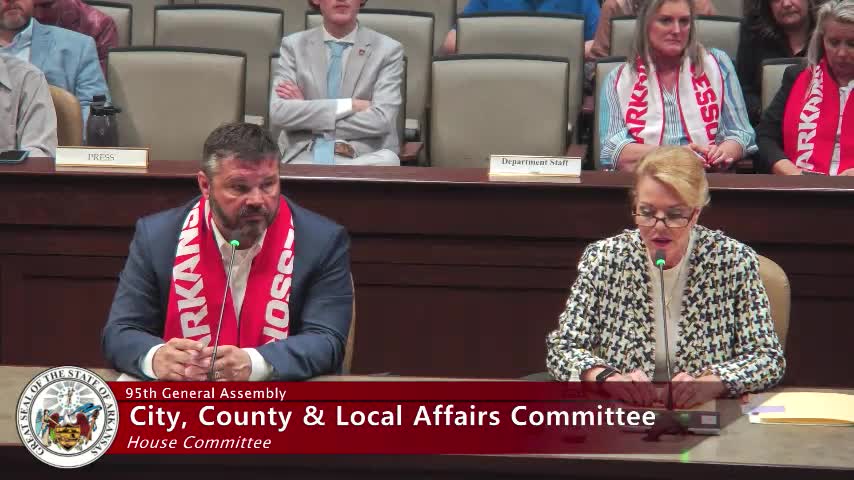
Representative Lundstrom proposed lowering the multiplier used to convert market value into assessed value from the statutory 20% cap to 15%, an effort intended to ease property-tax bills for homeowners and businesses. The committee heard detailed testimony from Russell Hill, Washington County assessor, and representatives of the Assessors Association and Association of Arkansas Counties, who opposed the measure.
Lundstrom said the change "simply shaves off the peaks" and aimed to give taxpayers some relief after steep market-driven increases. Russell Hill and other assessors warned the change would reduce property tax revenues by roughly 25% and that about 80% of that revenue funds local schools. "The number 5% has been thrown around a lot because we're lowering the taxation rate from 20% to 15. But that is a 25% cut in property tax revenues. This bill would cut all property tax revenues real and personal by one quarter. 80% of that goes to fund your local public schools," Lindsay French of the Association of Arkansas Counties told the committee, citing the assessors' analysis.
Assessors also described how Amendment 79 (earlier in the session) insulated current homestead owners from rapid market reappraisal, but that new buyers or properties sold would move quickly to full value — a dynamic the proposed multiplier change would affect differently. The assessors asked for more study, and the Assessors Association stated a unanimous opposition to the bill.
After testimony, Representative Lundstrom moved passage; the committee voted and "the noes have it," defeating the proposal. The transcript records no roll-call tally; committee members cited concerns over school funding and the mechanics of replacement revenue.