Get Full Government Meeting Transcripts, Videos, & Alerts Forever!
Get email alerts on the Roads Funding topic
No spam. Unsubscribe anytime.
Council members press staff on vehicle‑license tax use after staff outlines HEERF and general‑fund transfers
Summary
Multiple council members questioned staff about using more vehicle‑license tax (VLT) and Highway User Revenue Fund (HEERF) revenue for roads, and staff described the current practice of transferring 20% of VLT (about $1 million) to street projects and using construction sales tax and one‑time general‑fund transfers for CIP work.
Council members raised concerns April 10 about how Lake Havasu City uses vehicle‑license tax revenues and HEERF (highway user) funds to pay for road maintenance and capital projects.
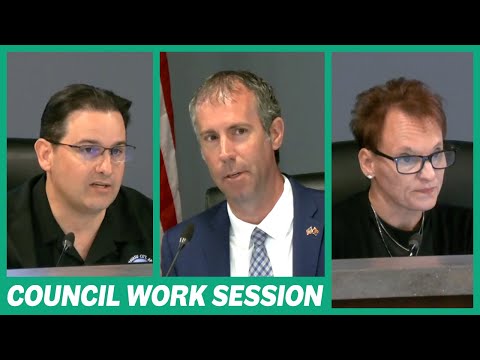
Administrative Services Director Jill Olson explained that the city currently transfers a portion of vehicle‑license tax into the general fund and that “20% of that is transferred into it for CIP street projects,” an amount staff said is roughly $1,000,000 of about $5,000,000 in annual VLT revenue. City Manager Jess Knudson noted that the city also uses construction sales tax and occasional one‑time general‑fund transfers — for example, a $4 million transfer toward the street program identified as construction‑sales‑tax funding — to augment road work.
Council Member Nancy Campbell pushed back, saying she understood state transportation funding models expect VLT and related revenues to be used for roads and questioned why only 20% is transferred. Council members and staff discussed the history: several years ago the city transferred 0% of VLT to HEERF and has moved to a commitment in recent cycles to dedicate a portion for street needs. Knudson cautioned that shifting ongoing general‑fund resources to roads has ripple effects on other services and that one‑time balances are commonly used for CIP work.
No policy change was adopted; council requested a clearer written breakdown of VLT receipts, HEERF receipts, and recent general‑fund transfers so members can consider whether to recommend additional dedicated road funding in future budget cycles.