
Goodyear municipal court reports record filings; expands dockets and staff initiatives
Get AI-powered insights, summaries, and transcripts
Sign Up Free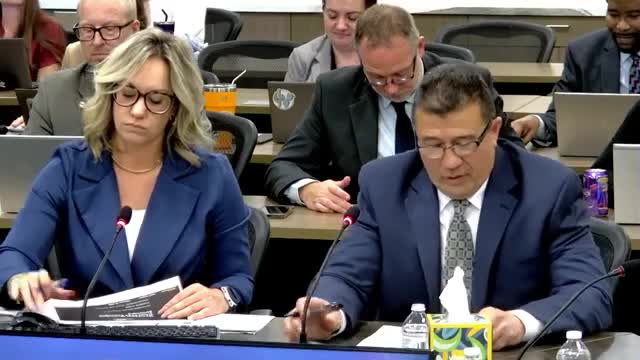
Summary
Presiding Judge Manuel Delgado told the Goodyear City Council work session on Feb. 10, 2025, that fiscal year 2024 charge filings rose to 13,734. The court has added a pro tem hearing officer, expanded dockets to two dedicated courtrooms five days a week and is pursuing process and facility changes to address heavy misdemeanor and DUI caseloads.
Presiding Judge Manuel Delgado told the Goodyear City Council work session on Feb. 10, 2025, that the Goodyear Municipal Court recorded 13,734 charge filings in fiscal year 2024 and has expanded courtroom dockets to run two dedicated courtrooms five days a week to address growing caseloads.
Delgado said the court’s filings include a wide range of matters: “we had 13,734. Of those, misdemeanor non traffic of 1,618,” and he listed additional categories including domestic violence, DUI and traffic charges. He added that calendar year 2024 total case filings were 8,362 and described that figure in relation to recent averages in the executive report provided to council.
The trend matters because Delgado said more than half of the court’s cases—“51.6% of the case load”—involve misdemeanors and criminal traffic matters, which typically require multiple court settings and additional post-adjudication steps for matters such as jail, counseling and interlock compliance. Delgado told council the court processes a high percentage of DUI cases, which he described as among the “most involved and complicated case types” the municipal court adjudicates.
To handle the volume, Delgado said the court obtained council approval last year to create a court hearing officer position; that officer began work in September 2024 and is sworn pro tem to adjudicate criminal matters. Delgado said the hearing officer received a three-week orientation for limited-jurisdiction judges and has helped redesign courtroom calendars to improve compliance with time standards.
Crystal Whalen, court administrator, described an ongoing capital improvement (CIP) project to reconfigure the court facility’s public and staff spaces. Whalen said the project will expand public seating from about 15 seats to a configuration intended to seat roughly 60 customers, add a permanent transaction counter, and create additional cubicle workstations with capacity for two more staff. “We are going to have a permanent counter installed in this project,” Whalen said, adding that staff gave up some secured parking to create a larger break room and work areas.
Delgado outlined several operational changes the court is implementing after an internal review and benchmarking visits. Those changes include procedural revisions, increased use of scanning and email, form updates, and a move toward paperless processing for parts of the civil traffic docket. He said the court compiled a recommendation list of about 15 process changes and that training and policy revisions were underway as of January.
Delgado and Whalen also described employee engagement work. Delgado said his contract required participation in the city’s Gallup Q12 initiative and described team-building activities, one-on-one meetings with staff and collaboration with human resources to produce an “impact effort matrix” to address staff suggestions. Quoting the staff-developed mission and vision, Delgado said, “The mission the new mission of the Goodyear Municipal Court is the Goodyear Municipal Court serves the community with professionalism, empathy, and competence each and every day. And our staff's vision is we strive to inspire public trust and confidence through our core values and teamwork.”
Council members thanked court leadership for reducing turnover and improving operations. Council questions addressed staffing capacity, courtroom scheduling, prosecutor availability and specialty courts. Delgado said the court has three prosecutors assigned to its matters but estimated they spend about half their time in court, with the rest devoted to case review, victim outreach, motions and administrative duties. On specialty courts, Delgado said staff and the hearing officer contacted Glendale about a potential intergovernmental arrangement for mental-health court services, but partners asked for concrete data before committing. Delgado said the court will begin collecting data via an application (Mercy Care) to identify defendants with serious mental illness and track numbers for a six-month evaluation period.
Delgado closed by saying automation, continued evaluation of DUI and misdemeanor caseloads, and facility planning remain priorities and that facility planning may be considered in the city’s fiscal year 2027 strategic plan.