Get Full Government Meeting Transcripts, Videos, & Alerts Forever!
Get email alerts on the Rocky Glades Quarry Permits topic
No spam. Unsubscribe anytime.
Residents raise water, air and historic-resource concerns at ADEM hearing on Rocky Glades quarry permits
Summary
The Alabama Department of Environmental Management held a joint public hearing April 8 at the Chambers County Courthouse on draft air permit 302-0022-X001 and draft NPDES permit AL0084500 for Rocky Glades Pit, a proposed granite quarry near Casita, Chambers County.
The Alabama Department of Environmental Management held a joint public hearing April 8 at the Chambers County Courthouse on draft air permit 302-0022-X001 and draft NPDES permit AL0084500 for Rocky Glades Pit, a proposed granite quarry near Casita, Chambers County.
ADEM air-division staff said the quarry’s crushing, screening and conveying operations would be controlled by wet-suppression systems and that, as configured in the application, the facility would qualify as a “minor source” under state and federal permitting programs. Dodie Mosley, of ADEM’s construction materials section, said the department’s preliminary determination is that compliance with the draft air permit “would not result in violations of applicable air quality standards,” but that the department will reconsider that finding after reviewing public comments. Mosley also noted the agency’s limits, saying, “The department does not have the or the authority to regulate other aspects of the mining activity, including blasting. Blasting is regulated by the state fire marshal.”
ADEM’s water-division representative, Skyler Wilson, described the draft NPDES permit as authorizing treated-effluent discharges through five proposed outfalls to waters identified in the application as an unnamed tributary to Double Branch and an unnamed tributary to Calliawake Creek. Wilson said those receiving waters are classified as suitable for fish and wildlife and that the draft permit was developed to meet applicable state and federal requirements; she added the department’s preliminary water-quality determination will also be reconsidered after the close of the public comment period.
Justin Laney, speaking for Rocky Glades Fund LLC, said the company has complied with regulatory requests to date and pledged to follow applicable state and federal air- and water-quality rules. “We are willing to comply with, and we have complied with everything that the ADEM has set forth to this point,” Laney said, and added the company plans community donations to local fire departments and schools.
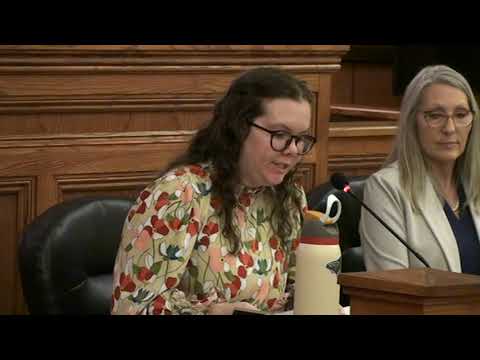
Local elected officials and scores of residents urged ADEM to withhold final approval until concerns are addressed. Chambers County Commissioner David Eastridge, who said many residents have raised objections since October 2024, asked the department to “make the right decision” for county citizens. State Representative Debbie Wood, who represents District 38, told the panel that area households rely on private wells and septic systems and warned that there is “no way to possibly get these people water if their wells run dry.”
Speakers at the hearing repeatedly described Casita’s geology as a fractured-rock aquifer that supplies private wells and surface ponds. Several residents said the quarry’s groundwater use and blasting could deplete or contaminate those local water supplies. William “Bill” Montgomery told the hearing that the quarry’s water source is “underground water…trapped in underground pockets and was accumulated over thousands of years,” and that, in his view, once that water is used it “would be gone for centuries.” Other residents described livestock, crops and small-farm livelihoods that rely on those wells and springs.
Community members also raised air-quality and public-health concerns tied to dust from crushing and truck traffic. Denise Prather Shealy said wetting trucks on-site will not prevent dust along a two-mile dirt road, and warned of effects on grandchildren with allergies and local school buses that use the route. Multiple speakers asked whether regular well testing would be required and whether tree buffers or other measures would be mandated to limit dust, noise and visual impacts.
Historic-preservation concerns were raised by members of the Harris family, who said a Phase I cultural-resources survey identified an 1845-era structure near the site that may be eligible for the National Register of Historic Places and noted the survey did not inspect roughly 36 acres of the proposed study area because of a biohazard. Bert Harris asked whether the Alabama Historic Commission has reviewed the finding and urged further evaluation.
Speakers also cited local road conditions and public-safety questions about oversized truck traffic, potential fly rock from blasting, and long-term property-value effects. Several residents said their families have lived on farms in the area for multiple generations and urged ADEM to consider the community’s long view before permits are finalized.
ADEM hearing officer Tom Burks opened the hearing and explained that the department will accept written comments in addition to oral testimony and that the agency will post its final determinations and responses to comments to its e-file system. The full hearing video and the department’s draft permits and supporting materials were made available on ADEM’s website and the department’s YouTube channel; Mosley and Wilson emphasized the agency’s authority is limited to air- and water-quality factors in the permit decisions.
Public comment on the drafts remains part of the administrative record; ADEM will review the hearing record, consider written comments submitted by the deadline, and then issue final decisions and responses to comments.