Get Full Government Meeting Transcripts, Videos, & Alerts Forever!
Get email alerts on the Business Licensing topic
No spam. Unsubscribe anytime.
City staff outlines proposed change to secondhand-dealer licensing for short-term vendor sales
Summary
At the March 17 Mesa City Council study session, staff described a proposed change that would exempt short-term vendor sales from the city's secondhand-dealer license while retaining tax reporting requirements and police-reporting obligations for purchased goods.
City staff told the Mesa City Council at a March 17 study session that a proposed change to the city's secondhand-dealer licensing requirements would exempt vendors who only sell items at short-term markets from needing a secondhand-dealer license.
The change, described by Leanne Cardenas, assistant director for business services, would mean sellers at one-day vendor fairs or similar short-term events would not have to undergo the background checks and fingerprinting currently required by the secondhand-dealer license. "They'll still need a transaction privilege tax license and report the Mesa tax to us, but no secondhand license," Cardenas said.
The secondhand-dealer license was originally designed to require reporting when businesses purchase goods from the public, enabling the city and police to monitor and trace potentially stolen items. Cardenas said the proposed revision is limited to vendors who are selling only and not purchasing from the general public; such sellers would remain subject to the city's transaction-privilege-tax (sales tax) rules.
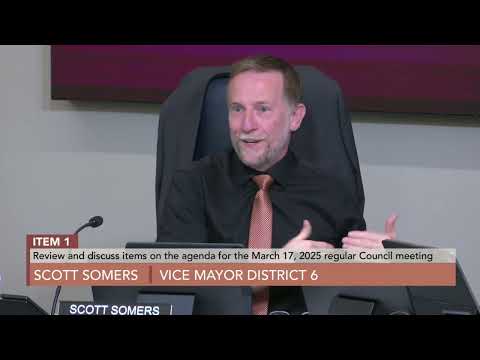
Vice Mayor Summers asked whether Mesa Police Department had been consulted on the change; Cardenas said yes. Council members and staff described the amendment as aimed at lowering barriers for small, short-term markets and downtown vintage events that previously avoided participation because of licensing costs and background-check requirements.
Council discussion at the study session focused on preserving the license's original public-safety purpose while removing unnecessary burdens for short-term vendors. Staff emphasized that businesses that purchase goods from the public would still have reporting obligations to the police.
The item was presented as part of the study-session agenda and described by staff; no final council action on the ordinance was recorded in the transcript from this meeting.