Get Full Government Meeting Transcripts, Videos, & Alerts Forever!
Get email alerts on the Roads topic
No spam. Unsubscribe anytime.
County presents pavement-preservation results; vendor: network in good condition, average PCI 79
Summary
Public Works summarized recent pavement work and a new pavement-condition study. Roadway Asset Services reported the county’s road network averages a PCI of about 79, with only 2% in the backlog (full reconstruction candidates); staff said the department will emphasize chip- and slurry-seal treatments to avoid costly overlays.
Public Works staff reviewed recent and planned pavement-preservation activity and released a third-party pavement-condition assessment showing the county’s network in strong overall condition.
Deputy Santos and Public Works Director Kelly Frittipovich summarized last year’s work: funded in part with ARPA money, crews completed 23 miles of overlay, about 52 miles of chip seal, 33 miles of slurry seal and performed maintenance on roughly 1,400 miles of gravel roads. For the current fiscal year Public Works projected about 20 miles of overlay, 33 miles of chip seal and additional slurry-seal work, plus an increase in gravel-road maintenance.
Roadway Asset Services conducted a data-driven pavement assessment using laser/crack-scan equipment and panoramic imagery. Senior vice president Zach Thomason presented the study results: the county maintains roughly 614 centerline miles of paved road (about 12 million square yards of pavement). The consultant reported an average pavement condition index (PCI) of about 79 across the network, with roughly 2% of pavement in the reconstruction backlog (PCI < 40) and an "upper 30 percent" share of roads scoring in the best, 'good' category.
Thomason explained the reasoning for a preservation emphasis: "If we can get in early and we can get in often, we can spend $2 a square yard versus delaying to major rehabilitation, which can cost $30 a square yard or even more," he said, illustrating relative costs for preservation vs. reconstruction.
Why it matters: The PCI distribution shows a largely well-maintained network. Public Works said preserving roads while they are in fair-to-good condition through crack sealing, chip and slurry seals will minimize the need for expensive overlays and reconstruction.
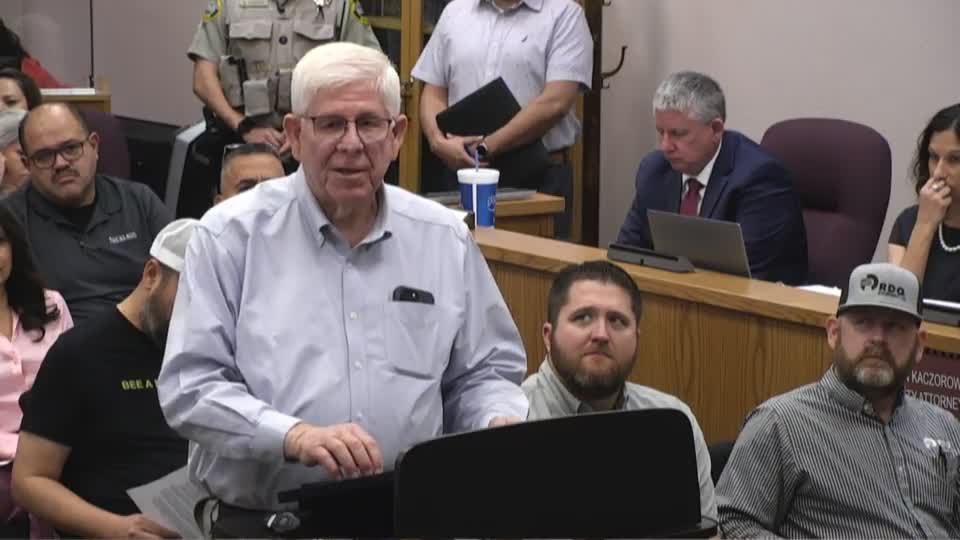
Public input and follow-up: Residents and public commenters complimented staff and urged continued investment; one commenter noted local pavement materials and recurring cracking on some streets and asked staff to consider aggregate choices. Supervisors asked staff to prioritize recurring problem locations and to coordinate with drainage and gravel-road maintenance crews. Public Works said they will use the study’s geospatial data to target localized failures for patching and to refine next year’s program.
Next steps: County staff will integrate the pavement-condition data into ongoing maintenance planning, prioritize localized deep patches where the study shows failures, and continue to rely on chip- and slurry-seal work to protect pavement value.