Get Full Government Meeting Transcripts, Videos, & Alerts Forever!
Get email alerts on the Environment Seagrass Mitigation topic
No spam. Unsubscribe anytime.
St. Petersburg council approves 178-acre seagrass mitigation bank, setting aside credits for future development
Summary
City council unanimously approved creation of a 178-acre seagrass mitigation bank that will use dredged material from Port Manatee, generate mitigation credits and install signage and outreach; construction is expected to begin after Army Corps permitting with planting in 2026–27.
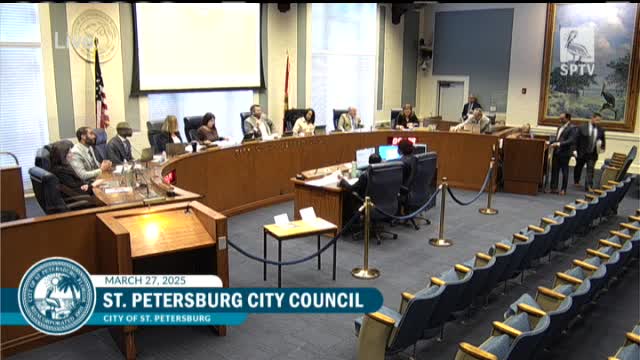
City Council on Monday approved creation of a 178-acre seagrass mitigation bank that city staff said will restore and protect a contiguous seagrass meadow, produce mitigation credits for future development impacts and reduce the city’s construction costs by using dredged material from Port Manatee.
The project converts a 32-acre dredge hole and adjacent existing meadow (about 147 acres) into a larger, self-sustaining seagrass area and is expected to produce about 13.41 federal mitigation credits. Port Manatee will dredge material it removes for maintenance and transport that clean sand to the city site, a move staff said will significantly lower construction costs. Council voted 9-0 to approve the measure.
The project matters because it creates a single large mitigation area rather than piecemeal offsets, staff said, and it ties environmental restoration to a predictable funding and credit-sale model that can fund ongoing maintenance. The bank will also include signage and a community-engagement plan designed to reduce recreational damage to seagrass and educate boaters and shoreline users.
City project manager Brijesh Grama told the council the work has been in development for several years and described its scale during the presentation: "It's a great project, and before I just wanted to have that introduction for the team before we continue on." Staff said the total site area will be approximately 178 acres, with the dredge hole itself roughly 32 acres and the existing meadow about 147 acres.
Staff outlined costs and credits: an initial maintenance fund deposit that will produce roughly $11,000 in annual interest to pay long-term maintenance, planting costs that could total about $1.1 million spread over 2026–27 depending on staging, and an early estimate that credits could be worth roughly $750,000 in today's dollars (staff noted that estimate is dated and market values may rise). City staff said credits will be released in stages as the site meets success metrics; the final credit release is expected after multi-year monitoring (staff’s schedule runs into FY 2032 for final releases).
The project includes a permit and sequencing plan. Staff said the city will seek a mitigation banking instrument (MBI) and Army Corps approval; once the MBI and permits are in hand, construction by Seaport Manatee is anticipated in fall 2025 to accept dredged material. Planting would follow after settlement, with major plantings expected in summer 2026 and additional planting in 2027 if required. Because the Army Corps process requires interagency consultation, staff said the permit phase will include roughly a 45-day consultation window with other regulators before the MBI is issued.
To curb recreational impacts, the city will install up to 15 signs (3-by-4-foot suggested size) at known cut-throughs and public access points and will monitor impacts and add signage if needed. Julie Vogel, the project’s engineering manager, told council the signs will be project-specific and developed with communications staff and partners such as Tampa Bay Watch.
Councilmembers praised the project’s scale and potential to create a long-term habitat. "This project is such a winner," Councilmember Brandy Gabbard said, calling it "a great example of environmental stewardship" and thanking staff for years of work to get the plan permitted and funded.
Staff also described the mitigation bank’s service area for buyers of credits, which will cover the broad Tampa Bay region from Anclote Key down through Sarasota Harbor and Tampa Bay; that geographic scope gives the city marketability for developers who need seagrass offset credits. Staff said the bank can sell fractional portions of credits rather than only whole credits, giving flexibility when developers have small, scattered impacts.
Council members asked about community outreach, video and interpretive signage, and ties to other funding sources; staff said they will return with a more detailed schedule once the MBI application is submitted and the Army Corps acceptance is confirmed. The council vote was unanimous.
The city will monitor the bank after construction, with staged credit releases and multi-year success criteria. Staff said credit revenue and the bank structure will also create a funding stream the city can use to maintain the site and respond to natural loss.
What’s next: staff will submit the MBI and Army Corps permit application, finalize a construction contract with Seaport Manatee, and return to council with timelines and community outreach materials once permits are received.