Get Full Government Meeting Transcripts, Videos, & Alerts Forever!
Get email alerts on the Transportation Scooters topic
No spam. Unsubscribe anytime.
City council approves 90-day extension of shared-scooter agreement while RFP finishes
Summary
City Council approved a 90-day extension to the existing scooter-share agreement to allow completion of a competitive request-for-proposal (RFP) process; staff said the program has logged more than 1.2 million trips since 2020.
City Council approved a 90-day extension to the city’s existing shared-scooter agreement so staff can finish a competitive request-for-proposal process and return with a recommendation for a longer-term operator.
City staff told the council that procurement rules allow administrative extensions but that, because previous extensions and elements of the agreement involved council approvals and a property license, staff sought council approval for a limited 90-day continuation. Evan Morey, presenting for the administration, said the city has recorded “more than 1,200,000 trips” on shared scooters since the program began in late 2020 and that ridership varies by day and event.
The extension was presented with an explanatory memo, a draft agreement and a resolution. Morey said the RFP committee began work late last year and has required multiple rounds of clarification from prospective vendors, which delayed a final recommendation. He told the council the city’s procurement code permits administrative contract extensions of up to six months but that the administration elected to request council approval for this 90-day extension.
Council member Gina Driscoll, who said her district is particularly affected by scooters, moved approval and stressed the desire for closer council involvement in future decisions. “Why the switch?” Driscoll asked, referring to why staff sought council approval rather than using the administrative extension option. Morey answered that precedent (previous council approvals and an added property license in the agreement) and the agreement’s unique nature prompted the decision to bring the extension to council.
Council member Brandy Gabbard said she and Morey had worked on a nonbinding initiative (NBI) to route the RFP results and the recommended operator to the Housing, Out-Transit (HOUT) committee for more detailed committee review before a future council vote; she said that referral would appear on the March 28 agenda.
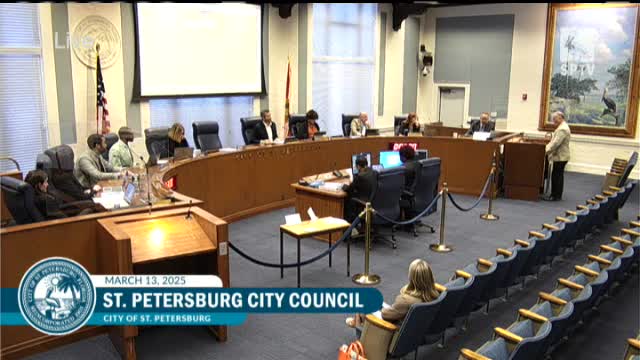
The motion to approve the short-term extension (agenda item C1) passed without opposition; the clerk announced: “approve agenda item C1 passes unanimously with council member Hanawitz being absent.”
City staff said that, if the RFP process identifies an operator or operators that meet the city’s requirements, they will return with a fuller report outlining benefits and trade-offs for council consideration before any longer-term agreement is adopted. The extension is explicitly tied to finishing the solicitation and negotiation; any long-term award is conditioned on successful negotiation and a future council decision.