Get Full Government Meeting Transcripts, Videos, & Alerts Forever!
Get email alerts on the Livestock Moratorium topic
No spam. Unsubscribe anytime.
Trustees decline to introduce small-domestic-livestock moratorium after planning commission recommended denial
Summary
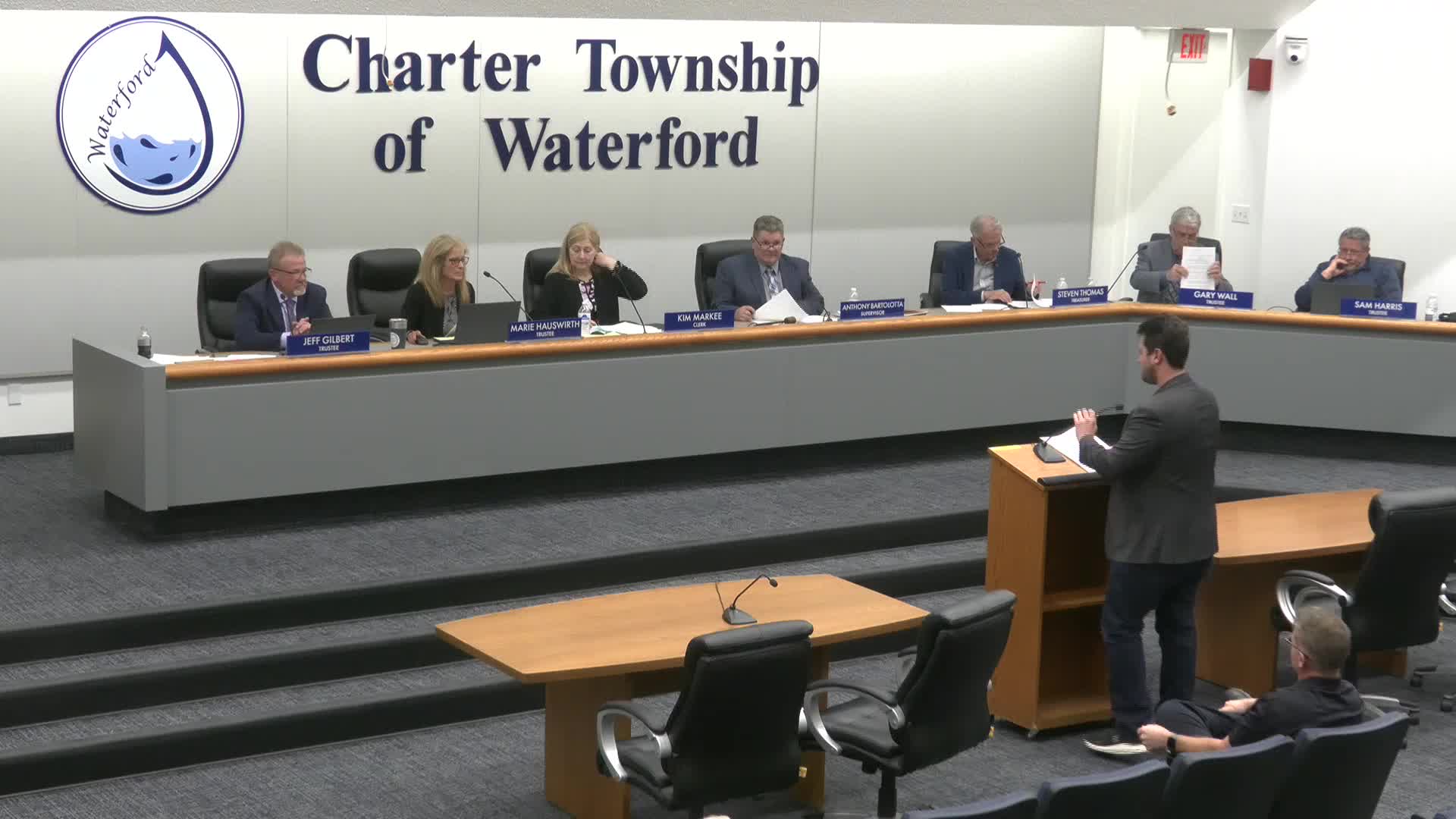
At its April 14 meeting, the Waterford Township Board of Trustees voted to deny introduction of Ordinance 2025‑C‑006, a proposed moratorium on small domestic livestock such as chickens and ducks, following debate over enforcement and planning‑commission history.
Waterford Township trustees on April 14 voted to deny introduction of Zoning Ordinance 2025‑C‑006, a proposed moratorium on small domestic livestock that would have temporarily restricted keeping animals such as chickens and ducks within the township.
The moratorium proposal had been drafted after complaints and incidents discussed at the January meeting and considered by the Planning Commission. Jeffrey Palkowski, Waterford’s director of development services, told trustees the commission reviewed a draft moratorium but recommended denial by a 7–0 vote and forwarded that recommendation to the Board of Trustees for final action. "We have seen an uptick in small domestic livestock lately, and it's a case by case basis," Palkowski said, describing how special approvals and enforcement have been applied in prior cases.
A member of the public, Vaughn Wagner of 2510 Silverside Road, urged clarity on the Planning Commission record and questioned how previously denied cases had been reopened and later approved. Wagner said citizens were concerned that votes seemed to change after public hearings and requested the township provide meeting minutes and video to clarify the process.
Trustees discussed how the township has handled approvals. Palkowski explained the usual approval track: many small‑domestic‑livestock requests come to the Planning Commission after code‑enforcement complaints, with approvals often including conditions such as enclosure setbacks, limits on numbers and waste‑management plans. "Often we see a waste management plan, a feeding schedule," Palkowski said. He told the board that most requests this year followed code‑enforcement actions; roughly 10 requests had arrived in 2025 and only two were not the result of enforcement activity.
A motion "to not introduce the ordinance and deny the zoning amendment" was made and seconded; a roll‑call vote recorded unanimous approval to deny introduction. (Trustees recorded their votes by name during the roll call.)
Why it matters: the vote means the township will continue handling new small‑livestock requests through the existing special‑approval process and code enforcement rather than pausing approvals through a temporary moratorium. Residents who asked for clarity on prior Planning Commission minutes were told staff would provide the meeting record and video upon request.
The board moved on to other agenda items after the vote; staff said anyone seeking the Planning Commission minutes or video should contact the township office.