
Conservation advisory committee proposes CEP-funded education and long-term wetland and ag‑preservation projects
Get AI-powered insights, summaries, and transcripts
Sign Up Free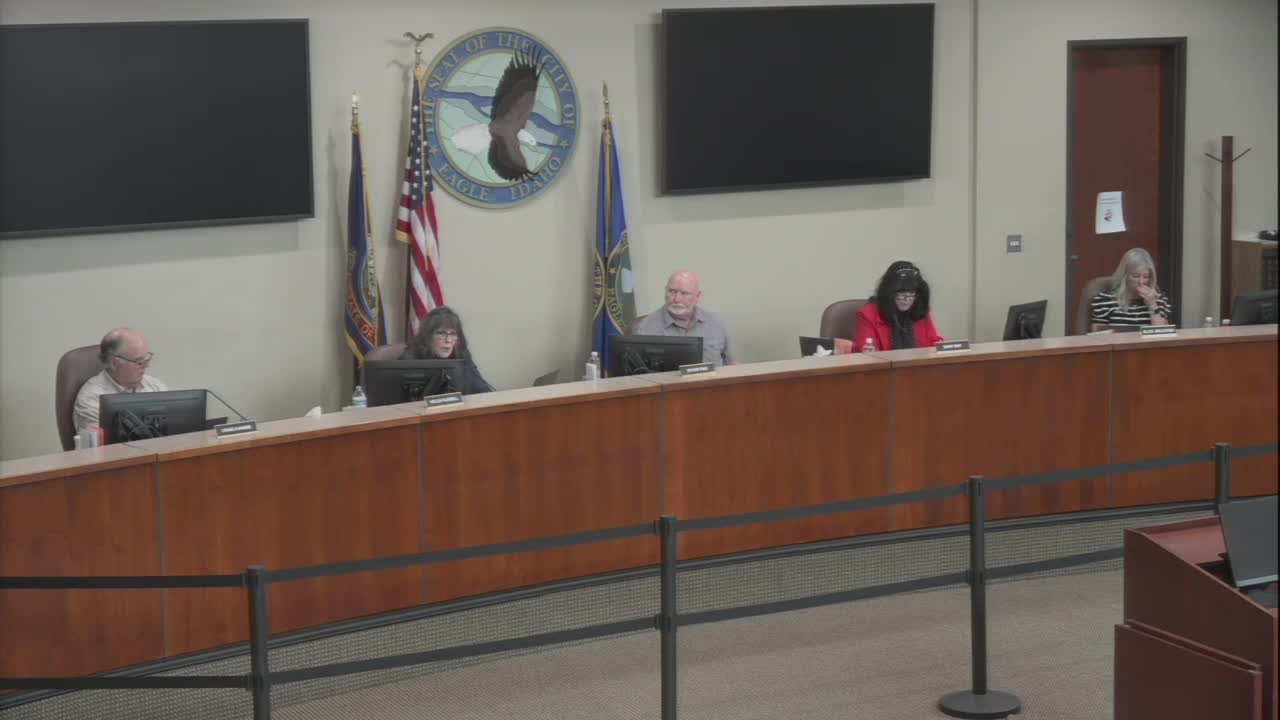
Summary
The Conservation Advisory Committee asked council to fund short‑term outreach and education on foothills habitat and invasive weeds and to pursue long‑term options such as wetlands banking and agricultural preservation using CEP funds.
The City of Eagle Conservation Advisory Committee presented a set of recommended projects to council on April 14 aimed at using the city’s Conservation Education Program (CEP) funds and other sources for habitat, invasive‑weed outreach and long‑term land preservation.
Charlie Woods Park, the Boise Foothills Guide and invasive‑weed education were listed as short‑term priorities. Chair Charlie (last name on file) told council the Boise Foothills Guide contains species identification and habitat information and suggested the city purchase 500 printed copies (estimated at about $3 per book through Ada County Soil and Water Conservation District) for distribution at community events and the Saturday market. The committee proposed Survey123 (an ESRI‑based field reporting app) and outreach trailers from Ada County Weed and Pest to encourage residents to photograph and report invasive patches; the committee cited yellow star thistle as an emerging concern in the foothills.
Longer-term recommendations included exploring wetlands banking and a habitat-based restoration for Charlie Woods Park (behind the Starbucks area near the Boise River) and an “ag preservation” program modeled on military-compatible‑use buffers (ACUB). The wetlands‑banking idea would require initial technical reports and permitting but could create a revenue stream if credits are sold; the committee cited market values for wetlands credits in a wide range though no final funding plan was presented at the meeting.
Committee members recommended using CEP funds to seed studies, printing and outreach, and proposed a 1‑ to 5‑year plan to prioritize short‑ and long‑term work. Councilmembers asked questions about weeds, the proposed printed guide, and whether the city could partner with Ada County and the Soil and Water Conservation District; the committee said partnerships are already in progress and the committee’s member Mike Fellin (Ada County Soil & Water Conservation District chair) supports printing and outreach.
Why it matters
The recommendations would expand public education about foothills habitat and invasive weeds, create tools for resident reporting of noxious species and explore projects that could offset future development impacts through wetlands banking or conservation easements. Using CEP funds for these technical and outreach steps would put the city on a pathway to larger habitat and agricultural‑preservation projects.
Speakers (selected)
- Charlie (last name on file), Chair, Conservation Advisory Committee — presented short‑ and long‑term project list, including outreach, Foothills Guide and wetlands banking. - Councilman Kwame — asked about weeds and citizen reporting; committee described Survey123 and Ada County partnerships. - Councilwoman (Russell) — proposed city purchase and distribution of printed guides at markets and events.
Council direction and next steps
Councilmembers expressed support for printing a first run of educational guides and asked staff to work with the committee to outline a plan for CEP-funded studies and outreach events. Council asked staff to return with a more detailed funding plan if the committee pursues wetlands‑banking feasibility studies.