Get Full Government Meeting Transcripts, Videos, & Alerts Forever!
Get email alerts on the Parks And Recreation topic
No spam. Unsubscribe anytime.
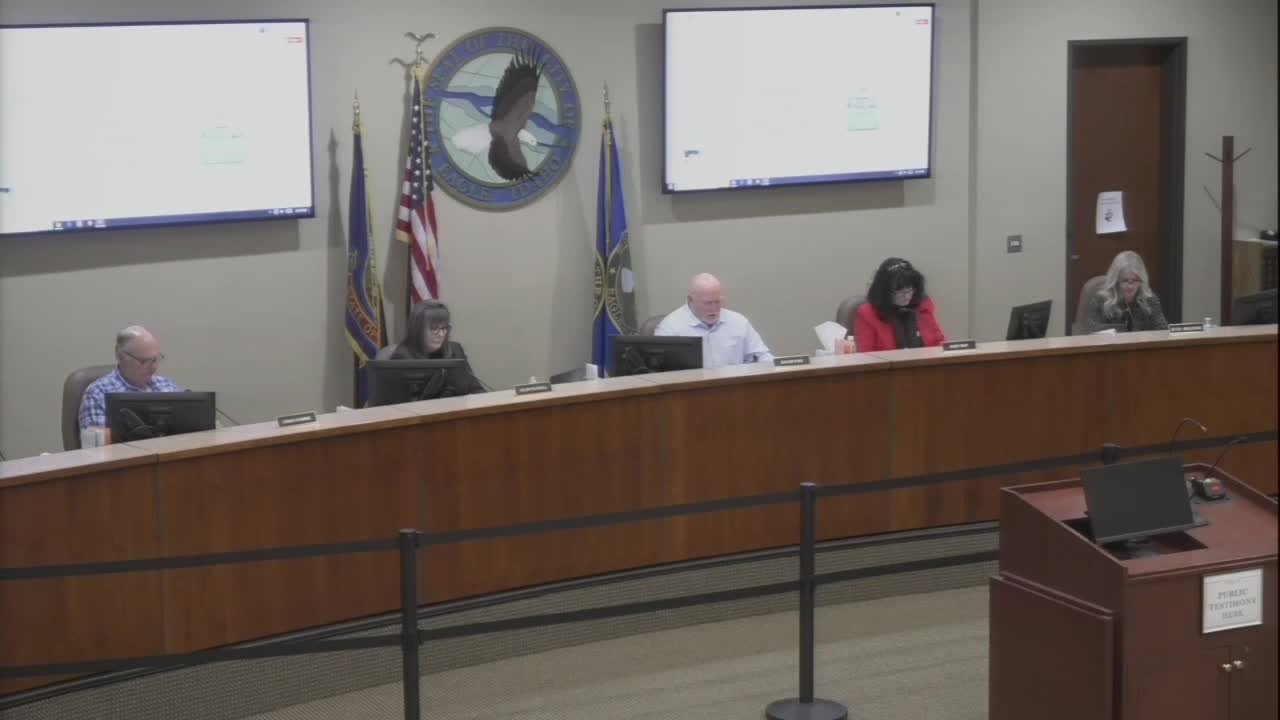
Eagle council pauses Heritage Park renovation after months of design work, schedules follow-up meeting
Summary
After a lengthy presentation and an hour of public comment, Eagle City Council delayed a final decision on the proposed $3 million Heritage Park renovation. Council members asked staff to return for a special meeting after public concerns about trees, parking and the splash pad were aired.
Eagle City Council on March 11 paused a planned decision on the proposed renovation and expansion of Heritage Park — a project that city staff estimates at roughly $3 million — after sustained public comment and questions from council members about tree removals, loss of downtown parking and the cost and scope of a new splash pad.
City staff led by Nicole Baird Spencer presented a 90%-complete design on the downtown park at State Street and Second Street, describing a rebuilt restroom and mechanical building, a new shaded plaza area, relocation of park signage, rescaled and replaced trees, and an updated splash pad. “We are replacing 18 trees at this time in this concept onto the site,” Spencer told the council during the presentation, referring to trees that would be removed and a larger replanting plan intended to restore canopy over time.
The project has been in the city capital program since 2021 and the city has set aside $3 million in the capital projects fund for construction. Staff said the splash pad alone is currently budgeted at about $630,000. Staff presented a tentative schedule that included advertisement for bids in late March, a bid opening April 15, a notice to proceed in mid‑May and construction completion targeted for November 2025.
Why it matters: Heritage Park is the small village green in downtown Eagle where concerts, the farmers market and the annual Eagle Country Christmas have long been held. The park’s footprint is roughly half an acre; supporters argue a renovation would modernize infrastructure, improve vendor power and staging, and return events downtown after the ACHD mobility project. Opponents and many residents said the plan removes too many mature trees, takes public parking and introduces modern elements — notably two electronic “reader” signs — that would change the park’s historic, small‑town character.
What council heard: Dozens of residents and local business owners spoke in public comment. Some voiced support for the renovation as a needed investment for downtown activity. “I think the city of Eagle really does deserve this,” said Erin Gallegos, a downtown business owner. Others urged a more limited, lower‑cost approach or the retention of particular mature trees. Dwight McCarty asked, “Do we need a water feature?” and suggested relocating or omitting the splash pad to reduce costs and utility routing complexities.
The city’s licensed arborist, Louis Atirida, reported that six park trees were scored as “1” on a five‑point viability scale (diseased or damaged and unlikely to last five years), including two box elders behind the gazebo, two ash trees flanking the gazebo and the park Christmas tree. Atirida described cavities and decayed wood in several trunks and said construction trenching or changes to grade and compaction could further damage root systems. He urged caution but did not recommend wholesale removal of trees beyond those rated structurally unsound.
Council members pressed staff on alternatives and impacts. Councilmembers said they were concerned about the loss of roughly 17 angled parking stalls in the current full‑build concept; staff clarified that a reduced option would still require removing about five stalls to accommodate a larger restroom and mechanical area. Staff also said the existing splash pad has a confined‑space vault and aging equipment that is increasingly costly and difficult to maintain and that a modernized recirculating system would reduce daily manual chemical checks.
What the council decided: After public comment and staff responses, Councilmember [not specified in transcript] moved that the body not make a decision that night but instead schedule a special meeting to review public input and reach a final determination. The motion carried on a roll call vote: Councilwoman Gindelsberger — aye; Councilmember Kwame — aye; Councilwoman May — aye; Councilmember Russell — aye. The council asked staff to prepare refined cost, tree‑preservation and phasing options for the follow‑up meeting.
Other procedural steps: Earlier in the meeting staff had confirmed the project’s 90% design and noted the design review board’s requests to refine landscaping and signage. Staff also said two large informational signage elements would be designed separately and that the splash pad portion may use state‑approved contractors on a pre‑approved list. The council did not adopt a final plan and directed staff to return with options and additional detail.
Ending: Council members asked staff to return quickly with a narrowed set of options — full build, reduced build (five‑stall parking impact) and a phased approach — and clearer cost estimates. They scheduled a special follow‑up to continue the discussion; no final construction authorization was given at the March 11 meeting.