Get Full Government Meeting Transcripts, Videos, & Alerts Forever!
Get email alerts on the Capital Improvements Plan topic
No spam. Unsubscribe anytime.
Planning commission hears follow-up on CIP: Sunset sidewalk moved to preliminary engineering, several Fuller/Maiden Lane projects remain on hold
Summary
City staff told the Planning Commission that a Sunset Boulevard sidewalk proposal will move into planning and preliminary engineering while related projects around Fuller and Maiden Lane remain on hold because of funding, MDOT Rail permits and prioritization within the Border-to-Border trail program.
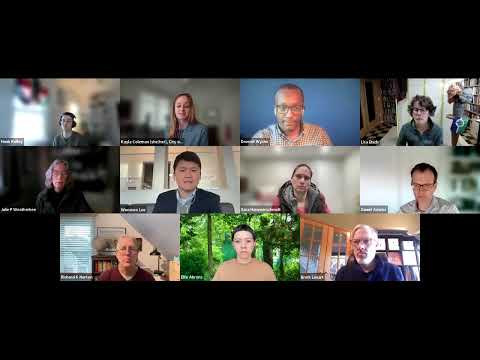
Kayla Coleman, the capital projects asset manager for the City of Ann Arbor, briefed the Planning Commission on follow‑up work and process questions for the city’s six‑year Capital Improvements Program (CIP).
Coleman told commissioners that staff had run the requested ranking for the Sunset Boulevard sidewalk (Brooks to Newport) and that the project would fall roughly in the mid‑to‑lower half of the active‑transportation asset group (about rank 24 of 35). She said staff and council members agreed to pursue a planning and preliminary engineering phase to test whether the sidewalk could be placed outside the existing curb line, or whether utility constraints and proximity to the water‑treatment plant would force the sidewalk into the traditional location between curb and property line.
The planning and preliminary engineering step will examine technical feasibility and utility conflicts, Coleman said, and will provide a clearer basis for whether construction in the six‑year horizon is viable. She noted the project has a dedicated funding source in the city’s sidewalk millage, which improves its funding prospects compared with many CIP items that lack an identified revenue source.
Coleman also reviewed several related projects at Fuller and Maiden Lane and East Medical Center Drive. She said the Border‑to‑Border trail extension under Maiden Lane — an item in the Parks, Recreation and Open Space (PROS) plan and long present in CIP lists since 2016 — remains on hold because county and trail partners prioritize filling gaps where no trail connection exists and there is no identified funding for this segment. A proposed non‑motorized connection under East Medical Center Drive (TRAT‑1604) also remains on hold after MDOT Rail declined to grant the easement or permit needed to construct the path in the constrained right‑of‑way.
On safety priorities, Coleman said Vision Zero intersection and corridor projects are prioritized by crash data and that Fuller & Maiden Lane does not currently show the frequency and severity of crashes that place it in tier 1 or tier 2 safety lists. Staff noted crash‑data updates are in progress and priorities could change with new data.
Commissioners raised process and transparency questions. Commissioner Arden praised Coleman’s work and suggested separating strategic value from complexity/urgency in scoring so the public and commission can better understand why a project ranks where it does. Commissioner Norton and others urged clearer presentation of scoring details or a short list of projects that warrant deeper explanation during early review. Commissioner Adams asked whether existing engineering work on the Sunset sidewalk had been counted toward its score and requested clearer linkage between dashboard scores and CIP ranking. Coleman said staff will explore ways to present more detailed scoring and suggested a September work session in full‑plan years to review preliminary project lists.
Coleman emphasized procedural constraints: the CIP is intended as a realistic, implementable six‑year program; staff review the on‑hold list in each full CIP cycle (every other year); and finance requires an adopted CIP by January at the latest so the CIP can be incorporated into the proposed budget materials that staff prepare in February.
The presentation prompted questions about coordination with MDOT Rail, Washtenaw County (the Border‑to‑Border funding partner), and the potential for earlier check‑ins with the commission so staff can surface a small set of projects for deeper explanation before public release.
The commission did not take a formal vote on any CIP items at the working session. The discussion closed with staff confirming they will test an earlier schedule for the next modification year and bring additional detail on on‑hold projects and scoring format options to commissioners for follow up.
The meeting closed the CIP segment with an attendee public comment recommending the city post on‑hold projects on its interactive CIP map so residents and partner agencies can see long‑term aspirations even when projects are not in the six‑year program.
The planning commission will consider the CIP again at its regular sessions and through the formal adoption timeline that staff outlined.