Get Full Government Meeting Transcripts, Videos, & Alerts Forever!
Get email alerts on the Open Meetings topic
No spam. Unsubscribe anytime.
Eagle holds legal training on open‑meetings, conflicts of interest and quasi‑judicial rules
Summary
City Attorney Victor led a training at a Feb. 10 special joint meeting for Eagle’s boards, commissions and city council covering Idaho open‑meetings law, quasi‑judicial procedures under the Local Land Use Planning Act, ex parte contacts, site visits, public‑comment time limits, group email cautions and conflicts of interest.
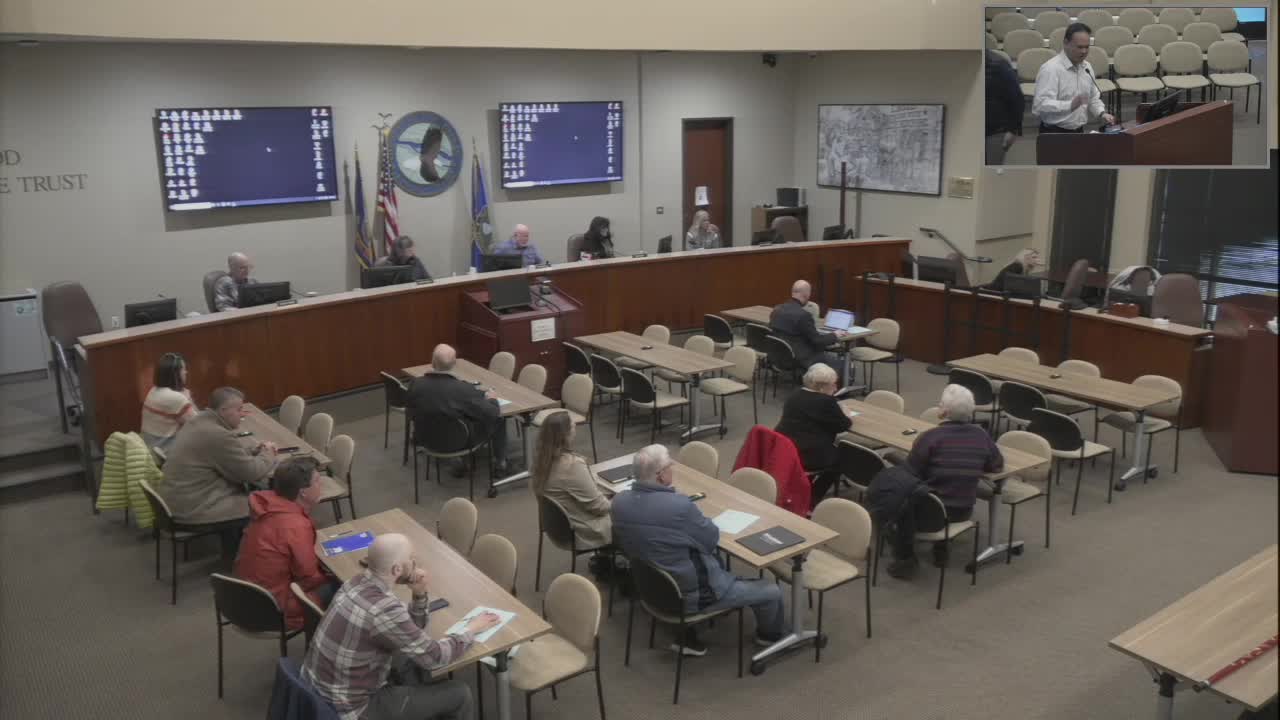
City Attorney Victor led a legal training on Idaho open‑meetings law and related rules at a special joint meeting of the City of Eagle’s council, committees and boards on Feb. 10. The session, which began at 5:30 p.m., reviewed when meetings must be public, how quasi‑judicial hearings work under the Local Land Use Planning Act (LUPA), restrictions on off‑record contacts and practical guidance on public comment, email use and conflicts of interest.
Victor told attendees the state’s policy requires that “the formation of public policy is public business and shall not be conducted in secret,” citing the preamble to Idaho Code Title 74, Chapter 2 and emphasizing the need for open deliberations and a transcribable record. He said a meeting occurs when a quorum gathers “for the purpose of deliberating or making a decision,” and warned that serial communications that produce concurrence outside an open meeting are prohibited by Idaho case law.
The session explained how quasi‑judicial proceedings differ from legislative discussions. Under LUPA, Victor said, councils and planning commissions “are taking on evidence” and must compile a verbatim, transcribable record that can be reviewed on judicial appeal. He urged decision makers to speak clearly into microphones and to avoid independent research outside the agency record because courts reviewing land‑use decisions consider only the evidence the governing body received publicly.
On public participation, Victor described two categories: instances required by law (for example, LUPA public hearings on land‑use applications) and discretionary comment periods some boards allow. He said the city uses a three‑minute time limit for speakers, noting Idaho Supreme Court guidance that “2 minutes is not long enough” while 4 minutes has been upheld; Victor summarized, “4 minutes is good. I think 3 minutes is good, but 2 minutes is not.” He also said applicants have been allowed longer presentation time (attendees discussed a 25‑minute applicant allotment for some hearings).
Attendees asked practical questions. Commissioner Eric Smith asked why officials often decline to answer public questions during testimony; Victor replied that questions become inquiries rather than testimony and can jeopardize the fairness of the record, advising staff or the applicant should respond to factual inquiries. Councilmember Russell asked about parliamentary procedures to end repetitive debate; Victor pointed to standard motions such as “call the question” and referenced a one‑page cheat sheet available to members.
The presentation covered off‑record contacts and site visits. Victor said ex parte communications with applicants or interested parties after an application is filed can be cured by disclosure on the record and, if necessary, by asking whether the contact would sway the decision maker. He cautioned that an unpublicized site visit or an unrecorded Google Earth “fly‑by” looked at alone by a member is similar to an independent investigation and can create problems; if a site visit is to be used, he advised it be noticed and conducted so the public can see and hear the decision makers.
On conflicts of interest, Victor discussed LUPA’s economic‑interest standard and the Ethics in Government Act. He said board members with a direct, personal economic interest should disclose it and refrain from participating; he recommended the conflicted member step out of the room to avoid any appearance of undue influence. He described the close relations the statute considers (employer, business partner, relatives through second degree of consanguinity) and framed the guidance as risk reduction to protect the city from successful legal challenges.
The attorney also warned about group emails and shared documents. He said circulating opinions or edits among an entire board risks creating a deliberative record outside an open meeting; he noted email threads are public records and warned about inadvertent inclusion of prior threads when recipients use “reply all.” He advised members to route substantive questions to staff rather than to the whole body.
Staff agreed to circulate the presentation slides after the meeting. The only formal vote recorded at the session was a voice vote to adjourn; a motion to adjourn passed when a member moved, a second was made and a single “Aye” was recorded from the floor. The meeting closed after the attorney’s remarks and a brief Q&A.
The training aimed to reduce legal risk and improve the conduct of public hearings, especially for land‑use matters that can be appealed to district court if procedural protections are not followed.